
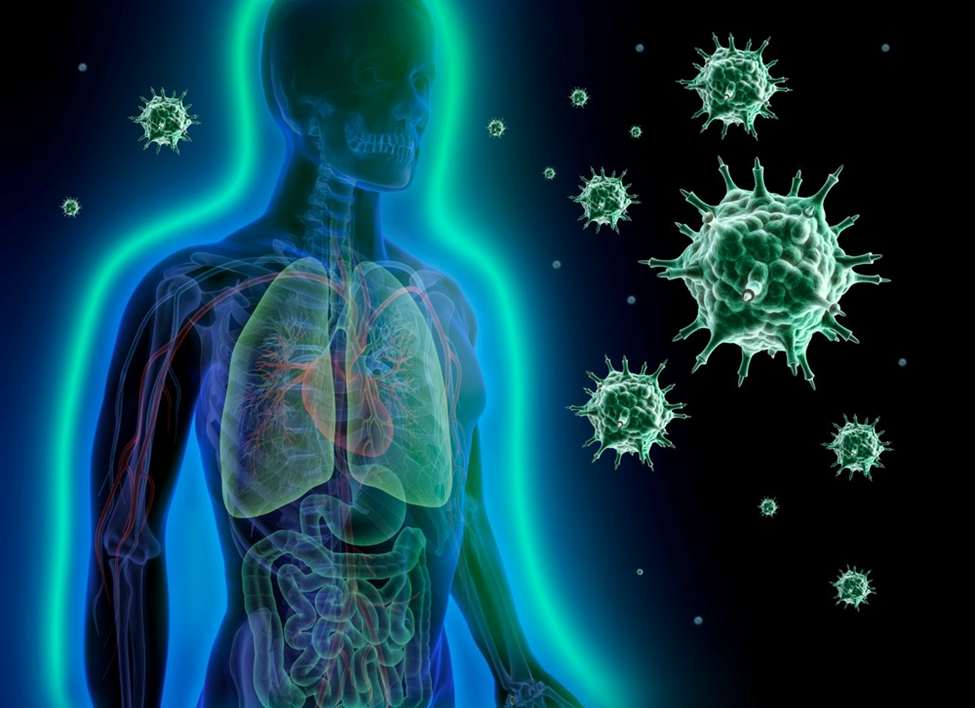
About : The human immune system is a complex network of lymphoid organs, tissues, specialized cells, and soluble molecules, including antibodies and cytokines, that defends the body against pathogens.
1. Cellular Components :
Immune responses are mediated by white blood cells (WBCs), which originate in the bone marrow. These are broadly categorized into:
- Lymphocytes (20–40% of WBCs): The primary cells of the adaptive immune system (e.g., B-cells and T-cells).
- Myeloid Cells: Includes granulocytes (neutrophils, eosinophils, basophils) and monocytes (which mature into macrophages). These cells are crucial for both innate and adaptive responses.
2. Innate Immunity
Innate immunity is the body’s non-specific, first line of defense, present from birth. It is achieved through four primary types of barriers:
- Physical Barriers: Skin and the mucous membranes lining the respiratory, gastrointestinal, and urogenital tracts, which block or trap microbes.
- Physiological Barriers: Secretions such as gastric acid, saliva, and tears, which create chemical environments hostile to microbes. Human milk (colostrum) also provides physiological barrier protection.
- Cellular Barriers: Phagocytic cells including polymorphonuclear leukocytes (PMNLs, or neutrophils), monocytes, macrophages, and a type of lymphocyte called natural killer (NK) cells.
- Cytokine Barriers: Proteins secreted by virus-infected cells, such as interferons, which signal adjacent uninfected cells to resist viral replication.
3. Acquired (Adaptive) Immunity
Acquired immunity is a pathogen-specific defense characterized by immunological memory.
3.1. Primary and Secondary Responses
- Primary Response: The initial, lower-intensity immune response produced upon first exposure to a pathogen.
- Secondary Response: A subsequent encounter with the same pathogen elicits a rapid, highly intensified response, mediated by memory B-cells and T-cells.
3.2. Mechanisms of Acquired Immunity
There are two main branches of the acquired immune response:
1. Humoral Immune Response: Mediated by antibodies (immunoglobulins) produced by plasma B-cells, which circulate in the blood and other bodily fluids .
2. Cell-Mediated Immune (CMI) Response: Mediated by T-lymphocytes. Antigen-Presenting Cells (APCs) display antigens (via MHC complex) to Helper T-cells (T-H). Activated T-H cells then stimulate cytotoxic T-cells, macrophages, and B-cells to mount a coordinated defense.
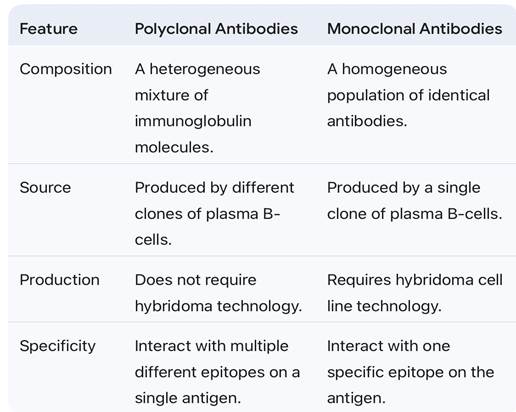
3.3. Antibody Types: Polyclonal vs. Monoclonal
4. Classification of Acquired Immunity
Acquired immunity can be obtained either actively or passively.
- Active Immunity: Develops when the host’s own immune system produces antibodies in response to antigen exposure. This occurs naturally during an infection or is induced artificially via immunization. It is slow to develop but provides long-lasting memory.
- Passive Immunity: Involves the direct transfer of pre-formed antibodies to a host, providing immediate but temporary protection. Natural examples include antibodies passed from mother to fetus via the placenta or to the infant through colostrum (containing IgA).
5. Immunological Applications: Vaccination
Vaccination is a practical application of the immune system’s memory.
- Principle: An in-activated or weakened pathogen (vaccine), or its antigenic proteins, is introduced into the body.
- Mechanism: This stimulates a primary immune response, generating antibodies and, critically, memory B-cells and T-cells without causing the disease.
- Effect: Upon future exposure to the actual pathogen, these memory cells recognize the agent and mount a rapid, high-magnitude secondary response, neutralizing the pathogen and preventing illness.