
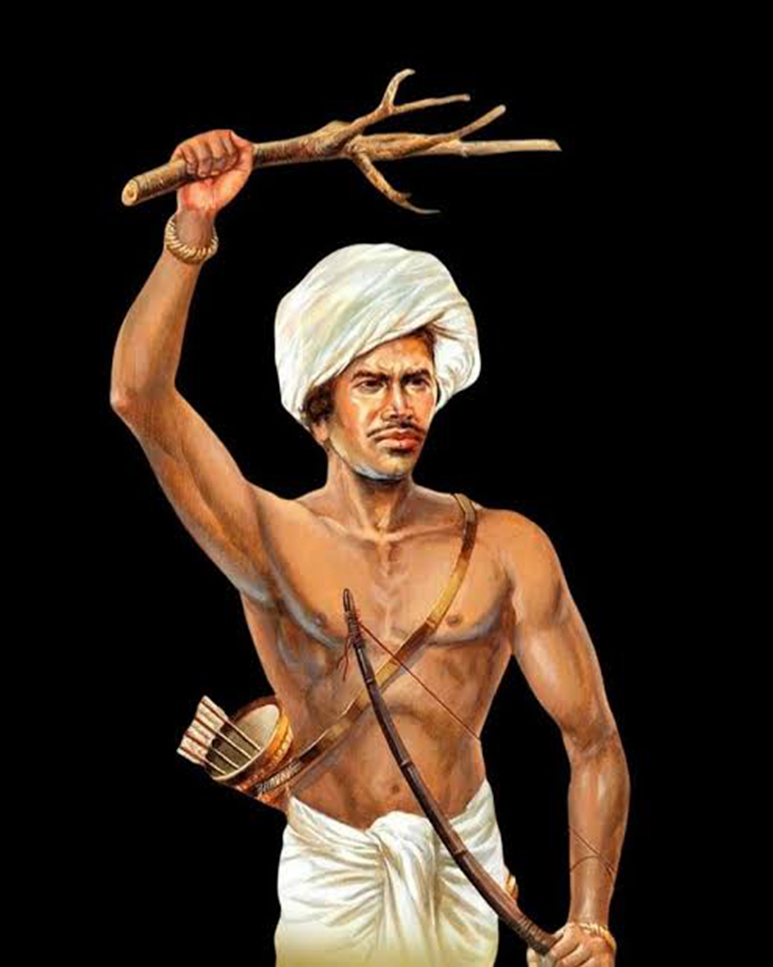
Context : Prime Minister Narendra Modi to visit Dediapada, Narmada district (Gujarat) on the birth anniversary of Bhagwan Birsa Munda (celebrated as Janjatiya Gaurav Divas) to inaugurate development projects.
Key Tribal Welfare Initiatives :
Over ₹9,700 crore was allocated for tribal welfare, emphasizing these schemes:
- Tribal Housing and Welfare Initiative : PM to participate in grih pravesh of 1 lakh houses under PM-JANMAN and DA-JAGUA schemes aimed at tribal socio-economic upliftment.
• Eklavya Model Residential Schools (EMRS): Inauguration of 42 EMRS, reinforcing the government’s commitment to providing quality education to tribal students. - Community Infrastructure: 228 multi-purpose community centres were also inaugurated.
About Birsa Munda (1875-1900)
- A revered tribal freedom fighter and folk hero from the Munda tribe of the Chotanagpur Plateau.
- Spearheaded a significant tribal uprising, the ‘Ulgulan’ (Great Tumult), against British colonial rule.
- Widely known by the title ‘Dharti Aba’ (Father of the Earth).
- Drivers of the Rebellion
- Erosion of Tribal Land System: The British imposition of the Zamindari system dismantled the traditional ‘Khuntkatti’ (communal land ownership) system.
- Land Alienation and Exploitation: This policy led to widespread land dispossession, forced labour (‘begar’), and crippling debt among the tribal population.
- Oppressive Forest Laws: New regulations restricted traditional tribal access to and use of forest resources.
The ‘Ulgulan’ (Great Tumult) & Birsait Faith :
- Birsait Faith: Birsa founded a new faith, ‘Birsait,’ which advocated for a return to indigenous traditions and social reforms, unifying the Munda community.
- Munda Rebellion (1899-1900): This was a direct socio-political and military uprising.
- Objective: To end British colonial rule (‘Maharani Raj’) and establish self-rule (‘Munda Raj’).
- Methodology: Employed guerrilla warfare, targeting symbols of colonial and feudal authority (British officials, missionaries, and zamindars).
- Capture and Death: Birsa Munda was captured in March 1900 and died in Ranchi Jail in June 1900, bringing the rebellion to an end.
Legacy and Significance
- Legislative Impact: The uprising was a primary catalyst for the Chotanagpur Tenancy Act (1908), which prohibited the transfer of tribal land to non-tribals and restored some land rights.
- National Commemoration: His birth anniversary, November 15, is celebrated as ‘Janjatiya Gaurav Diwas’ (Tribal Pride Day) by the Government of India.
- State Formation: The state of Jharkhand was officially created on his birth anniversary on November 15, 2000.
- Enduring Inspiration: He remains a central symbol of tribal resistance, social justice, and cultural revival, with his legacy informing modern welfare initiatives like PM-JANMAN.