
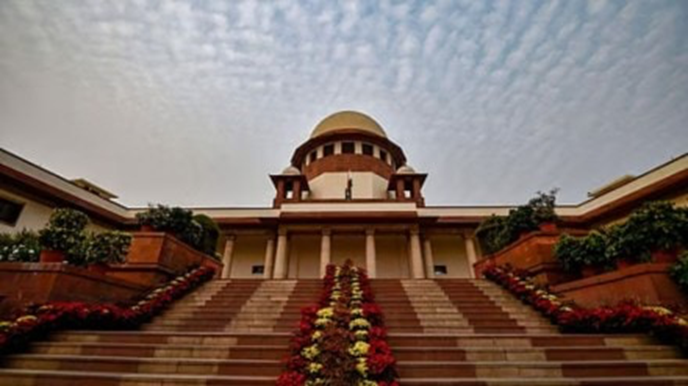
Context : The Supreme Court is set to pronounce an advisory opinion on a Presidential Reference (Article 143) regarding the judiciary’s authority to set fixed timelines for Governors and the President to grant assent to State Bills.
What is the Core Controversy?
- The Trigger: The dispute stems from an April 8 Supreme Court judgment which imposed a mandatory three-month deadline on Governors and the President to decide on Bills passed by State Legislatures.The Court ruled that decisions, including delays, are subject to judicial review.
- The Reaction: The Union Government challenged this via a Presidential Reference, arguing that the Court had encroached upon the discretionary powers of high constitutional authorities
Constitutional Framework: Assent to State Bills
Governor’s Powers (Article 200)
- Options Available: Upon presentation of a Bill, the Governor has four courses of action:
- Grant assent.
- Withhold assent (rejection).
- Return the Bill (for reconsideration by the Legislature).
- Reserve the Bill for the President’s consideration.
- Time Constraint: While the Constitution prescribes no specific deadline, it mandates action “as soon as possible.”
- Aid and Advice: The Governor is bound to act on the aid and advice of the Council of Ministers, barring specific discretionary areas.
Presidential Review (Article 201)
- Scope: Pertains to Bills reserved by the Governor for the President.
- Timeline: Constitutionally undefined, though the Supreme Court’s recent judgment prescribes a three-month window for decision-making.
Operational Challenges & Federal Friction
The Discretionary Debate
- Centre’s Stand: Argues that Article 163 grants Governors discretionary powers that are beyond judicial scrutiny.
- States’ Grievance: Opposition-ruled States allege that Governors weaponize “indefinite delays” to stall legislation, acting contrary to the advice of elected Ministries.
- Impact on Federalism
- Politicization: The alleged partisan conduct of Governors is viewed as a threat to the federal structure.
- Reform Calls: Increasing friction has revived demands for structural reforms or the abolition of the Gubernatorial post to preserve state autonomy.
Judicial Interpretation & Way Forward
Precedents on Timelines
- The Supreme Court has previously intervened to set timelines for constitutional authorities, notably in the K.M. Singh case (2020) regarding Speaker’s powers under the Tenth Schedule.
- The April 2025 Verdict
- Mandatory Duty: The Court interpreted the phrase “Governor shall” in Article 200 as a non-discretionary command, ruling out indefinite inaction.
- Future Outlook: The anticipated opinion on the Presidential Reference is expected to reinforce this stance, ensuring that constitutional offices do not undermine democratic legislative processes.