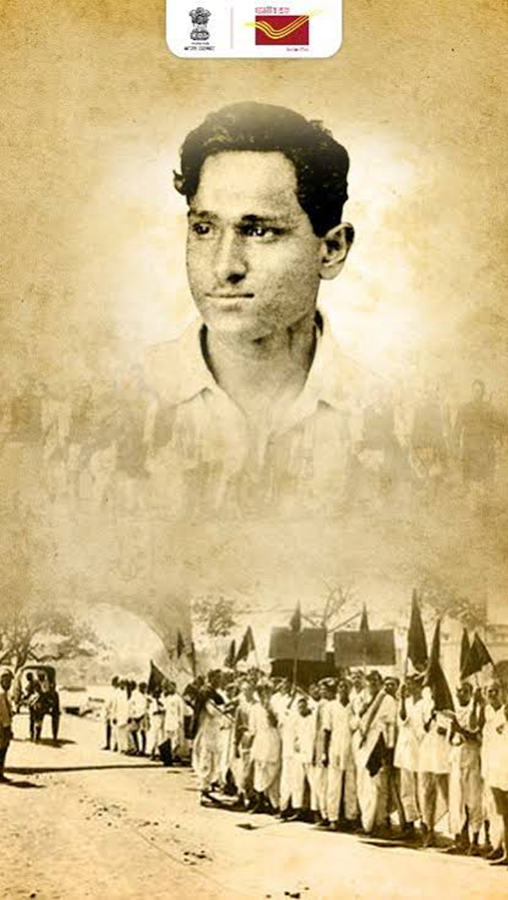
Early Life and Revolutionary Induction:
- Origins: Born on November 18, 1910, in Oari village, Purba Bardhaman district, West Bengal.
- Education & Alliances: Pursued education at PPN High School, Kanpur, where he established contact with Bhagat Singh and Chandrasekhar Azad.
- Activism: Joined the Hindustan Republican Association (HRA) and acquired expertise in bomb-making to support revolutionary activities.
- The Central Assembly Bombing Case (1929)
- Objective: To protest the enactment of the Defence of India Act, 1915, the Public Safety Bill, and the Trade Disputes Bill, while also registering retaliation for the death of Lala Lajpat Rai.
- Execution: On April 8, 1929, Dutt and Bhagat Singh threw two non-lethal bombs from the Visitor’s Gallery of the Central Legislative Assembly, Delhi.
- Symbolism: The act was accompanied by the slogan ‘Inquilab Zindabad’ (Long Live the Revolution) and the distribution of pamphlets.
- Motive: The revolutionaries aimed to “make the deaf hear” rather than cause casualties; both voluntarily courted arrest to use the trial as a platform for their ideology.
- Trial and Incarceration
- Legal Proceedings: Defended by Asaf Ali, the trial concluded in June 1929.
- Sentencing: Dutt and Singh were sentenced to life imprisonment and deported to the Cellular Jail (Port Blair).
- Note: Bhagat Singh was later executed separately for his involvement in the Saunders murder case.
- Continued Struggle: Following his release, Dutt actively participated in the Quit India Movement (1942), resulting in a subsequent four-year imprisonment.
- Post-Independence Era and Legacy
- Civilian Life: Despite his significant contributions, Dutt received no official recognition or state support post-1947. He sustained his livelihood through a transport business.
- Demise: He passed away on July 20, 1965, in Delhi following a prolonged illness.
- Final Resting Place: In a fitting tribute, he was cremated at Hussainiwala (Punjab), alongside the memorials of his comrades Bhagat Singh, Sukhdev, and Rajguru.
About Bhagat Singh:
Formative Years & Activism
- Background: Born in 1907 (Punjab) into a family active in the Ghadar Movement; educated at National College, Lahore.
- Organization: Founded Naujawan Bharat Sabha (1926) and was a key leader of the Hindustan Socialist Republican Association (HSRA).
- Rallying Cry: Popularized the slogan “Inquilab Zindabad” (Long Live the Revolution).
- Saunders Assassination (1928): Assassinated officer John Saunders to avenge the death of Lala Lajpat Rai during a police lathi charge.
- Central Assembly Bombing (1929): Threw non-lethal bombs in the Assembly to protest repressive bills. Surrendered voluntarily to propagate revolutionary views during the trial.
Trial, Execution & Legacy
- Lahore Conspiracy Case: Tried by a special tribunal in a process widely criticized for lacking judicial fairness.
- Martyrdom: Hanged on March 23, 1931, alongside Rajguru and Sukhdev. This day is commemorated as Shaheed Diwas.
- Ideology: Advocated socialism and armed revolution over non-violence. Authored the influential essay “Why I Am An Atheist,” promoting rationalism over religious dogma.