
Context:
The NGT has ordered Uttar Pradesh to map people affected by chromium contamination in after industrial discharge polluted local groundwater.
Chromium (Cr): Properties, Forms, and Environmental Impact :
1. Key Characteristics
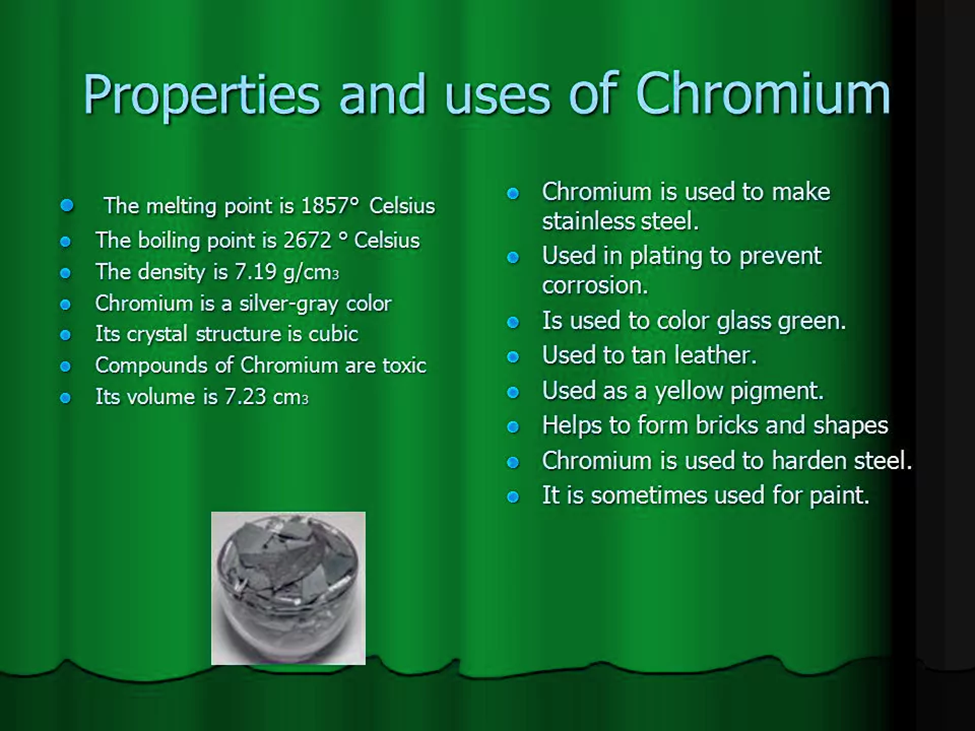
Chromium (Symbol: Cr; Atomic Number: 24) is a hard, lustrous, silver-grey metal with a high melting point, derived commercially from chromite ore. It is recognized as the third hardest element, following carbon (diamond) and boron.
2. Differentiating Forms :-
Chromium primarily exists in two forms:
1 Trivalent Chromium (Cr(III)): This form is an essential micronutrient for humans. It plays a vital role in the metabolic processes of glucose, protein, and fats.
2 Hexavalent Chromium (Cr(VI)): This is a highly toxic, carcinogenic, and environmentally hazardous form. It is predominantly produced by anthropogenic (human-made) activities.
3. Chromium Pollution
Chromium pollution is the contamination of the environment, particularly soil and water, by chromium compounds, especially toxic Cr(VI).
- Sources: While some chromium enters the environment naturally, significant pollution stems from anthropogenic activities. Key sources include open-cast chromite mining, smelting, metal processing, industrial production (e.g., tanneries), and agricultural runoff.
- Mechanism: A primary cause of contamination is the direct discharge of untreated industrial effluents and mining waste into water bodies.
- Impact in India: High concentrations of chromium have created severe environmental and public health risks in several regions, notably the Sukinda Valley (Odisha), Ranipet (Tamil Nadu), and Kanpur (Uttar Pradesh).
