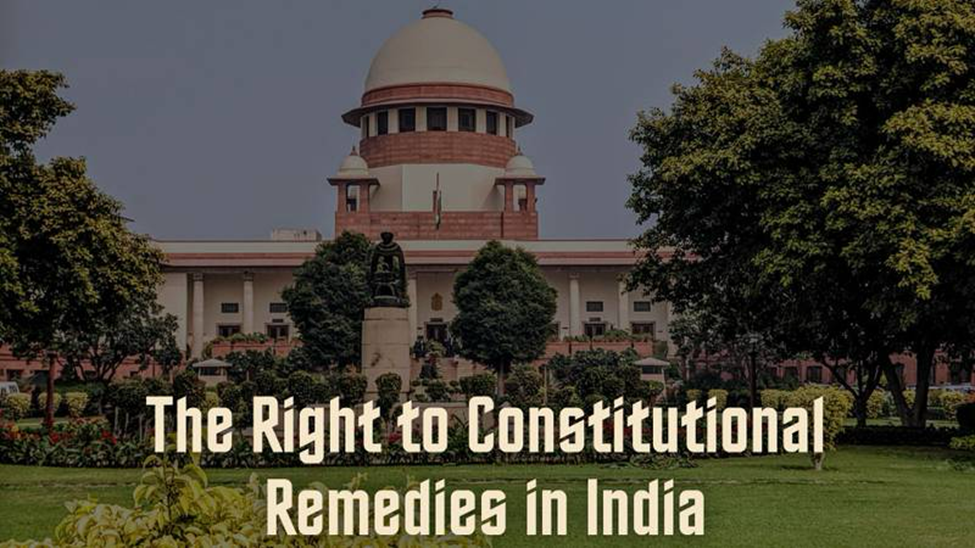
About :- Article 32 of the Indian Constitution empowers citizens to directly approach the Supreme Court for the enforcement of Fundamental Rights. Dr. B.R. Ambedkar described this article as the “heart and soul” of the Constitution, as it renders all other rights meaningful and enforceable.
Key Features and Provisions
- Protector and Guarantor: The Supreme Court is designated as the ultimate defender of Fundamental Rights.
- Jurisdiction: The Court possesses original (direct access without appeal) and wide powers to issue directions, orders, or writs. This power is concurrent with High Courts (under Article 226), not exclusive.
- Scope: Article 32 applies solely to the enforcement of Fundamental Rights, not other legal or constitutional rights.
- Basic Structure: The Supreme Court has declared this right a “Basic Feature” of the Constitution; hence, it cannot be curtailed by amendment.
- Suspension: The right to move the Court can only be suspended during a National Emergency (Article 359).
Writs (Prerogative Writs)
Adopted from the British legal system, the Constitution empowers the Supreme Court to issue five specific writs to ensure justice:
1. Habeas Corpus: To protect against unlawful detention.
2. Mandamus: To command a public official to perform a duty.
3. Prohibition: To prevent a lower court from exceeding its jurisdiction.
4. Certiorari: To quash an order passed by a lower court or tribunal.
5. Quo Warranto: To inquire into the legality of a claim to a public office.