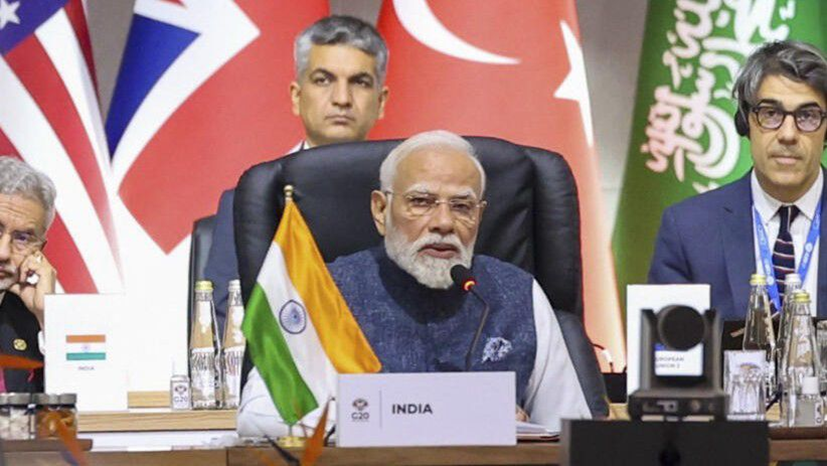
Context: During the 3rd Session of the G-20 Summit (Theme: “A fair and a just future for all — critical minerals; decent work; artificial intelligence”), Prime Minister Narendra Modi proposed a global framework to regulate and harness Artificial Intelligence.
What is the Core Philosophy proposed?
- Human-Centric vs. Finance-Centric: The development of critical technologies must prioritize human welfare over financial gains.
- Global & Open Source: Technology applications should be “global” rather than nationalistic and based on “open source” models rather than exclusive, proprietary systems.
- Responsibility: While AI should enhance capabilities, the ultimate responsibility for decision-making must remain with humans.
What constitutes the ‘Global Compact on AI’?
- The PM called for a unified global agreement based on the following pillars:
- Governance: Effective human oversight and “safety-by-design” architecture.
- Transparency: AI systems must be responsible and auditable.
- Restrictions: Strict prohibition on the use of AI for deepfakes, criminal activities, and terrorism.
- Talent Mobility: A shift from protecting “jobs of today” to building “capabilities of tomorrow” (referencing the Delhi G20 progress on talent mobility).
2. What are India’s Specific Initiatives?
- India-AI Mission: Focuses on building accessible high-performance computing capacity to ensure AI benefits reach the grassroots level.
- AI Impact Summit 2026: India announced it will host this summit in February 2026.
- Theme: “Sarvajanam Hitaya, Sarvajanam Sukhaya” (Welfare for all, happiness for all).
- Objective: To promote sustainable development, trusted trade, and fair finance.