
Context :- India’s TB incidence has declined by 21%, falling from 237 cases per lakh (2015) to 187 per lakh (2024)—almost double the global decline of 12%, according to the WHO Global TB Report 2025
About :-
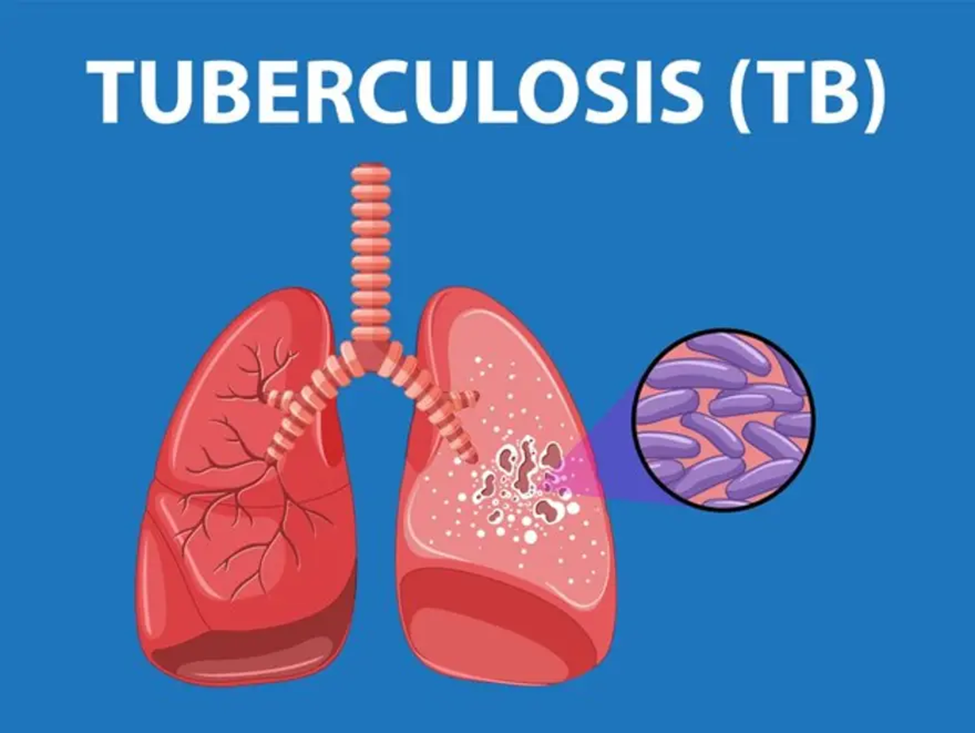
Tuberculosis (TB) is an infectious disease caused by the bacterium Mycobacterium tuberculosis. It primarily manifests as pulmonary TB (affecting the lungs) but can also present as extrapulmonary TB, impacting sites such as the abdomen, glands, bones, and nervous system. Transmission occurs via airborne droplets inhaled from the coughs or sneezes of an infected individual.
Classification and Clinical Presentation :-
TB is broadly classified into two states:
1.Latent TB: The immune system contains the bacteria. The individual is asymptomatic and non-infectious.
2. Active TB: The immune system fails to control the infection, leading to bacterial multiplication. This state is symptomatic and often contagious (especially pulmonary TB).
Key symptoms of active TB include a persistent cough (often exceeding 3 weeks, sometimes with hemoptysis), unexplained weight loss, fever, night sweats, fatigue, loss of appetite, and swollen lymph nodes.
Prevention and Treatment :-
The Bacillus Calmette-Guérin (BCG) vaccine offers moderate protection, primarily against severe forms of TB in infants and children.
Active TB is curable with a multi-drug antibiotic regimen lasting between 6 and 18 months, depending on the site and drug resistance.
Classification of Drug-Resistant TB (DR-TB)
Drug-resistant tuberculosis arises when the bacterium Mycobacterium tuberculosis becomes resistant to the primary antimicrobial drugs used for treatment.
- Multidrug-Resistant TB (MDR-TB): Defined by resistance to at least isoniazid and rifampicin, the two most potent first-line anti-TB drugs.
- Extensively Drug-Resistant TB (XDR-TB): A more severe form, defined as MDR-TB with additional resistance to any fluoroquinolone and at least one of three second-line injectable drugs (amikacin, kanamycin, or capreomycin).
India’s National TB Elimination Programme (NTEP)
India aims to eliminate TB by 2025 through its National TB Elimination Programme (NTEP). The current National Strategic Plan (2017-2025) operates on a “Detect – Treat – Prevent – Build” framework.
Key Initiatives:
- Ni-kshay Portal: A web-based patient management and surveillance system for all TB cases.
- Ni-kshay Poshan Yojana (NPY): Provides a nutritional support incentive of Rs. 500 per month via Direct Benefit Transfer (DBT) to all TB patients during their treatment.
- Pradhan Mantri TB Mukt Bharat Abhiyan: Encourages community participation (“Ni-kshay Mitras”) to provide additional nutritional, diagnostic, and vocational support to patients.
- BCG Revaccination: India is exploring revaccination to prevent TB, though this is not currently a WHO-recommended practice.
