
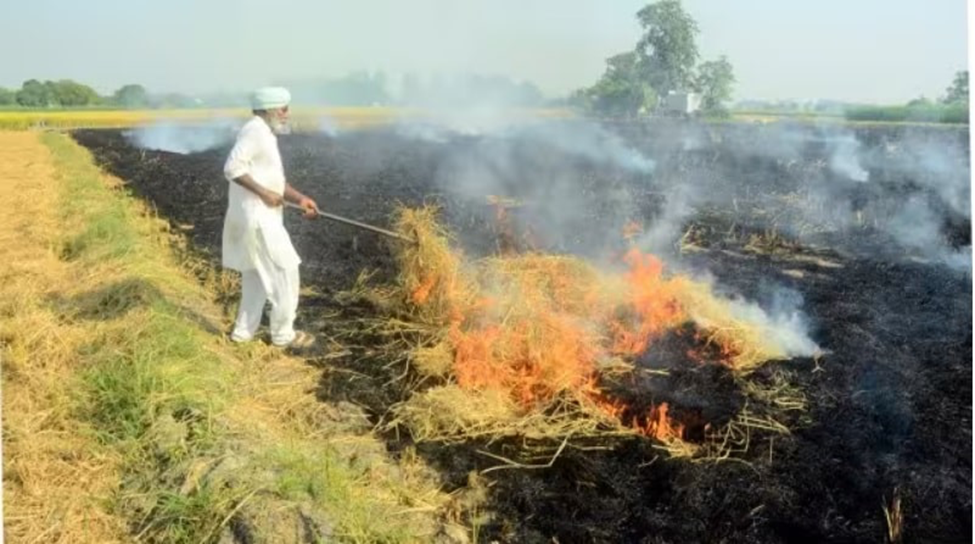
Context :- Recent satellite data for October 2025 indicates an approximate 20% reduction in the actual area of stubble burning in key Punjab districts (Amritsar, Taran Taran, Ferozpur) compared to the previous year.
About :- Stubble burning (parali) is the practice of incinerating leftover crop residue, primarily paddy, to rapidly clear fields for wheat sowing, typically between September and November.
Consequences of Stubble Burning:-
Atmospheric Pollution: The practice releases high volumes of pollutants, including Particulate Matter (PM2.5, PM10), Carbon Monoxide (CO), and Nitrogen Oxides (NOx). These contribute significantly to smog formation and the degradation of regional air quality.
Soil Degradation: Incineration depletes soil of essential nutrients (Nitrogen, Phosphorus, Potassium), destroys beneficial microorganisms, and reduces organic matter.
Government Interventions:-
- Legal Framework: Enforcement under the Air Act (1981) and Environment Act (1986), with oversight by the Commission for Air Quality Management (CAQM).
- Residue Management: Promoting in-situ (e.g., Happy Seeders, PUSA bio-decomposers) and ex-situ (e.g., biomass, ethanol production) solutions.
- Financial Assistance: Providing subsidies for management machinery via The Sub-Mission on Agricultural Mechanisation (SMAM) and offering direct financial incentives to farmers.
