
Why in the News
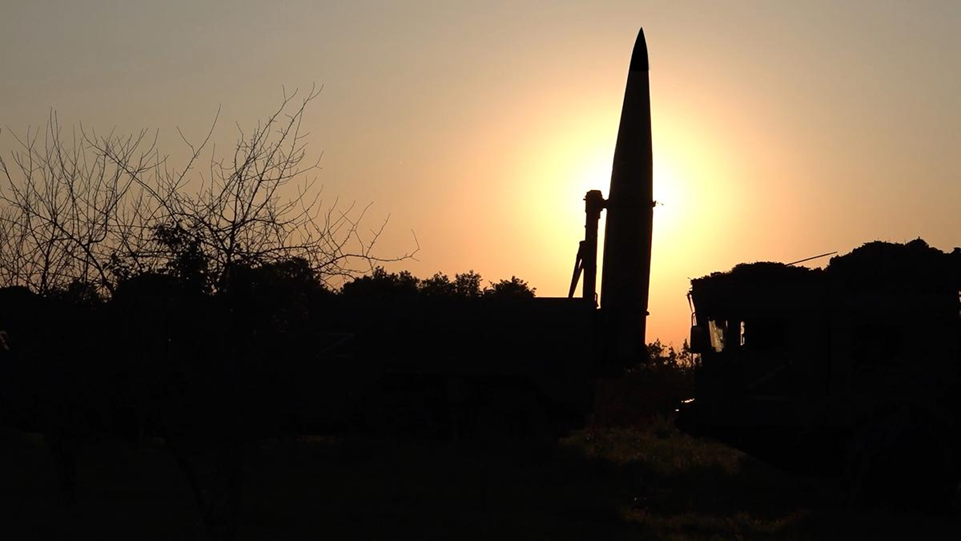
Recently, the U.S. indicated its intent to resume nuclear weapons testing to match other nuclear-capable nations. It was noted that several countries, including North Korea and Pakistan, have conducted multiple nuclear tests in the 21st century.
Context of the Announcement
- The announcement followed Russia’s successful tests of a nuclear-powered cruise missile (Burevestnik) and an undersea torpedo (Poseidon), both designed to penetrate American missile defense systems and capable of carrying nuclear warheads.
- These tests, however, did not involve nuclear detonations.
Historical Background
- The last Russian nuclear detonation occurred in 1990, during the Soviet Union era.
- The last U.S. nuclear bomb test took place in 1992, while China conducted its last nuclear detonation in 1996.
- The Comprehensive Nuclear Test Ban Treaty (CTBT), signed in 1996, aimed to ban all nuclear detonations, but it never entered into force, as the required number of ratifications was not achieved.
- The U.S. and China signed but did not ratify the CTBT, while Russia ratified the treaty but de-ratified it in 2023 amid rising tensions with the U.S.
Debate in the U.S.
- Currently, Russia maintains the largest nuclear arsenal with 4,309 warheads, followed by the U.S. with 3,700 warheads, and China with over 1,000 warheads.
- Historically, the U.S. conducted the highest number of nuclear tests (1,030 detonations), followed by the Soviet Union (715), France (210), and China (over 45).
- Subcritical tests have been proposed as an alternative; these involve compression of fissile material using conventional explosives without triggering a nuclear chain reaction.
- Supporters of resuming nuclear tests argue that such tests strengthen nuclear deterrence, validate the operational capability of arsenals, and provide critical data to develop more advanced, compact, and specialized warheads.
Environmental and Strategic Implications of Nuclear Testing
Devastating Effects
- The 1963 Partial Test Ban Treaty, signed by the Soviet Union, the U.S., and the U.K., prohibited nuclear detonations in the atmosphere, outer space, and underwater.
- Since the treaty, most nuclear tests have been conducted underground.
- Experts highlight that even subterranean nuclear tests can cause:
- Destruction of ecosystems at test sites.
- Contamination of soil, air, and water, affecting the surrounding environment.
Potential Domino Effect on Global Powers
- Resumption of U.S. nuclear tests could trigger reciprocal testing by other nuclear states.
- Reports suggest that China has prepared facilities at Lop Nur, the site of its first nuclear test in 1964, in anticipation of potential testing.
- Russia has indicated that any testing by the U.S. would be met with equivalent measures.
- If both the U.S. and Russia resume tests, China could follow suit.
- Subsequently, India may face internal pressure to conduct nuclear tests, followed potentially by Pakistan.
- Such developments could initiate a new phase of nuclear arms race, with long-term strategic and environmental consequences for the global community.
Conclusion
The resumption of nuclear testing by any major power could undermine global non-proliferation efforts, trigger a new arms race, and increase geopolitical tensions. It risks environmental hazards and compels other nuclear-capable countries, including India and Pakistan, to reconsider their policies. Ensuring restraint, adherence to treaties, and international dialogue remains critical for global security and strategic stability.
Nuclear Proliferation
The rapid spread of nuclear weapons, associated technologies, and fissile materials, combined with increasing regional conflicts, has ushered in a new nuclear era. Preventing the proliferation and potential use of nuclear weapons has become an urgent global priority.
Understanding Nuclear Proliferation
Definition:
- Proliferation generally refers to a rapid increase in number or quantity of something.
- Nuclear proliferation specifically denotes the spread of nuclear weapons, nuclear technology, and related knowledge to nations that did not previously possess them.
Types of Nuclear Proliferation:
- Horizontal Proliferation:
- Occurs when states or non-state actors acquire or develop nuclear weapons or capabilities.
- Vertical Proliferation:
- Happens when nuclear-armed states expand or modernize their arsenals, improving weapon technology, reliability, or developing new types.
Nuclear Terrorism:
- Definition: Non-state entities obtaining nuclear weapons or materials and using them to cause mass casualties or destruction.
- Forms:
- Acquisition or production of nuclear weapons by non-state actors.
- Attacks on nuclear power plants or installations, potentially releasing radioactive material.
- Use of “dirty bombs”, where conventional explosives disperse radioactive materials.
India’s Unique Position:
India occupies a distinctive position in the global nuclear landscape:
- De facto nuclear weapons state (DNWS) with demonstrated nuclear capability since 1974.
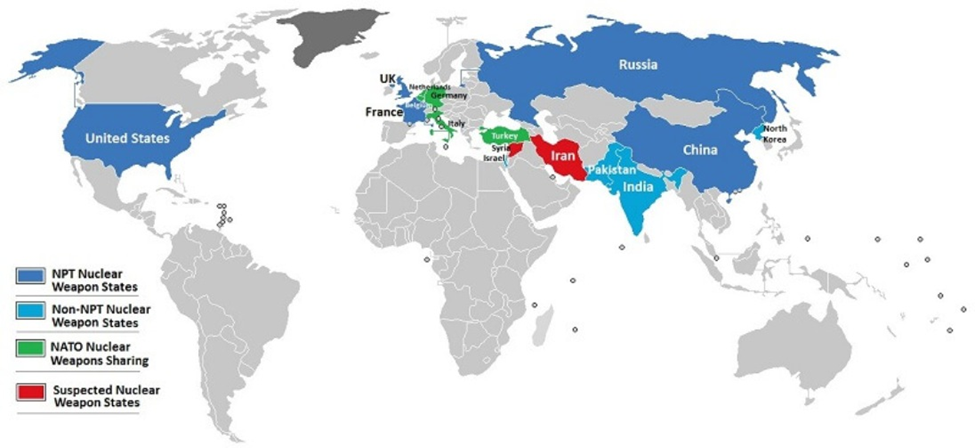
- Non-signatory to the Nuclear Non-Proliferation Treaty (NPT) alongside Pakistan, Israel, and North Korea.
- Recognized as a responsible nuclear power by the international community, particularly post-2008 Indo-US Civil Nuclear Agreement.
- Only non-NPT signatory granted formal civil nuclear cooperation by major powers (USA, Russia, France, Japan, South Korea, Australia).
Preventing Nuclear Proliferation – Historical Background
- The Hiroshima and Nagasaki bombings (1945) highlighted the catastrophic consequences of nuclear weapons.
- Efforts to control nuclear weapons began with the first UN General Assembly (1946) but initially had limited success.
- Cold War Era:
- Nuclear weapons and deterrence were central to US–Soviet relations.
- Both powers undertook efforts to limit nuclear arms to prevent global catastrophe.
Non-Proliferation of Nuclear Weapons Treaty (NPT), 1968
- Proposed by USA, UK, and USSR, signed in 1968, effective from 1970.
- Objectives:
- Prevent spread of nuclear weapons and technology.
- Promote peaceful uses of nuclear energy.
- Advance nuclear disarmament and overall disarmament goals.
- Classification of States:
- Nuclear Weapon States (NWS): USA, Russia, China, France, UK (tested nuclear weapons before 1968).
- Non-Nuclear Weapon States (NNWS): Prohibited from developing nuclear weapons; India, Israel, Pakistan are non-signatories.
- Three Pillars of NPT:
- Non-proliferation: NWS cannot transfer weapons or assist NNWS in developing nuclear arms.
- Peaceful Use of Nuclear Energy: All states can pursue nuclear energy for non-military purposes.
- Disarmament: NWS have a legal obligation to gradually reduce nuclear arsenals.
- Assessment:
- Successfully restricted NNWS from acquiring nuclear weapons.
- Helped reduce US and Russian stockpiles.
- Limitations: Some countries remain outside the treaty, avoiding inspections.
Why India Refuses to Sign: India’s Stance on NPT
- Discriminatory Framework:
- Creates unjust hierarchy between nuclear “haves” and “have-nots.”
- Arbitrary cutoff date (1 January 1967) excludes India despite nuclear capability.
- “Nuclear Apartheid“: Five powers retain weapons indefinitely while others denied right.
- Lack of Time-Bound Disarmament:
- Article VI imposes only vague obligation on NWS to pursue disarmament.
- No specific timeline for nuclear weapons elimination.
- Demands India’s unilateral restraint while NWS modernize arsenals.
- Strategic Autonomy:
- Signing NPT would require India to disarm existing nuclear weapons under Article II.
- Contradicts India’s security imperative against China and Pakistan.
- Historical Position:
- India has advocated for universal, non-discriminatory disarmament since independence.
- Nehru’s proposals at UN for comprehensive disarmament never realized.
- India refuses to accept inferior status in global security architecture.
- Legal Status of India:
- India is NOT bound by NPT as a non-signatory.
- Under customary international law, India maintains right to possess nuclear weapons.
- India has acquired status of “persistent objector” to any emerging customary norm prohibiting non-NPT nuclear states from possessing weapons.
Comprehensive Nuclear-Test-Ban Treaty (CTBT)
- Objective: Ban all nuclear explosive tests, both above and below ground.
- Adopted: 1996; not yet in force.
- Non-Signatories: India, Pakistan, North Korea.
- Global Reach: 183 signatories; all states share equal obligation not to conduct nuclear tests.
- Verification System: Over 300 monitoring stations worldwide; contributes to nuclear safety.
Nuclear Weapons Prohibition Treaty (NWPT), 2017
- Purpose: Makes it illegal to possess, use, produce, transfer, or deploy nuclear weapons.
- States are also prohibited from threatening their use.
- Signatories (as of 2017): 53 countries.
Nuclear-Weapon-Free Zones (NWFZs)
- Regional approach to strengthen global non-proliferation and disarmament norms.
- NWFZs exist in South America, Caribbean, Southeast Asia, South Pacific, Africa, and Central Asia.
- Key Treaties:
- Tlatelolco Treaty: Latin America & Caribbean
- Rarotonga Treaty: South Pacific
- Bangkok Treaty: Southeast Asia
- Pelindaba Treaty: Africa
- Central Asia NWFZ Treaty
- Antarctic Treaty
- Moon Agreement
- Outer Space Treaty
- Seabed Treaty
India-Specific Nuclear Frameworks
- Indian Nuclear Doctrine (1999/2003): Credible minimum deterrence (CMD), No First Use (NFU), Massive Retaliation, Civilian Control (NCA), Political & Executive Councils, deterrence stability
- Indo-US Civil Nuclear Agreement (123 Agreement, 2008): NSG waiver, IAEA safeguards, non-NPT status, global nuclear commerce
- IAEA Safeguards: Civilian reactors under inspection, military facilities national control, verification mechanism
India’s Nuclear Capabilities and Arsenal
Weapons Development Timeline
- 1974 Pokhran-I: Peaceful nuclear explosion
- 1998 Pokhran-II: Declared nuclear weapons state, thermonuclear device, sub-kiloton warheads
- Current Arsenal (2023–24): ~160 warheads, annual production 4–5
Delivery Systems
- Land-Based: Agni I–VI, Prithvi series
- Sea-Based: K-series SLBMs, INS Arihant, INS Arighat, second-strike capability
- Air-Based: Nirbhay cruise missiles, nuclear-capable aircraft
- Triad Capability: Land, sea, air
STRATEGIC SIGNIFICANCE
- Deterrence Stability: Nuclear weapons prevent full-scale India-Pakistan war; raise conflict costs. Ensures strategic stalemate.
- Regional Power Balance: Enables strategic autonomy, prevents Chinese coercion; supports QUAD role, Indo-Pacific strategy, and great power status.
- Energy & Climate Goals: Civil nuclear power → zero CO2, supports net-zero 2070, reduces import dependence, enhances sovereignty, and enables rural electrification.
- Responsible Nuclear Power Model: Zero proliferation, 27+ yr test moratorium, fissile production limits, civilian control → model for nuclear powers outside NPT.
- Global Non-Proliferation Impact: Weapons development outside NPT shows regime limitations; responsible conduct sets precedent for aspiring nuclear states.
- Geopolitical Shift: Transition from bipolar → multipolar world; complex strategic triangles; India’s nuclear status central to civilizational identity and global power aspiration.
KEY CHALLENGES
- NFU Policy Credibility: Pakistan rejects NFU, threatens TNWs first use; India’s NFU appears non-credible against sub-kiloton warheads (Nasr, Anza). Risk: Doctrinal ambiguity → escalation.
- Tri-Nuclear South Asia: India (~180 warheads), Pakistan (~170), China (~600) create complex deterrence dynamics. China’s arsenal growth and Pakistan-China nexus strain command & control.
- Sea-Based Deterrent: Only 2 submarines operational (INS Arihant, Arighaat); no continuous at-sea deterrent (CASD) → strategic vulnerability. Full CASD likely 2030s → second-strike credibility at risk.
- Fissile Material Security: ~560 kg weapons-grade plutonium (+5-10 kg/yr); insider theft or terrorist diversion possible. NTI Index: India 20/22.
- Cyber Threats: Cyberattacks could cause false alarms, disrupt communication, trigger unauthorized launches. Risk: accidental nuclear escalation.
- NPT Discrimination: Recognizes only 5 NWS (pre-1967); excludes India → “nuclear apartheid”. Risk: erodes global non-proliferation.
- China’s Arsenal Expansion: Warheads 260 (2015) → 600 (2025), projected 650-700 (2030); advanced ICBMs, SLBMs, hypersonics. Risk: India’s CMD undermined.
- Escalation Ladder Ambiguity: Doctrine lacks precise nuclear thresholds; massive retaliation scope unclear. Risk: miscalculation, unintended escalation.
- Command & Control: Speed vs safety paradox; PM dependency; unclear succession; communication gaps. Risk: accidental or delayed response.
- NSG Membership Blocked: China veto; conditional on Pakistan’s entry. Tech transfer restrictions persist. Risk: India remains outsider in nuclear governance.
Way Forward to Prevent Nuclear Proliferation
- Strengthen Multilateral Treaties: Universalize Comprehensive Test Ban Treaty (CTBT), promote Fissile Material Cut-off Treaty (FMCT), and reform Nuclear Non-Proliferation Treaty (NPT) with time-bound disarmament obligations to address discriminatory frameworks.
- Enhance Verification and Security: Implement robust IAEA safeguards, ensure fissile material security, adopt nuclear forensics, and strengthen cybersecurity of command-and-control systems to prevent theft or misuse.
- Regional Confidence-Building: Establish no-first-use (NFU) assurances, pre-notification of exercises, hotlines, and data-sharing mechanisms to reduce misperceptions and escalation risks.
- Tighten Export Controls and Counter-Proliferation: Strengthen compliance with NSG, MTCR, and Australia Group guidelines; promote intelligence sharing to prevent illicit nuclear trade and technology transfer.
- Responsible Doctrines and Transparency: Maintain credible minimum deterrence (CMD), uphold NFU policy clarity, ensure civilian control of nuclear forces, and adopt voluntary moratoria on testing and fissile material production to enhance global credibility.
- Incremental and Verifiable Disarmament: Encourage phased warhead reductions, mutual transparency, and engagement of non-NPT nuclear states in disarmament discussions.
- Civil Nuclear Cooperation and Energy Security: Promote safe civil nuclear energy, proliferation-resistant fuel cycles, and international cooperation to support sustainable development, reduce reliance on conventional energy, and decrease incentives for nuclear weapons acquisition.
Conclusion
Nuclear proliferation poses an existential threat to humanity and global stability. Controlling it demands disarmament, secure nuclear materials, conflict resolution, and global cooperation. Only through responsible policies and sustained international efforts can we move toward a safe, nuclear-weapon-free world.
UPSC MAINS PYQs
1. In what ways would the ongoing US-Iran Nuclear Pact Controversy affect the national interest of India? How should India respond to this situation? (2018)