
Why in the News
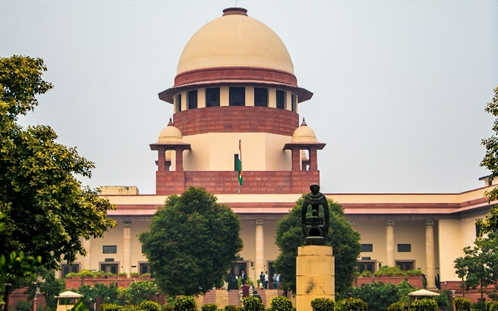
A Supreme Court (SC) judge, Justice Sanjay Kumar, recently issued significant observations emphasizing that the state must display “obvious transparency and fairness” when handling matters related to “religious oppression and secularism.” These remarks were made in a separate opinion while the SC Bench was reviewing a judgment, ultimately resulting in a split opinion.
Background of the Case
Review Petition Context
- The observations came in the context of rejecting a plea by the Maharashtra government to review a previous September 2025 judgment of the Supreme Court.
- The original judgment had directed the constitution of a Special Investigation Team (SIT) to investigate allegations made following the Akola riots of 2023.
The SIT Mandate
- The directed SIT was required to comprise an equal number of Muslim and Hindu police officers.
- The team was tasked with investigating allegations of murder and assault.
Case Details: The Akola Riots of 2023
The Incident and Complaint
- The case originated from a complaint made by a 17-year-old Muslim boy, Mohammad Afzal Mohammad Sharif, regarding the riots of May 2023.
- Afzal allegedly witnessed four men attacking a man in an autorickshaw.
- The men subsequently assaulted the boy, leaving him with head injuries.
- Afzal attempted to file a complaint about the murder and the assault on him at the police station.
Allegations of Police Inaction
- It was alleged that the police had “taken no notice” of Mohammad Afzal Mohammad Sharif’s complaint.
The Victim and Motive
- The murder victim was later identified as Vilas Mahadevrao Gaikwad, who was plying an autorickshaw owned by a Muslim.
- Afzal stated that Gaikwad was killed under the mistaken impression that he was a Muslim.
Judicial Observations on Secularism and State Neutrality
Justice Sanjay Kumar’s Opinion (The Mandate for Transparency)
- India’s Secularism: It was observed that India has developed its “own interpretation of secularism,” where the state “neither supports any religion nor penalises the profession and practice of any faith.”
- State Machinery Composition: Despite the secular ideal, the “inescapable fact” is that the state machinery ultimately comprises “members of different religions and communities.”
- Need for Manifest Fairness: Justice Kumar emphatically stated that “transparency and fairness in their actions must be manifest” in matters “even remotely touching upon secularism and religious oppression.”
- Actionable Direction: The state machinery must “tailor its actions accordingly” to uphold this secular ideal.
The Bench Decision on the Review Plea
- Justice Sanjay Kumar: Rendered a separate opinion rejecting the review plea filed by the Maharashtra government.
- Justice Satish Chandra Sharma: Agreed with the State government, concluding that the original September 2025 judgment required a re-look.
- Final Outcome: The conflicting opinions resulted in a split opinion on the review petition.
Conclusion
- This judicial development underscores the critical need for institutional neutrality and procedural transparency within the executive, particularly in maintaining law and order during communal conflicts.
- The directive to constitute an SIT based on balanced religious representation reflects a judicial attempt to ensure impartial investigation where state agencies are perceived to have failed.
- The necessity for the state machinery to make its fairness “manifest” serves as a vital benchmark for ensuring public trust and adherence to constitutional secular values in governance.
SECULARISM
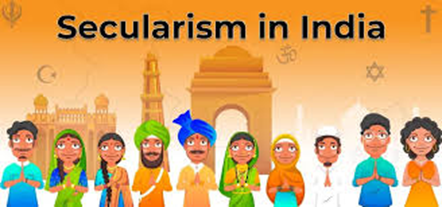
Secularism as a global concept refers to the principle of separating religious institutions from state affairs, ensuring that governance operates on rational and constitutional grounds rather than religious ideology. However, the manifestation and interpretation of secularism vary significantly across democracies.
- In India, secularism denotes equal respect and freedom for all religions, following a “principled distance” approach that maintains a balanced state-religion relationship while allowing state intervention to promote social reform and equality, unlike the Western model of strict separation.
- Enshrined in the Preamble through the 42nd Amendment (1976) and upheld as part of the basic structure by the Supreme Court, it reflects India’s commitment to religious pluralism, tolerance, and constitutional morality in a diverse society.
The Unique Character of Indian Secularism
Indian Secularism is fundamentally distinct from its Western counterpart, adopting a posture of positive engagement rather than strict separation.
A. Positive Secularism (Principled Distance)
India’s model involves the state maintaining a principled distance from all religions, allowing for both support and intervention when constitutional values are compromised.
- Equal Respect (Sarva Dharma Sambhava): The state treats all religions equally and provides equal protection and support to all faiths. It does not establish, patronize, or support any single religion.
- Example: The state can fund religious schools (e.g., Madrasas and Gurukuls) under Article 30, provided it does so uniformly.
- Ancient Pluralism: Rooted in the Vedic concept of “Ekam Sat Vipra Bahudha Vadanti” (Truth is one, sages call it by various names).
- Intervention for Reform: The state reserves the right to interfere in religious affairs to abolish social evils or ensure fundamental rights.
- Example: The state abolished untouchability (Art. 17) and enacted laws like the Hindu Code Bills and the Muslim Women (Protection of Rights on Marriage) Act, 2019 (banning Triple Talaq).
B. Contrast with Western Secularism (Negative Secularism)
| Feature | Indian Model (Positive) | Western Model (Negative/Separation) |
| State-Religion Relationship | Principled Distance (Can support or intervene). | Strict Separation (A “wall” between church and state). |
| Interference | State can and does interfere in religious matters for social reform and justice. | State cannot interfere with religious affairs, even for reform. |
| Aim | Focus on equal respect and tolerance among all religions. | Focus on non-recognition and non-support of religion by the state. |
| Examples | Financial aid to religious schools, lifting temple entry restrictions. | Prohibition of state funding to religious schools (USA), ban on religious symbols in public offices (France – Laïcité). |
Philosophical Origins and Ideas of Secularism
| Source / Tradition | Core Idea / Philosophy | Key Features / Principles | Illustrations / Examples |
| Western Enlightenment Influence | Based on reason, rationality, and separation of church and state. | Inspired by French Laïcité and American First Amendment; promotes rationalism and freedom of conscience. | Formed the philosophical base for modern constitutional secularism in India. |
| French Laïcité Model | Advocates strict separation of religion and state. | The 1905 Law on Separation of Churches and State ensures state neutrality, freedom of religious exercise, and no public funding for religion. | Religion is treated as a private matter, maintaining a secular public sphere. |
| American Model | Emphasizes a “wall of separation between church and state.” | The First Amendment’s Establishment Clause prohibits the state from favoring or establishing any religion. | Everson v. Board of Education (1947) upheld this separation principle. |
| Gandhian Philosophy — Sarva Dharma Sama Bhava | Advocates equal respect for all religions. | All faiths are equally valid paths to truth; stresses tolerance, moral reform, and harmony. | Guided Gandhi’s practice of inclusive spirituality and influenced India’s secular ethics. |
| Nehruvian Secularism | Envisions neutrality towards religion — neither promoting nor opposing it. | Stresses scientific temper, rationality, and modernization while ensuring religious freedom. | Nehru’s governance emphasized equidistance from all faiths. |
| Ancient Indian Traditions | Rooted in tolerance and pluralism. | Showcases India’s historical continuity of religious coexistence and moral governance. | Examples: Ashoka’s Dhamma (moral conduct, tolerance) |
| Medieval Bhakti–Sufi Movements | Promoted syncretism and inter-religious harmony. | Bhakti saints and Sufi mystics emphasized love, devotion, and unity of faiths over ritualism. | Kabir, Guru Nanak, and Nizamuddin Auliya symbolized interfaith understanding; Akbar’s Sulh-i-Kul (universal peace) institutionalized non-sectarianism. |
| Constituent Assembly Debates | Balanced religious freedom with social reform. | K.T. Shah’s proposal to add “secular” was rejected by Dr. Ambedkar, arguing secular ideals were implicit in Fundamental Rights and DPSPs. | Demonstrated a contextual and inclusive approach to secularism. |
| Unique Indian Formulation | Emphasizes “principled distance”, not absolute separation. | Allows state intervention in religion to reform social evils (e.g., untouchability, Sati) and ensure gender justice. | Represents Indian secularism as inclusive, reformative, and pluralistic. |
Constitutional Framework
The constitutional provisions form the legal basis for India’s secular character.
A. Core Fundamental Rights (Individual Protection)
- Article 25 (Freedom of Conscience): Guarantees the individual freedom to profess, practice, and propagate any religion.
- Limitation: Subject to public order, morality, health, and other Fundamental Rights.
- Article 26 (Freedom to Manage Religious Affairs): Guarantees the right of religious denominations to establish and maintain institutions, manage their own affairs, own property, and administer such property.
- Article 27 (Freedom from Taxation): Prohibits the collection of taxes for the promotion or maintenance of any particular religion.
- Article 28 (Freedom from Religious Instruction): Prohibits religious instruction in state-funded educational institutions.
B. Equality and Non-Discrimination
- Article 14: Ensures equality before the law, mandating that the state cannot differentiate based on religion.
- Article 15: Prohibits discrimination by the state against any citizen on grounds only of religion (among others).
- Article 16: Guarantees equality of opportunity for all citizens in matters of public employment, irrespective of their religion.
C. Directive Principle and Fundamental Duty
- Article 44 (Uniform Civil Code – UCC): Directs the state to secure a UCC for all citizens throughout the territory of India, aimed at deepening secular principles and equality in personal matters.
- Article 51A (e): Enjoins every citizen to promote harmony and the spirit of common brotherhood, transcending religious, linguistic, and regional or sectional diversities.
D. Seventh Schedule (Legislative Powers): Entry 5 of the Concurrent List includes subjects like marriage, divorce, adoption, and succession, allowing both Parliament and State Legislatures to legislate on personal laws, enabling gradual secular reforms.
Significance of Secularism in India
- Preservation of Unity and National Integration: In a multi-religious society with Hindu (79.8%), Muslim (14.2%), Christian (2.3%), Sikh (1.7%), and other communities, secularism prevents majoritarianism and ensures inclusive citizenship.
- Protection of Fundamental Rights: Secularism safeguards freedom of conscience, belief, worship, and propagation under Articles 25–28, enabling individuals to practice religion freely without state coercion.
- Prevention of Communalism and Religious Conflict: By maintaining state neutrality, secularism reduces potential for communal violence and religious polarization, fostering inter-community harmony.
- Promotion of Social Reform: The principle allows state intervention to abolish discriminatory practices like untouchability (Article 17), Sati, and triple talaq, advancing gender equality and social justice.
- Democratic Governance: Secularism ensures political power is not monopolized by any religious group, maintaining democratic accountability and preventing theocratic tendencies.
- Protection of Minority Rights: Articles 29–30 provide educational and cultural rights to minorities, allowing them to preserve identity while participating fully in national life.
- Foundation for Constitutional Morality: Secularism upholds constitutional values of equality, liberty, fraternity, and dignity, transcending narrow religious identities to create a composite national identity.
- Economic and Scientific Progress: By separating religion from governance, secularism promotes rational policymaking, scientific temper (Article 51A), and merit-based opportunities, fostering socio-economic development.
Supreme Court Judgments on Secularism
| Year | Case & Bench | Key Points / Judgment Highlights |
| 1973 | Kesavananda Bharati v. State of Kerala (13-judge bench) | Established Basic Structure Doctrine; Parliament cannot amend fundamental features including supremacy of Constitution, rule of law, separation of powers, federalism, and secularism; Chief Justice Sikri listed secular character of Constitution as a basic feature; prevented arbitrary amendments undermining constitutional identity. |
| 1985 | Mohd. Ahmed Khan v. Shah Bano Begum | Upheld Section 125 CrPC as secular provision; prioritized gender justice and constitutional morality over Muslim personal law; Chief Justice Chandrachud emphasized constitutional law prevails over personal law; led to political backlash and enactment of Muslim Women (Protection of Rights on Divorce) Act, 1986. |
| 1994 | S.R. Bommai v. Union of India (9-judge bench) | Examined Article 356; declared secularism, democracy, federalism as basic structure; Justice Ahmadi: secularism based on accommodation and tolerance; Justice Ramaswamy: state duty to ensure secularism; political parties using religion violate Constitution; made President’s Rule proclamations justiciable, strengthening federalism and secularism. |
| 2014 | Pravasi Bhalai Sangathan v. Union of India | Recognized the threat of hate speech to communal harmony; declined to create new laws citing separation of powers; referred to Law Commission for legislative reforms; emphasized balancing free speech (Article 19(1)(a)). |
| 2017 | Shayara Bano v. Union of India (5-judge bench) | Declared Triple Talaq (Talaq-e-Biddat) unconstitutional by 3:2 majority; violated Article 14 (equality); not essential religious practice under Article 25; led to Muslim Women (Protection of Rights on Marriage) Act, 2019. Parliament enacted Muslim Women (Protection of Rights on Marriage) Act, 2019, criminalizing instant triple talaq with up to 3 years imprisonment, promoting gender justice within secular framework. |
| 2018 | Indian Young Lawyers Association v. State of Kerala (Sabarimala Case, 5-judge bench) | Struck down ban on women aged 10–50 from entering Sabarimala Temple by 4:1 majority; violated Articles 14, 15, 25; Chief Justice Misra & Justice Chandrachud emphasized constitutional morality over religious tradition; Justice Indu Malhotra dissent: courts should avoid interference unless pernicious, oppressive, or social evils; highlighted tension between religious autonomy and gender equality. |
| 2024 | Balram Singh v. Union of India | Dismissed petitions challenging inclusion of “Socialist” and “Secular” in Preamble (42nd Amendment); secularism implicit from inception, 1976 amendment made it explicit; affirmed Parliament’s amending power under Article 368. |
Case Studies
- Gujarat Riots (2002): Post-Godhra violence targeted Muslims, raising concerns about state failure and communal politics; SIT investigations and Supreme Court clean chit to CM remained controversial.
- Goa Civil Code: Retains uniform family law (marriage, divorce, succession) for all religions, serving as a practical model for UCC in India.
- Mysuru Dasara Celebrations: State sponsorship of Hindu festival sparked debate over secular neutrality versus cultural heritage preservation.
Challenges to Secularism in India
- Communalism & Communal Violence
- Religious polarization and riots: Partition (1947), anti-Sikh riots (1984), Babri Masjid demolition (1992), Gujarat riots (2002), Muzaffarnagar (2013), Delhi (2020).
- Recent threats: mob lynching, cow vigilantism, hate crimes.
- Politicization of Religion & Vote-Bank Politics
- Exploitation of religious identities for electoral gains.
- Examples: Hindutva politics, mandir-masjid disputes, polarizing campaigns, religion-based candidate selection.
- Uniform Civil Code (UCC) Debate
- Resistance due to religious diversity and fear of cultural homogenization.
- Concerns: violation of Articles 25-26, marginalization of minorities, administrative complexities.
- Example: Uttarakhand UCC (2024) debates on LGBTQ+ exclusion, criminalization, live-in relationship registration.
- Discriminatory Laws with Religious Undertones
- Cow slaughter bans favoring Hindu sentiments over secular principles (Article 48, DPSP).
- Anti-conversion laws in UP, MP affecting minorities and interfaith marriages.
- Rise of Religious Fundamentalism & Extremism
- Threats to pluralism: Islamic radicalization, Hindu nationalist militancy, Sikh extremism (1980s Punjab crisis).
- Judicial Inconsistencies & Controversies
- ERP doctrine allows courts to determine essential religious practices, raising concerns of judicial overreach.
- Examples: Ismail Faruqui, Sabarimala verdict.
- Hate Speech & Social Media
- Inflammatory content fuels communal tensions.
- Existing laws (Sections 153A, 295A, 505 IPC) criticized for overbreadth and under-inclusiveness.
- Educational & Cultural Polarization
- Communalization of curricula, rewriting history, emphasis on Sanskrit/ancient knowledge systems.
- Examples: NEP 2020 debates, curricular polarization.
Way Forward: Strengthening Secularism
- Strengthening Institutional Frameworks
- Independent oversight bodies to monitor communal incidents.
- Implement recommendations of Sachar Committee, Ranganath Misra Commission, Law Commission (267th Report).
- Legislative Reforms for Hate Speech
- Enact comprehensive hate speech laws: Sections 153C, 505A IPC.
- Ensure procedural safeguards: prior sanction, judicial oversight.
- Promoting Interfaith Dialogue & Harmony
- Institutionalize interfaith platforms, involve religious leaders, civil society, youth.
- Promote Sarva Dharma Sambhava, Gandhian nonviolence, faith-based peacebuilding.
- Civic Education & Awareness
- Integrate secularism, pluralism, tolerance in school curricula.
- Train teachers in inclusive pedagogy, promote media literacy.
- Uniform Civil Code – Consultative Approach
- Broad-based consultation with communities, legal experts, civil society.
- Focus on gender justice, phased implementation (inheritance, adoption).
- Judicial Accountability & Clarity
- Clear jurisprudence on Essential Religious Practices, hate speech, and religious freedom.
- Standing Constitution Benches for sensitive cases, transparent appointments.
- Regulation of Social Media & Online Platforms
- Effective implementation of IT Rules 2021, hold platforms accountable.
- Fast-track removal of inflammatory content, promote digital literacy.
- Political Reforms
- Enforce Representation of People Act (Sections 123(3), 123(3A)), prohibit religious appeals in elections.
- Empower Election Commission, promote inner-party democracy and transparent funding.
Conclusion
Secularism is not an imported concept but a Constitutional Mandate and a Cultural Reality essential for India’s survival as a democratic, pluralistic entity. The Indian model of ‘principled distance’—where the state ensures equal respect for all faiths while reserving the right to intervene for social justice—is a unique and pragmatic approach to managing one of the world’s most diverse societies.
The primary task for the Indian state and its citizens is to continuously reaffirm and defend this constitutional value against the forces of communalism, ensuring that the promise of Justice, Liberty, and Equality is fulfilled for every citizen, irrespective of their faith. The successful negotiation of issues like the UCC will determine the future strength and depth of India’s secular commitment.
UPSC MAINS PYQs
- How do the Indian debates on secularism differ from the debates in the West? (2014)
- How is the Indian concept of secularism different from the western model of secularism? Discuss. (2018)
- What are the challenges to our cultural practices in the name of secularism? (2019)
- Customs and traditions suppress reason leading to obscurantism. Do you agree? (2020)
- Are tolerance, assimilation and pluralism the key elements in the making of an Indian form of secularism? Justify your answer. (2022)