
WHY IN THE NEWS?
Special Intensive Revision (SIR) of electoral rolls ordered by Election Commission of India (ECI) in 12 States and Union Territories (UTs) recently provoked strong protests from some State governments. Litigation challenging the exercise was initiated in the Supreme Court of India. Controversy revolves around the timing of the extensive revision and ECI’s power to prescribe citizenship verification documents.
BACKGROUND AND CONTEXT OF THE EXERCISE
I. Scope of the SIR Order
- Affected States and UTs: SIR ordered in Tamil Nadu, Kerala, West Bengal, Uttar Pradesh, Madhya Pradesh, Rajasthan, Chhattisgarh, Goa, Gujarat, Puducherry, Andaman and Nicobar Islands, and Lakshadweep.
- Timing Precedent: SIR was conducted in Bihar earlier, beginning in June; the Assembly election had just been held in the State.
- Opposition Challenge: Opposition opposed SIR in Bihar on various grounds, including haste, and challenged it in Court alleging ECI’s power to conduct such extensive revision after summary revision done in 2024 was unconstitutional.
- ECI Justification: ECI claimed SIR necessary due to demographic changes since last SIR in 2002-03, citing large-scale urbanisation, migration, and death.
II. Legal Framework of Electoral Roll Revision
Revision of the roll is dealt with under Section 21 of the Representation of the People (RP) Act, 1950, and Rule 25 of the Registration of Electors Rules 1960.
- Mandatory Revision: Revision of the roll is mandatory before general election to Lok Sabha or State Assemblies [Section 21(2)(a)].
- Discretionary Revision: Revision may be done in “any year” if ECI so directs [Section 21(2)(b)].
- Special Revision: Special revision may be directed in any constituency or part of it [Section 21(3)].
- ECI Accountability: Reasons have to be recorded by ECI for undertaking discretionary revisions.
- Types of Revision:
- Revision before election under Section 21(2)(a) is summary in character.
- Revision done under Section 21(2)(b) in ‘any year’ is an intensive revision, which is akin to preparation of a new roll.
INFIRMITIES AND CONTROVERSIAL ASPECTS OF THE SIR
I. Issue of Timing and Procedure
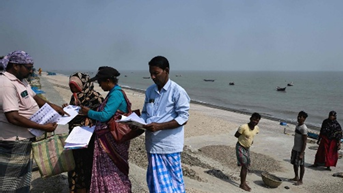
- Procedural Burden: Intensive revision involves massive exercise of enumeration, requiring enumerators to visit every household and collect data, deal with claims and objections, and decide appeals.
- Unanswered Question: Question as to why SIR should be done just a couple of months before elections has remained unanswered.
- ECI Inaction: ECI did not conduct an SIR anytime during 2003 and 2024, despite five general elections to Lok Sabha and many State elections during this period, which is described as unexplainable.
- Intriguing Choice: It is intriguing why ECI chosen to conduct an SIR just before Bihar elections and now a few months before Assembly elections in Kerala, Tamil Nadu and West Bengal.
- Legal Interpretation of Timing: Intensive revision is a comprehensive and time-consuming exercise, presumed to be delinked from elections.
- Only a summary revision can be reasonably assumed to be done before an election.
- SIR just a couple of months before elections is not envisaged under RP Act, 1950.
II. Issue of Citizenship Verification and Documentary Proof
- Constitutional Basis: Under Article 326 of Constitution, voter has to be a citizen of India. Citizenship is governed by Articles 5 to 11 of Constitution and the Citizenship Act of 1955.
- ECI’s Document Specification: Documents demanded by ECI from applicants did not include Aadhaar as ECI of opinion that Aadhaar is not a proof of citizenship.
- Judicial Direction on Aadhaar: Supreme Court, through interim order, directed ECI to accept Aadhaar also as a document to establish identity of the voter.
- Jurisdictional Overreach: Law relating to citizenship is administered by Ministry of Home Affairs and not ECI.
- ECI’s Assumed Power: ECI is not the authority which can specify documents to prove citizenship; it can be done only by the Ministry of Home Affairs of Government of India.
- Lack of Government List: Ministry of Home Affairs has so far not notified any comprehensive list of documents required by voters to prove their citizenship; Article 326 impliedly requires government to specify such documents.
- Arrogation of Power: In the absence of such a list, ECI arrogates to itself the power to specify the list of documents which voters should produce, which is legally not right.
- Unclear Impact: It is not clear how many voters whose names were in roll till 2024 were removed from voters’ list in Bihar after SIR on ground of non-citizenship because they could not produce any of the documents specified by the ECI.
JUDICIAL PRECEDENT AND CONSTITUTIONAL DIRECTIONS
I. Impact on Existing Voters
- Lal Babu Hussein Precedent: Supreme Court’s decision in Lal Babu Hussein And Others v. Electoral Registration Officer And Others (1995) is of crucial importance.
- Presumption of Validity: Court said: “In the second situation, since the name is already entered, it must be presumed that before entering his name the concerned officer must have gone through the procedural requirements under the statute”.
II. Constitutional Mandates
- Due Process: Article 14 forbids any arbitrary action by the state or its agencies.
- Liberty Protection: Article 21 forbids the deprivation of the liberty of any person except in accordance with a fair and just procedure.
- Need for Adherence: Legal and constitutional authorities need to adhere to these constitutional directions.
Way Forward
- Legislative Clarity: The Ministry of Home Affairs should issue a comprehensive, uniform list of documents valid for citizenship verification during voter registration.
- Timing Regulation: The Representation of the People Act should be amended to clearly demarcate permissible timelines for intensive revisions vis-à-vis election schedules.
- Institutional Coordination: Enhanced coordination between ECI and MHA must ensure that citizenship verification is conducted within constitutional limits.
- Transparency Mechanisms: Public disclosure of SIR methodology, criteria for deletion/addition, and redressal processes should be mandatory to strengthen voter trust.
- Safeguarding Voter Rights: Strict adherence to Articles 14 and 21 must be ensured to prevent arbitrary deletions and protect the integrity of electoral democracy.
Conclusion
- The Special Intensive Revision (SIR) represents a critical test of India’s electoral governance framework.
- While updating voter rolls is vital for electoral integrity, the timing, legal authority, and procedural transparency of SIR raise serious constitutional and administrative questions.
- Ensuring clarity in documentation, legal accountability, and protection of voter rights remains essential to uphold democratic fairness and public confidence in India’s electoral system.
UPSC MAINS PYQs
- On what grounds can a people’s representative be disqualified under the Representation of the People Act, 1951? Also, mention the remedies available to such a person against his disqualification. (2019)
- “There is a need for simplification of procedure for disqualification of persons found guilty of corrupt practices under the Representation of the People Act.” Comment. (2020)
- Discuss the procedures to decide the disputes arising out of the election of a Member of Parliament or State Legislature under the Representation of the People Act, 1951. What are the grounds on which the election of any returned candidate may be declared void? What remedy is available to the aggrieved party against the decision? Refer to the case laws. (2022)
- Discuss the role of the Election Commission of India in the light of the evolution of the Model Code of Conduct. (2022)
Summary Pointers – SIR, ECI, RP Act, Article 326 & Citizenship
| Theme | SIR (State of Electoral Reforms / Electoral System) | Election Commission of India (ECI) | Representation of the People Act (RPA), 1950 & 1951 | Article 326 (Universal Adult Suffrage) | Citizenship (Constitutional Provisions) |
| Constitutional Basis | Based on Preamble, Part XV (Articles 324–329) | Article 324 – 329 | Enacted under Articles 327–329 | Part XV, specifically Article 326 | Part II (Articles 5–11) |
| Nature | Framework for free, fair, inclusive elections | Constitutional Body, permanent and independent | Statutory Law (quasi-constitutional) | Democratic Right, not a Fundamental Right | Defines membership of the Indian State |
| Objective | Ensure transparency, equity, and participation | Conduct and supervise elections to Parliament, State Legislatures, President & Vice-President | Regulate electoral rolls, qualifications/disqualifications, and election offences | Ensure universal adult franchise on equality principle | Determine citizenship acquisition & termination |
| Key Provisions/ Mechanism | – EVMs, VVPAT, Model Code of Conduct– Political funding reforms– Decriminalisation of politics | – CEC + Election Commissioners appointed by President– Article 324: plenary powers- Party recognition & delimitation powers | – RPA 1950: Electoral rolls, delimitation- RPA 1951: Conduct, disqualification, election disputes | – Voting age 18 years (via 61st Amendment, 1989)- Based on residence, not property or education | – Citizenship by birth, descent, registration, naturalization– Citizenship Act, 1955 & CAA 2019 updates |
| Scope of Authority | Covers entire electoral process, reforms & tech | Central authority for both Centre & States | Legal foundation for elections | Applies to all citizens aged 18+ | Applies to individual identity & nationality |
| Accountability & Autonomy | Subject to Parliamentary & Judicial oversight | Independent, but requires financial autonomy | Enforced via Election Tribunals & Courts | Constitutional guarantee, amendable only via Constitutional Amendment | Subject to laws made by Parliament (Art. 11) |
| Major Issues / Challenges | – Opaque political funding– Criminalization– Paid news & social media influence– Simultaneous elections debate | – Allegations of bias– Appointment process lacks transparency- Budgetary dependence | – Weak enforcement of corrupt practice laws- Ambiguity in disqualification (Section 8)- Technology adaptation lag | – Voter exclusion, NRIs voting, migrant participation | – Illegal migration, statelessness, CAA–NRC controversy |
| Reform Measures / Committees | – Dinesh Goswami Committee (1990)– Indrajit Gupta Committee (1998)– Law Commission 170th & 255th Reports | – Second ARC, Law Commission 255th Report (2015)– SC in T.N. Seshan Case (1995) reaffirmed independence | – Election Laws (Amendment) Act, 2021 – voter ID–Aadhaar linkage- Regular amendments for inclusion | – 61st Amendment lowered age- Proxy voting proposal for NRIs | – Citizenship (Amendment) Act, 2019 (CAA)– OCI/PIO merger (2015)– Pending rules notification |
| Judicial Interpretation / Case Laws | – Union of India vs ADR (2002) – candidate disclosure- PUCL vs Union of India (2003) – right to know | – T.N. Seshan vs Union of India (1995) – CEC’s autonomy- A.C. Jose vs Sivan Pillai (1984) – ECI powers | – Lily Thomas vs Union of India (2013) – MP disqualification- Rajbala vs Haryana (2016) – qualifications | – Jyoti Basu vs Debi Ghosal (1982) – vote as statutory right | – Sarbananda Sonowal (2005) – illegal migration- State of U.P. vs Shah Mohammad (1969) – migration citizenship |
| Recent Developments / Relevance (UPSC) | – Electoral Bond Scheme verdict (SC 2024)– One Nation, One Election (2023 Committee) | – SC judgment (2023): CEC appointment panel – PM, LoP, CJI | – Aadhaar–EPIC linkage under 2021 amendment | – Voter outreach for migrants & service voters | – CAA 2019 rules notification (2024–25) |
| Way Forward / Reform Agenda | – State funding of elections– Transparent political finance– Digital literacy & audit | – Collegium-style appointments– Financial independence | – Harmonize with tech reforms– Streamline disqualifications | – Expand voter outreach– Ensure roll integrity | – Comprehensive refugee policy– Balance security & inclusivity |