
WHY IN THE NEWS?
Draft Shram Shakti Niti 2025 recently unveiled by government against grim backdrop of 11 million people enduring modern slavery in India, world’s highest. Policy claimed to be “future-ready” and cloaked in “ancient Indian ethos” from texts such as Manusmriti, but criticized for exposing gaps in India’s labour landscape and favouring employer ease over worker justice.
BACKGROUND: BRUTAL REALITIES OF LABOUR
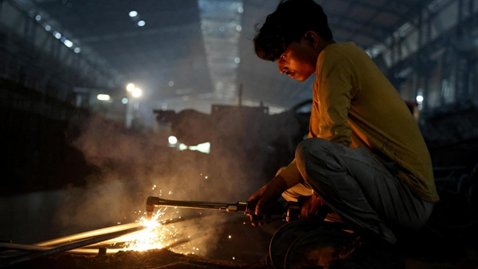
- Exploitation Instances: Hundreds of women observed peeling fish heads for meagre wages, working long hours without gloves, and losing promised Employees’ State Insurance (ESI) and Provident Fund benefits after being reclassified as “daily wagers”.
- Informalisation: Thousands of workers in various sectors (steel factories, sandstone quarries, seafood plants, and textile mills) hired through middlemen on daily wages, without contracts, and paid off the payroll through contractors, denied legal benefits.
- Workforce Statistic: Workers languish as part of the 90% informally employed workforce in India, as per a 2024 International Labour Organization (ILO) report.
CORE CRITICISM AND CONSTITUTIONAL CONFLICT
Policy flouts labour laws, enables wage theft, and erodes worker dignity. It is viewed as cynical rebrand favouring cultural nostalgia and employer ease over justice.
I. Constitutional and Statutory Violations
Policy criticized for defying fundamental constitutional protections and labour statutes:
- Articles Violated: Constitutional protections under Articles 14 (Equality), 16 (Equal opportunity), and 23 (Prohibition of forced labour) are defied.
- Policy Character: Policy flouts labour laws, enables wage theft, and erodes worker dignity.
II. Gaps in Universal Social Security Framework
Policy introduces a portable Universal Social Security Account, merging various schemes (EPFO, ESIC, PMJAY, e-SHRAM, State boards) for lifelong benefits, invoking Article 41 (right to work, education, and public assistance).
- Funding Gaps: Funding is dodged; no gig employer mandates or state matches risked, potentially leading to e-SHRAM’s paltry payouts.
- Digital Exclusion: Digital IDs, in situation of only 38% household literacy, result in exclusion of women, senior citizens and low-literates, violating Article 15.
- Bargaining Power: Absence of union safeguards affects workers’ bargaining capacity.
- Enforcement Need: Initial phase must enforce offline access and tripartite funds; otherwise, situation is case of exploitation.
III. Occupational Safety and Mental Health Concerns
Policy pledges strict enforcement of 2020 Occupational Safety, Health and Working Conditions Code, with risk audits and gender-sensitive standards, honouring Directive 42 (just and humane conditions of work and for maternity relief) and ILO Convention 155.
- Fatalities Goal: Goal of “near-zero fatalities” by 2047 appears fanciful without penalties and given reality of inspector shortages.
- Digital Bias: Digital tools exclude informal workers, undermining equality (violation of Article 14).
- Mental Health: Ignoring gig mental health noted.
- Union Role: Union audits are weakened, affecting Article 19 (freedom of association/union).
IV. Concerns in Employment Facilitation and Gig Economy
Policy hints Ministry of Labour and Employment (MoLE) will become an employment facilitator using AI-driven National Career Service (NCS) for job matching, credential checks, and skill alignment, merging Skill India to tackle 91.75% graduate mismatches.
- AI Bias Risk: Absent AI bias safeguards risk caste- and gender-based Article 15 violations.
- Gig Worker Wages: Wages Code minima ignored for 12 million gig workers, where “flexibility” is cover for abuse.
- Tech-Driven Inequality: Unclear transition benefits demand ethics audits and union-vetted algorithms to curb tech-driven inequality.
V. Female Labour Participation and Green Transition Gaps
- Female Labour Participation (FLP): Policy targets 35% female labour participation by 2030 (from 33.7%) through affordable childcare, flexible gigs, equal pay, and apprenticeships, aligning with Article 15’s gender equity and ILO Convention 195’s mobility goals.
- Implementation Deficit: Success unlikely without quotas, penalties or sufficient maternity support for informal workers.
- Data Gaps: Overlooking youth mental health and caste-gender data gaps hides unique challenges that Dalit women face.
- Green-Tech Vision: Policy promotes AI-enhanced safety measures and reskilling opportunities for coal workers, aligning with SDG 13 (climate goals) and livelihood rights of Article 21.
- Just Transition: “Just transitions” lack substance without income support or union involvement, risking violations of ILO Convention 29.
- Marginalisation: Widening rural-AI gaps and urban-centric green jobs marginalize 400 million informal workers.
- Avert Exploitation: Tripartite funding and Organisation for Economic Co-operation and Development (OECD) safeguards essential to avert exploitative eco-trap that undermines dignity.
VI. Governance and Accountability
Policy hints at convergence through Labour and Employment Policy Evaluation Index (LEPEI) dashboards, aiming to realise Article 12’s vision of just governance by linking National Education Policy with Digital India.
- Surveillance Risk: Weak enforcement of the Digital Personal Data Protection Act risks enabling surveillance and undermining Article 19’s freedoms.
- Symbolic Rhetoric: Policy projects a “rights-driven, future-ready” vision for Viksit Bharat, but ambitious rhetoric undermined by weak regulatory oversight, digital exclusion, unenforced penalties, and fragile adherence to ILO conventions.
- Union Decline: All gaps accelerate decline of unions in an expanding gig economy.
ILO Conventions and International Standards Referenced in Policy
- ILO Convention 29: Forced labour prevention—gaps in green transition mechanisms.
- ILO Convention 155: Occupational safety, health, and women’s care-role risks—enforcement deficiencies.
- ILO Convention 195: Employment and training standards—digital bias risks.
- ILO 2024 Report: Documentation of 90% informal workforce—policy inadequacy for informal workers.
- Sustainable Development Goal 13: Climate action—just transition lacks substance.
- OECD Standards: Comparative safeguards absent from green transition planning.
Way Forward
- Mandatory Actions for Rollout (2025-47): The ambitious rollout necessitates several urgent, non-negotiable interventions:
- Initiation of urgent pilots across key sectors.
- Mandatory rights audits to ensure accountability.
- Implementation of tripartite enforcement mechanisms (involving government, employers, and unions).
- Provision of offline access to schemes for digitally excluded workers.
- Establishment of transparent grievance redressal systems.
- AI bias safeguards and ethics audits to be instituted before deployment of AI-driven NCS and job-matching systems.
- Enforceable penalties and strengthened inspectorate to be established to achieve occupational safety targets.
CONCLUSION
- The Shram Shakti Niti 2025 aspires to create a “rights-driven, future-ready” labour framework for Viksit Bharat, yet its lofty goals remain undermined by digital exclusion, weak enforcement, and inadequate funding.
- In the absence of institutional safeguards and inclusive implementation, issues such as weak regulatory oversight, digital exclusion, unenforced penalties, and fragile adherence to ILO conventions may accelerate the decline of unions and reduce the policy to mere rhetoric rather than substantive justice.
- Ultimately, the success of the policy will depend on its capacity to restore dignity, justice, and social protection to India’s working poor.
MIGRANT LABOUR IN INDIA
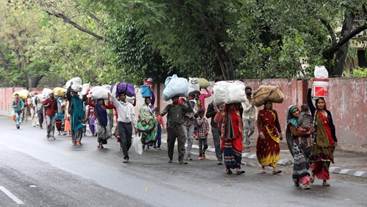
Migrant Labour refers to individuals moving across state or district boundaries for employment, often engaging in circular migration—temporary, repetitive movement between rural homes and urban workplaces.
This group forms the economic bedrock of sectors like construction and manufacturing, yet their non-recognition as a distinct political or social constituency renders them highly vulnerable to exploitation and exclusion from welfare schemes. The issue is fundamentally one of portable rights and social security.
SCALE, PATTERNS, AND DATA
- Scale: The Census 2011 estimated the total number of internal migrants at 450 million (37% of the population). The number of Inter-State Migrant Workers is over 41.4 million.
- Economic Contribution: Estimates suggest that internal migrants contribute approximately 10% of India’s GDP.
- Latest Trends (PLFS 2020-21): The overall migration rate in India is approximately 28.9%, and about 10.8% of migrants moved for employment-related reasons.
- Migration Streams: Rural-to-Rural: Formed 54% of classifiable internal migration (21 crore migrants), mostly women moving after marriage. Intra-state movement accounts for almost 88% of all internal migration.
- Corridors: Major source states include Bihar, Uttar Pradesh, Odisha, and West Bengal. Major destination states include Maharashtra, Gujarat, Tamil Nadu, and Delhi.
- Demographic Effect: Out-migration of men leads to the ‘Feminization of Agriculture’ in source regions, increasing the burden on women left behind.
DRIVERS OF MIGRATION
Migration is a complex phenomenon driven by a combination of factors that compel individuals to leave their place of origin (Push Factors) and factors that attract them to a destination (Pull Factors).
| Category | Factor Type | Mechanism |
| I. Economic & Developmental | Push (Distress) | Agrarian Distress: Declining farm incomes, low productivity, and fragmentation of land holdings lead to high levels of disguised unemployment in rural areas. Indebtedness forces distress migration. Limited Local Employment: Shortage of sustainable, non-farm livelihood options in rural and Tier-III regions. |
| Pull (Opportunity) | Wage Differential: Significant gap between rural and urban wages, making urban centres financially lucrative. Market Demand: Abundant, dynamic job opportunities in specialized sectors like construction, manufacturing, and urban services. | |
| II. Social & Demographic | Social (Pull) | Social Empowerment: Cities offer anonymity and can mitigate constraints imposed by rigid caste-based discrimination and social hierarchies, facilitating greater social mobility. |
| Social (Demographic) | Family/Marriage: Marriage is the single largest cause of migration, predominantly driving women’s movement. | |
| Social (Pull) | Education and Health: Access to quality higher education and specialized healthcare facilities (majority of hospitals are urban-centric). | |
| III.Environmental & Ecological | Push (Climate/Resource) | Climate-Induced Displacement: Extreme weather events (e.g., cyclones, floods), desertification, and water scarcity (chronic droughts) destroy assets and livelihoods. Example: Migration from coastal areas due to sea-level rise and saline ingress affecting cultivation. Resource Depletion: Over-extraction or depletion of natural resources (like forests or groundwater) that sustain local economies. |
| IV. Political & Institutional | Push (Lack of Services) | Lack of Governance/Security: Areas experiencing political instability or conflict (e.g., regions affected by left-wing extremism). Infrastructure Gaps: Poorly developed rural infrastructure (roads, reliable electricity, digital connectivity) hinders local enterprise growth. |
| Policy (Pull/Push) | Policy Induced Migration: (Pull) Government policies favoring the concentration of Special Economic Zones (SEZs) and industrial parks in certain urban corridors. (Push) Lack of affordable, permanent housing (Urban Slums/Housing) in destination cities reinforces circular migration patterns rather than permanent settlement. | |
| Institutional (Facilitator) | Inter-State Linkages: Development of national highways and railway networks acts as a facilitator, lowering the cost of movement and efficiently connecting labor supply centers to demand centers. |
Significance of Migrant Labour
| Category | Role | Impact |
| I. Economic Significance | Economic Engine & GDP Contribution | Migrants provide the essential flexible labour supply for key sectors like construction, garment manufacturing, and unorganized services, powering rapid urbanization and infrastructure growth. |
| Remittances & Poverty Alleviation | Internal remittances sent back to source regions sustain rural households, boost consumption, and are invested in education, healthcare, and asset creation. This acts as a major poverty alleviation mechanism in states like Bihar and Odisha. Foreign Remittances: India is the world’s largest recipient of remittances (primarily from Gulf countries, US, UK, Canada). These funds are a major source of Foreign Exchange (forex), helping finance the Current Account Deficit (CAD) and boosting national income. | |
| Inflation Control | The availability of a large and flexible labour pool helps keep labour costs low in urban industrial centres, which in turn aids in controlling the prices of goods and services. | |
| Filling Labour Gaps | Migration ensures that specialized and demanding industries and regions (e.g., highly industrialized states like Gujarat and Maharashtra) have a consistent workforce, efficiently resolving labour shortages in destination areas. | |
| II. Social and Demographic Significance | Demographic Dividend Utilization | Migration facilitates the effective deployment of India’s large, young workforce by relocating labour from low-productivity rural areas to high-productivity urban jobs, thereby leveraging the demographic dividend. |
| Agents of Social Change | Migrants returning home act as Social Remittances carriers, introducing new ideas, technologies, practices (e.g., family planning, modern education models), and democratic values from urban centers into rural communities. | |
| Cultural Exchange | Migration leads to the intermingling of diverse populations, contributing to the development of a composite national culture and promoting social integration in host cities. | |
| SDG Achievement | Migration is essential for achieving Sustainable Development Goal 8 (Decent Work and Economic Growth) by providing livelihood opportunities and SDG 1 (No Poverty). |
Challenges faced by Migrant Labour
The informality of migrant work is the root cause of exploitation and vulnerability.
I. Exclusion and Entitlement Gaps
- Official Invisibility: Lack of robust, real-time data and documentation (e.g., local address proof, voter ID) leads to exclusion from state-level schemes.
- Non-Portability: Historically, state-specific welfare benefits (PDS, housing, ration cards) were domicile-centric, leading to the denial of entitlements in the host state.
- Political Marginalization: Due to being unable to vote in destination states, migrants are not a politically viable constituency, leading to policy neglect.
II. Exploitation in the Workplace
- Wage Theft: Vulnerability to payment of wages below the statutory minimum wage and illegal deductions by contractors (Jamadars/Sardars).
- Hazardous Conditions: Employment in high-risk, informal settings (brick kilns, construction) with rampant violations of Occupational Safety, Health, and Working Conditions (OSH) norms.
- Debt Bondage: Workers, especially seasonal ones, are often advanced loans (often to travel) that are then recovered through forced labour or unfair deductions, leading to a cycle of debt bondage.
III. Social and Living Conditions
- Substandard Housing: Concentration in temporary shelters and overcrowded slums, lacking basic amenities like sanitation, water, and electricity.
- Social Hostility: Facing xenophobia and the “sons of the soil” doctrine in host states, leading to discrimination and difficulty in social integration.
- Gender-Specific Issues: Female migrants face higher risks of sexual harassment, wider wage gaps, and significant difficulty accessing childcare and maternity benefits.
Impact of COVID-19 on Migrant Labour
- The pandemic triggered a massive reverse migration of around 43 million interstate migrant workers returning to their home regions during lockdowns.
- Many faced loss of employment, wage cuts, increased poverty, and food insecurity due to lockdown measures.
- Post-pandemic, migrant workers experienced altered work environments, with slow recovery in wages and job opportunities.
- Lockdown highlighted the lack of social security and institutional support, compelling urgent policy revisions.
Supreme Court Judgments
The Judiciary has been instrumental in upholding migrant labour rights under Article 21 (Right to Life and Dignity).
- People’s Union for Democratic Rights (PUDR) vs. UoI (1982): Stressed the importance of judicial scrutiny of labour violations and affirmed the right to minimum wages and fair treatment for workers.
- Problems and Miseries of Migrant Labourers, In Re (2020) Suo Motu Petition: Directed the Centre and States to provide free food, transportation (Shramik Trains), and non-insistence on ID proofs for accessing relief during the lockdown, reinforcing Article 21 and the Right to Food.
- Suo Motu Writ Petition (June 29, 2021): Mandated the completion of the ‘One Nation, One Ration Card’ (ONORC) scheme implementation and directed the completion of the e-SHRAM portal (NDUW) registration.
Government Initiatives and Legal Framework
I. Legal and Codified Framework
- New Labour Codes: The Inter-State Migrant Workmen (Regulation of Employment and Conditions of Service) Act, 1979, which suffered from poor implementation, has been subsumed under the Occupational Safety, Health and Working Conditions (OSH) Code, 2020.
- The OSH Code broadens the definition of ‘inter-state migrant worker’ and includes provisions for transportation allowance, skill development, a national database, a toll-free helpline, and annual medical checks.
- The Code on Social Security, 2020, aims to provide a social security net for all unorganised workers, including migrants, gig, and platform workers.
- Draft National Policy on Migrant Workers (NITI Aayog, 2021): Proposes a rights-based approach over a ‘handout’ approach.
- Recommends the Ministry of Labour and Employment as the nodal agency and suggests establishing Migration Resource Centres in high-migration zones.
II. Flagship Welfare and Technology Schemes
- One Nation, One Ration Card (ONORC): Ensures PDS portability across the country, allowing NFSA beneficiaries, including migrants, to draw subsidized food grains from any Fair Price Shop.
- e-SHRAM Portal (National Database of Unorganised Workers – NDUW): Launched in 2021, this portal is the first centralized national database of $\approx 30$ crore unorganised workers, including migrants.
- It aims to provide a Universal Account Number (UAN) for social security, integrated with various schemes through the ‘One-Stop Solution’ initiative.
- Affordable Rental Housing Complexes (ARHC): A sub-scheme under Pradhan Mantri Awas Yojana (Urban) to provide affordable rental housing to migrants and urban poor near their workplaces.
- PM SVANidhi Scheme: Provides collateral-free working capital loans up to ₹10,000 to street vendors, including many urban migrants, to resume livelihoods.
- PM Garib Kalyan Rojgar Abhiyan (GKRA): Launched post-2020 to provide immediate employment to returning migrant workers in their native districts (116 districts in 6 states) through infrastructure projects.
- Ayushman Bharat-PMJAY: Provides health coverage of ₹5 lakhs per family per year for secondary and tertiary care. Crucially, its portability feature allows migrants to avail treatment at any empanelled hospital across India.
WAY FORWARD AND POLICY IMPERATIVES
A holistic approach requires sustained commitment from both source and destination states, focusing on portability and inclusion.
I. Universalizing Portable Rights
- Benefit Portability: Ensure not just PDS, but also health (AB-PMJAY), education (portable school records, mid-day meals), and voting rights (remote voting) are made fully portable via digital means and accepting self-declaration.
- Social Security Floor: Accelerate the rollout of the Code on Social Security, 2020, and ensure every registered worker on e-SHRAM receives a guaranteed minimum mandatory entitlement (health insurance, life insurance, and pension).
II. Addressing Structural Issues
- Stemming Distress Migration: Invest in local livelihood enhancement in source regions through higher MGNREGA wages, skill development, and promotion of non-farm enterprises to address the push factors.
- Affordable Housing: Rapidly scale up the ARHC scheme and mandate that large industrial employers provide quality, subsidized temporary housing with integrated Anganwadi/creche services for female workers.
III. Social and Institutional Integration
- Tripartite Oversight: Strengthen the role of Trade Unions, Employers’ Associations, and Government Labour Departments in monitoring contracts, ensuring minimum wage adherence, and operating grievance redressal mechanisms.
- Language and Education: Provide multi-lingual and open schooling systems for migrant children, ensuring they do not drop out due to frequent location changes or language barriers.
- Global Best Practices: Draw from models like the Kerala government’s “Guest Worker” initiatives (language training, health camps) and international best practices on fair recruitment and social security totalization.
CONCLUSION
- India’s migrant workforce is a testament to the resilience of its people. The systemic challenge lies in converting their economic utility into social and political rights.
- Effective implementation of the new Labour Codes and the ONORC-e-SHRAM ecosystem, coupled with political will to guarantee portable entitlements, is the true policy imperative for achieving genuine social justice and leveraging the demographic dividend in the pursuit of Viksit Bharat.
UPSC MAINS PYQs
Discuss the changes in the trends of labour migration within and outside India in the last four decades. (2015)