
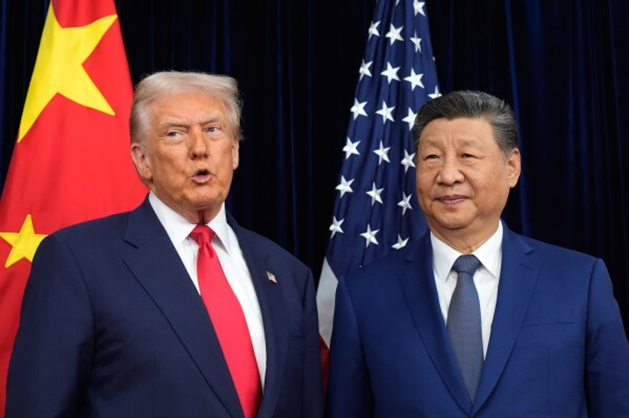
Why in the News?
- The U.S. President announced the decision to resume nuclear testing, ending decades of voluntary restraint. This move raises concerns of a renewed nuclear arms race, potential collapse of arms-control agreements, and instability in global nuclear governance.
- Other major nuclear powers, particularly Russia and China, have reacted strongly and denied clandestine tests. The development takes place at a time when global nuclear risks are already considered “alarmingly high” by the UN Secretary General.
Background / Context
- After the Cuban Missile Crisis, nuclear powers spent decades building arms-control structures to prevent catastrophe.
- The Comprehensive Nuclear-Test-Ban Treaty (CTBT) was negotiated in 1996 to ban all explosive nuclear tests but never entered into force due to pending ratifications.
- The global nuclear order evolved around:
- NPT: Aims to prevent proliferation, promote disarmament, and permit peaceful nuclear uses.
- CTBT: Establishes a norm (though not legally in force) against explosive testing.
- Bilateral treaties: Especially U.S.–Russia agreements like INF Treaty (now dead) and New START (nearing expiry).
- A long-standing taboo against nuclear testing has been central to nuclear restraint and global stability.
- Emerging technologies such as hypersonic glide vehicles, advanced missile defence, low-yield warheads, and autonomous systems blur the line between conventional and nuclear roles.
Potential Consequences
1. Breakdown of Arms-Control Architecture
- Resuming tests undermines decades of diplomatic effort.
- Could erode global trust in arms-reduction agreements.
- Risk of collapse of New START after 2026.
2. Renewed Nuclear Arms Race
- Other nuclear powers may feel compelled to:
- Validate new warhead designs.
- Expand their arsenals.
- Conduct tests to maintain technological edge.
- Russia and China may accelerate aggressive modernisation.
3. Destabilisation of Deterrence Stability
- Testing enables:
- Low-yield, more “usable” nuclear weapons.
- Advanced, hard-to-intercept delivery systems.
- Tactical options that reduce decision time during crises.
- Could increase risk of miscalculation.
4. Regional Security Fallout
- South Asia:
- India follows a voluntary moratorium (since 1998).
- Pakistan may feel pressure to keep pace if India adjusts its doctrine.
- East Asia:
- North Korea may use the opportunity to justify further tests.
- Middle East:
- Israel may push for increased opacity-based deterrence.
5. Erosion of the Nuclear Testing Taboo
- Since no nuclear explosions have occurred since 1998, a norm has developed.
- Breaking the taboo weakens moral restraint and opens the door for others.
Challenges
1. Absence of Legal Enforcement
- CTBT not in force → states cannot be legally compelled to stop testing.
- Monitoring network exists, but political leverage is weakening.
2. Competing Strategic Priorities Among Major Powers
- U.S., Russia, China mistrust each other’s intentions.
- Asymmetry in capabilities makes negotiations difficult.
3. Technological Complexity
- New delivery systems reduce detection time.
- Distinction between conventional and nuclear roles is blurring.
4. Declining Role of Multilateral Institutions
- UN Security Council divided due to geopolitical rivalries.
- Global institutions lack enforcement power.
5. Regional Proliferation Pressures
- Countries like India, Pakistan, North Korea could react to global shifts.
- Middle powers may reconsider nuclear options.
Way Forward
1. Renew Arms-Control Negotiations
- Resume U.S.–Russia dialogue to extend or replace New START.
- Expand talks to include China, similar to how:
- The P5 process creates space for dialogue among nuclear states.
2. Strengthen the CTBT Framework
- Encourage remaining Annex-II states to ratify.
- Example: Japan and Australia actively lobby for CTBT entry into force.
3. Promote Technological Transparency
- Create shared nuclear-risk reduction centers, as seen in Cold War “Hotline” arrangements.
4. Revive Confidence-Building Measures
- Data exchanges, inspection regimes, and crisis-management rules.
- Example: The Vienna Document in Europe (though not perfect) shows transparency reduces risk.
5. Reinforce the Nuclear Taboo
- Collective diplomatic messaging that any explosive testing is unacceptable.
- Civil society groups and scientific communities can strengthen the narrative, as happened during the 1980s anti-nuclear movement.
6. Encourage Regional Risk-Reduction Mechanisms
- South Asia:
- Existing agreements on non-attack of nuclear facilities can be expanded.
- Dialogue mechanisms similar to the 2005 Nuclear Risk Reduction Centres could be revived.
Conclusion
The move to resume nuclear testing marks a significant shift in the global nuclear landscape. It threatens to weaken the fragile structure of arms-control agreements, revive competitive weaponisation, and erode decades-old norms that helped keep nuclear risks in check. As geopolitical rivalry intensifies, rebuilding trust, strengthening international regimes, and reinforcing restraint will be essential to prevent miscalculation and maintain global strategic stability. The challenge today is to craft a nuclear order suited for the realities of the 21st century while preserving the hard-won taboo against nuclear explosive use.
UPSC CSE PYQ
| Year | Question |
| 2017 | Give an account of the growth and development of nuclear science and technology in India. What is the advantage of the fast-breeder reactor programme in India? |
| 2021 | Discuss the major reservations of India with respect to the Nuclear Proliferation Treaty (NPT). |