
Why in the News?
The issue has gained urgency due to both operational challenges and long-term policy contradictions:
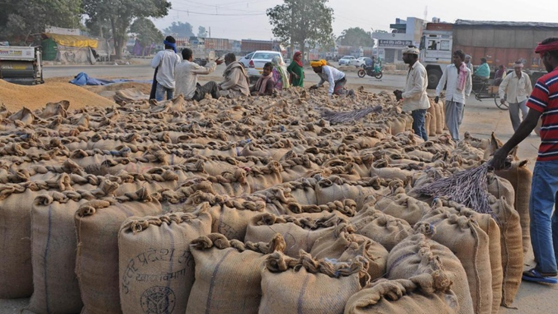
- Excessive Procurement and Stock Gluts: Central pool stocks for rice consistently and significantly exceed mandated buffer norms. For instance, rice stocks stood at 356.1 lakh tonnes in October 2025, over three times the required norm of 102.5 lakh tonnes. This reflects the continuation of a policy designed for food shortages in an era of massive surplus production.
- The Import Paradox: Despite the overflowing cereal granaries, India relies heavily on imports for other essential food items, spending a huge amount—approximately ₹1.2 lakh crore on edible oils and ₹30,000 crore on pulses in 2023-24. Nearly 55% of the country’s edible oil needs are met through imports.
- Controversies in Procurement: Administrative gaps, delays, and corruption allegations during paddy procurement (as seen in Tamil Nadu) expose the systemic weaknesses and inefficiencies in the public distribution and procurement mechanism.
Background and Context: Structural Imbalances
The current “cereal mess” is a direct legacy of the Green Revolution and subsequent policy decisions designed to ensure national food self-sufficiency in the 1960s.
1. Policy Skew towards Cereals
- Minimum Support Price (MSP): The effective operation of the MSP mechanism is heavily skewed towards rice and wheat, particularly in the historically successful Green Revolution states like Punjab, Haryana, and Andhra Pradesh. This acts as a strong price signal incentivizing farmers to focus on these two water-guzzling crops, irrespective of demand or environmental costs.
- PDS Dependence: The vast architecture of the Public Distribution System (PDS) and the National Food Security Act (NFSA) relies almost exclusively on rice and wheat, cementing the procurement focus on these two cereals.
2. Environmental and Economic Costs
- Water Scarcity: Excessive cultivation of paddy, especially in non-traditional areas like Punjab, has severely depleted groundwater tables, raising long-term environmental sustainability concerns.
- Soil Health: The monoculture of rice and wheat undermines soil health and nutrient balance, increasing reliance on chemical fertilizers and pesticides.
- Financial Burden: The accumulation of massive surplus stocks leads to high carrying costs (storage, handling, interest) and damages the financial health of the Food Corporation of India (FCI), contributing significantly to the annual food subsidy bill (around ₹2 lakh crore).
Key Analysis: The Imperative of Crop Diversification
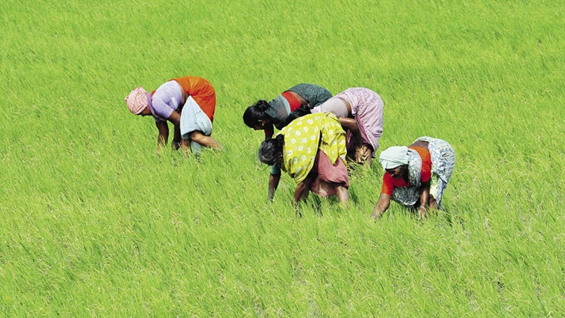
Agricultural diversification is the shift of resources from the regional dominance of a few crops to a larger mix of crops, livestock, or allied activities. This shift is essential for achieving true food and nutritional security, economic stability, and environmental sustainability.
1. Food and Nutritional Security
- Addressing the Nutritional Gap: India faces a triple burden of malnutrition (underweight, overweight, and micronutrient deficiency). An exclusive cereal diet fails to provide essential proteins and micronutrients.
- Balanced Diet: Diversifying to include pulses, oilseeds, fruits, and vegetables can provide a broader range of nutrients, directly addressing the prevalent protein and micronutrient deficiencies.
2. Economic Resilience and Farmer Income
- Risk Mitigation: Diversification spreads the risk across multiple commodities. If one crop fails due to climate shock or market fluctuations, income from others can stabilize the farmer’s livelihood.
- Higher Income: Shifting towards high-value crops (like horticulture, flowers, and medicinal plants) and allied sectors (livestock, fisheries) can significantly enhance farm income and promote rural prosperity.
- Example: High-value horticulture and livestock sectors are more labor-intensive than traditional cereal farming, aiding employment generation.
3. Environmental Sustainability
- Water Use Efficiency: Diversification away from paddy to crops like maize, pulses, and cotton, which require less water, is critical for addressing the groundwater crisis.
- Improved Soil Health: Crop rotation with legumes (pulses) naturally enhances soil fertility by fixing atmospheric nitrogen, reducing the need for chemical fertilizers and avoiding monoculture dominance.
Challenges to Diversification
- Price and Income Assurance: The biggest hurdle is the lack of assured returns for alternative crops. The MSP regime effectively guarantees the procurement of rice and wheat, creating a safety net that farmers are unwilling to leave for uncertain market prices of pulses or oilseeds.
- Market Infrastructure: Adequate market infrastructure (warehousing, cold storage, grading facilities) for perishable high-value crops (fruits, vegetables) is weak or non-existent in many regions.
- Credit and Input Risk: Diversifying often requires new skills, different seeds, and different machinery. Farmers face credit constraints and are generally risk-averse to new, unproven crops.
- Policy Fragmentation: While schemes like the National Food Security Mission (NFSM) promote pulses and oilseeds, they lack the strong, binding procurement support provided to cereals.
Way Forward: Policy Reforms for a Balanced Basket
- Reforming the MSP and Procurement System:
- Action: Implement the recommendations of committees like the Shanta Kumar Committee to hand over procurement operations of rice and wheat to states where infrastructure is developed (e.g., Punjab, Haryana).
- Example: Shift FCI’s focus to proactively procure in the eastern belt (Bihar, West Bengal, Assam) and smaller farm-dominated regions to ensure pan-India MSP coverage, particularly for pulses and oilseeds.
- Incentivizing Diversification:
- Action: Provide direct financial incentives to farmers who shift from high-water-consuming crops to less-intensive ones.
- Example: Offer a cash incentive per hectare for substituting paddy with maize or cotton, coupled with the assured procurement of the alternative crop at MSP to compensate for potential initial income loss (as explored in Punjab and Haryana).
- Modernizing Storage and Logistics:
- Action: Rapidly scale up the Negotiable Warehouse Receipt (NWR) System.
- Example: Encourage the creation of modern, science-based warehouses. NWRs allow farmers to deposit produce, get 80% advance from banks at MSP, and sell later when prices are favorable, reducing government storage costs and empowering farmers.
- Promoting Agro-Ecological Farming:
- Action: Link diversification support with sustainable practices and market access for high-value crops.
- Example: Increase support for horticulture, agro-forestry, and integrated farming systems through schemes like the Crop Diversification Programme (CDP), focusing on reducing input dependency and improving soil health.
Conclusion
India’s food policy faces a critical inflection point. The current cereal-centric system has secured basic food sufficiency but at the cost of environmental strain, nutritional gaps, and massive fiscal subsidies. Resolving this “cereal mess” requires bold political commitment to re-calibrate the MSP regime, invest in robust non-cereal market infrastructure, and provide credible income security for diversified farming. A sustainable and nutritionally secure India must move from merely filling the granaries to balancing the agricultural basket.
Source: Time to sort out India’s cereal mess – The Hindu
UPSC CSE PYQ
| Year | Question |
| 2023 | Explain the changes in cropping pattern in India in the context of changes in consumption pattern and marketing conditions. |
| 2022 | What are the major challenges of Public Distribution System (PDS) in India? How can it be made effective and transparent? |
| 2021 | What are the present challenges before crop diversification? How do emerging technologies provide an opportunity for crop diversification? |
| 2021 | How and to what extent would micro-irrigation help in solving India’s water crisis? |
| 2020 | What are the major factors responsible for making rice-wheat system a success? In spite of this success, how has this system become bane in India? |
| 2019 | How has the emphasis on certain crops brought about changes in cropping patterns in recent past? Elaborate the emphasis on millets production and consumption. |
| 2018 | What do you mean by Minimum Support Price (MSP)? How will MSP rescue the farmers from the low-income trap? |
| 2017 | How do subsidies affect the cropping pattern, crop diversity and economy of farmers? What is the significance of crop insurance, minimum support price and food processing for small and marginal farmers? |
| 2015 | In what way could replacement of price subsidy with Direct Benefit Transfer (DBT) change the scenario of subsidies in India? Discuss. |