
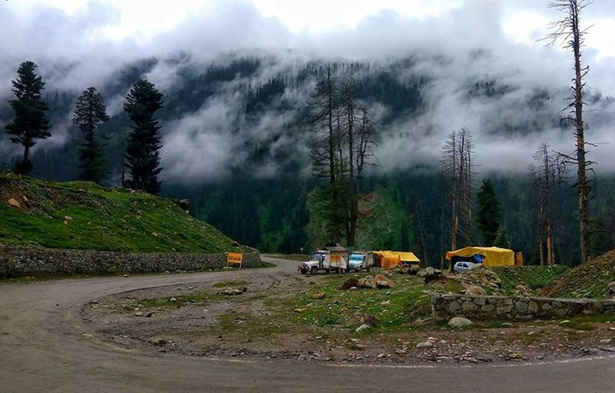
Why in the News?
The NH-701A project, which involves the upgradation of the existing Mughal Road alignment, has gained prominence due to the recent approval of major tunnel and road projects in the region.
- Strategic Approval: The Ministry of Road Transport and Highways (MoRTH) approved the development of NH-701A as a key alternative route to the frequently disrupted Srinagar-Jammu National Highway.
- Key Infrastructure: The project includes the crucial Peer-Ki-Gali tunnel (or Chata Paani tunnel), a major intervention designed to convert the seasonal Mughal Road into an all-weather corridor.
- Ecological Risk Concern: The general context of the news points to the fact that while highway projects are vital for infrastructure, they inherently carry ecological risks in mountain areas, mirroring concerns raised over similar projects like the Char Dham Highway.
Key Analysis: Strategic Imperatives vs. Ecological Costs
The NH-701A project represents the classic development vs. environment debate in the strategically sensitive and ecologically fragile Himalayan region.
1. Strategic and Socio-Economic Imperatives
The development of NH-701A is critical for national security and balanced regional development:
- All-Weather Connectivity: The existing Srinagar-Jammu NH-44 is prone to frequent closures due to landslides and heavy snowfall. NH-701A, with its planned tunnels (like Peer-Ki-Gali), will provide a dependable, all-weather alternative for the uninterrupted movement of essential supplies and passenger traffic.
- Significance: This is vital for the integrated development of Jammu & Kashmir and Ladakh, which otherwise remain cut off during winter.
- Defense and Logistics: Highways like NH-701A play a crucial role in the swift movement of defense forces and equipment and improving logistical support, especially close to the Line of Control (LoC). This enhances national security and troops mobility.
- Economic Boost: Improved connectivity will significantly spur economic growth across the Pir Panjal region, connect various tourist destinations, and create employment opportunities.
2. Environmental and Geological Risks
Highway construction in the Himalayas poses severe, often irreversible, environmental hazards:
- Slope Destabilization and Landslides: Road widening, hill cutting, and excavation for tunnels, especially in fragile mountainous areas, disrupt the geological equilibrium. This frequently results in an increased density of landslides and slope failure, as seen in the case of the Char Dham project, where landslides doubled.
- Visual Aid: * Muck Disposal and Debris Management: The construction of tunnels (like the 10-km Peer-Ki-Gali tunnel) generates massive quantities of excavated material (muck). Improper dumping of this debris into river valleys and streams pollutes water bodies and destabilizes lower slopes.
- Biodiversity Loss: Highway expansion often requires felling of roadside trees and diversion of forest land, impacting biodiversity and local ecosystems.
- Ground Subsidence: Unplanned development and poor drainage, particularly during tunnel construction, can weaken underground strata and trigger phenomena like ground subsidence (e.g., Joshimath crisis).
Mitigating Risks: The Role of Standard Operating Procedures (SOPs)
To balance development with sustainability, the use of best practices and specialized SOPs for mountain construction is essential.
1. Scientific Planning and Assessment
- Mandatory EIA and EMP: Thorough screening processes, Environmental Impact Assessment (EIA), and detailed Environmental Management Plans (EMP) are necessary to identify and mitigate adverse environmental impacts before construction begins.
- Tunnel Alignment SOPs: MoRTH has specific SOPs for tunnel alignment studies. These procedures mandate:
- Evaluating at least three alignment alternatives based on technical feasibility, geological stability, cost, and social/environmental impact.
- Avoiding critical constraints such as fault lines, steep slopes, and Eco-Sensitive Zones (ESZs).
- Using high-resolution baseline data (LiDAR, DEM) and geological mapping to assess rock mass quality and hazard zones.
2. Sustainable Construction Practices
- Green Highways Policy: The Revised SOP for the Green Highways Policy emphasizes integrating plantation and landscaping into the project design and maintenance, with costs included in the DPR.
- Geosynthetics and Local Materials: Specialized SOPs for high-altitude regions recommend using local marginal materials (tunnel muck, landslide debris) reinforced with geosynthetic materials to build sustainable and durable pavements.
- Disaster Management: The construction and maintenance must incorporate disaster management principles to enhance the resilience of the highway to natural disasters like floods and landslides.
Conclusion
The NH-701A project, particularly the strategic Peer-Ki-Gali tunnel, is a crucial step towards enhancing regional connectivity and national security in the Himalayas. However, the recurring environmental disasters linked to infrastructure projects in this region (like Char Dham) serve as a stark warning. For the project to be truly sustainable, the government must move beyond mere compliance and ensure that the Standard Operating Procedures and the highest standards of EIA and EMP are strictly enforced, guaranteeing that the push for strategic connectivity does not irrevocably compromise the ecological integrity of the Pir Panjal range and the broader Himalayan ecosystem.
Source: The NH-701A highway is an ecological risk – The Hindu
UPSC CSE PYQ
| Year | Question |
| 2013 | Bring out the causes for more frequent landslides in the Himalayas than in the Western Ghats. |
| 2016 | “The Himalayas are highly prone to landslides.” Discuss the causes and suggest suitable measures of mitigation. |
| 2019 | How can the mountain ecosystem be restored from the negative impact of development initiatives and tourism? |
| 2020 | How will the melting of Himalayan glaciers have a far-reaching impact on the water resources of India? |
| 2021 | Differentiate the causes of landslides in the Himalayan region and the Western Ghats. |