
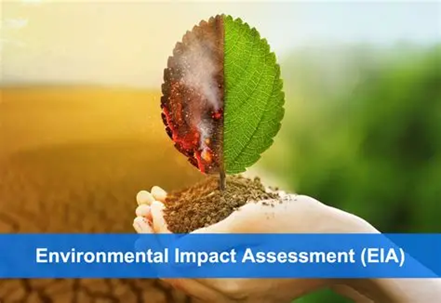
Why in the News?
The Supreme Court’s decision to recall its previous judgment has major legal, economic, and environmental implications:
- Recall of Strict Ban: The SC majority verdict recalled the Vanashakti judgment, which had struck down the Central government’s notifications (2017 and 2021 Office Memorandum (OM)) that allowed a process for granting ECs after a project had already commenced construction or operation.
- Public Interest and Economic Costs: The majority opinion cited concerns over public interest and massive economic loss. It was argued that sustaining the earlier ban would have led to the demolition of public and private projects worth nearly ₹20,000 crore (including AIIMS Odisha and a greenfield airport in Karnataka).
- Dissent on Principle: The dissenting judge strongly argued that the recall overlooks the very fundamentals of environmental jurisprudence and is a “step in retrogression”, asserting that there is no concept of ex post facto EC in environmental law.
- Reopening the Debate: The matter has now been placed before a larger bench for reconsideration, indicating that the legal position on whether ex post facto EC is permissible remains unresolved.
Deep Analysis: Environmental Impact Assessment (EIA) and Judicial Principles
The controversy surrounding ex post facto EC is fundamentally a conflict between the Precautionary Principle and the Polluter Pays Principle, testing the limits of the EIA Notification, 2006 (issued under the Environment (Protection) Act, 1986).
1. The Principle of Prior EC (Ex Ante Clearance)
The Indian EC regime is based on the Precautionary Principle, a cornerstone of environmental jurisprudence.
- Mandate: The EIA Notification, 2006, mandates that certain large industrial and infrastructure projects must obtain EC before any construction activity commences.
- Rationale of EIA: The four stages of the EIA process (Screening, Scoping, Public Consultation, Appraisal) are designed to assess potential environmental risks and guide project design before irreversible damage occurs.
- Constitutional Basis: Prior EC supports the fundamental right of citizens to a pollution-free environment and health under Article 21 of the Constitution. Allowing post-facto EC violates this right by compromising the environment before due assessment.
2. The Dangers of Retrospective (Ex Post Facto) Clearance
Environmental policy experts argue that retrospective clearance fundamentally defeats the purpose of the EIA process.
- Compromising Precaution: Ex post facto clearance transforms the preventive, anticipatory assessment into a mere remedial penalty system. Once a project is substantially built, the EC process is reduced to a “rubber stamp” on a fait accompli (accomplished fact).
- Incentivizing Non-Compliance: Granting retroactive approval rewards developers who show “scant regard for the rule of law” by starting projects illegally. This sets a lenient precedent that encourages future violations, believing they can simply pay a fine and regularise the project later.
- Exclusion of Public Consultation: The core EIA requirement of public consultation (mandatory for many projects) is rendered meaningless if the project is already constructed or near completion.
3. The Judicial Conflict: Pragmatism vs. Principle
The SC’s recent decisions highlight a conflict between two judicial approaches:
| Judicial Approach | Rationale / Principle |
| Principle (Dissenting/Vanashakti View) | Precautionary Principle. Ex post facto is an “anathema” to environmental law and should be universally barred. |
| Pragmatism (Majority/Review View) | Polluter Pays Principle and Public Interest. Ex post facto can be granted in exceptional circumstances if the consequences of denial (e.g., demolishing ₹20,000 crore worth of public projects) outweigh the consequences of regularisation. |
The majority judgment relies on past co-equal bench decisions (like Electrosteel and Pahwa Plastics) which allowed ex post facto EC with heavy penalties in exceptional cases, primarily to prevent massive economic disruption.
Implementation and Way Forward
The current uncertainty underscores the need for regulatory certainty and strengthening of the EIA framework.
1. Strengthening the Regulatory Framework
- Need for Ex Ante Discipline: The default rule must remain EC first. The government should be restrained from creating administrative mechanisms (like the 2017 Notification and 2021 OM) that essentially normalise violation.
- Clear, Time-Bound EC Procedures: Lengthy delays in the EC process often prompt developers to commence work illegally. The government must ensure a transparent and time-bound EC procedure to remove this justification for violation.
- Strengthened Monitoring: Regulatory bodies like the Ministry of Environment, Forest and Climate Change (MoEF&CC) and State Pollution Control Boards (SPCBs) must adopt real-time digital compliance monitoring and conduct strict site inspections to detect violations early.
2. The Role of the Larger Bench
- Harmonising Precedents: The matter must be conclusively settled by a larger SC bench to resolve the existing contradictions between judgments that strictly ban ex post facto EC (like Common Cause and Alembic) and those that allow it in exceptional circumstances.
- Defining “Exceptional Circumstances”: If ex post facto clearance is deemed permissible, the larger bench must narrowly define the “exceptional circumstances” and lay down stringent, non-negotiable conditions, ensuring it is not treated as a routine remedy.
3. Penalties and Restoration
- Enforcing Polluter Pays: Penalties imposed for ex post facto clearances must be heavy and exemplary to create a genuine deterrent. The fine should be commensurate with the economic benefit gained by violating the law.
- Mandatory Restoration: Clearance, even if granted retrospectively, must be conditional upon the implementation of a rigorous Environmental and Community Restoration Plan to remediate the damage already done.
The enduring lesson from environmental disasters is that the cost of remediation, both ecological and social, always exceeds the cost of prevention. The judicial system must ensure that the pursuit of ‘Ease of Doing Business’ does not translate into ‘Ease of Environmental Violation’.
Source: Breaking the rules: On the reversing of the Vanashakti ruling – The Hindu
UPSC CSE PYQ
| Year | Question |
| 2020 | How does the draft Environment Impact Assessment (EIA) Notification, 2020 differ from the existing EIA Notification, 2006? |
| 2018 | Define the concept of the carrying capacity of the environment. Explain how understanding this concept is vital while planning for sustainable development of a region. |
| 2016 | “The most significant achievement of modern law in India is the constitutionalization of environmental problems by the Supreme Court.” Discuss this statement with the help of relevant case laws. |
| 2014 | Environmental Impact Assessment studies are increasingly undertaken before a project is cleared by the Government. Discuss the environmental impacts of coal-fired thermal plants located at coal pitheads. |