
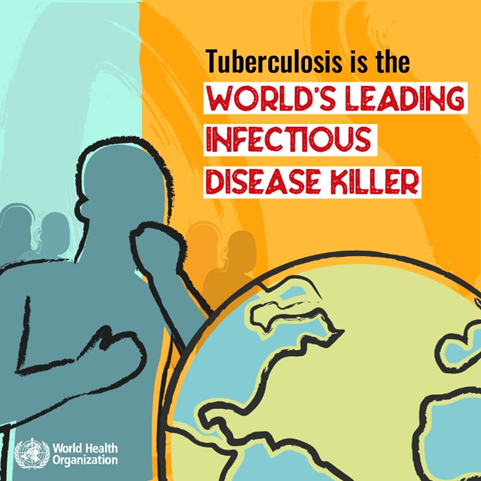
Why in the News?
The issue is prominent due to the release of the Global TB Report 2025 and the impending deadline for India’s self-imposed target:
- Progress vs. Target: India achieved a notable 21% reduction in TB incidence (from 237 per lakh in 2015 to 187 per lakh in 2024) and a 28% reduction in deaths since 2015. This rate of decline is nearly double the global average.
- The Burden: Despite the progress, India accounted for 25% of all global TB cases in 2024 (estimated 28 lakh cases) and contributed about 28% of all TB deaths worldwide. The absolute numbers mean that India still has the largest burden.
- Missing the Goal: India’s ambitious goal to eliminate TB (defined as <1 case per million population) by 2025—five years ahead of the Sustainable Development Goal (SDG) target of 2030—is likely to be missed.
India’s Strategy: Pillars of the National TB Elimination Programme (NTEP)
India’s strategy, outlined in the National Strategic Plan (NSP) 2017–2025, rebranded the earlier Revised National TB Control Programme (RNTCP) to the National TB Elimination Programme (NTEP) in 2020 to emphasize the elimination goal.
The NSP is based on the four strategic pillars of Detect – Treat – Prevent – Build (DTPB).
1. Detect: Enhanced Case Finding
- Expansion of Diagnostics: Scaling up the use of advanced molecular diagnostics like CBNAAT (Cartridge-Based Nucleic Acid Amplification Test) and TrueNat, which are faster and more accurate than older methods.
- AI and Digital Tools: Utilizing AI-enabled handheld X-ray devices and portable diagnostic tools, especially in remote areas.
- Private Sector Engagement: Focused engagement with the private sector, which accounts for nearly 50% of TB patients. Notification of cases from the private sector has significantly increased (accounting for 33% of total notifications in 2023).
2. Treat: Patient-Centric Care
- Treatment Coverage: Treatment coverage improved sharply from 53% in 2015 to 92% in 2024.
- Regimen Improvement: Rollout of shorter, all-oral regimens for Multi-Drug Resistant TB (MDR-TB), such as the BPaL (Bedaquiline, Pretomanid, Linezolid) regimen, which offers higher success rates and reduced treatment duration.
3. Support & Prevention (Build): Inter-sectoral Collaboration
- Ni-kshay Poshan Yojana (NPY): Provides ₹500 per month via Direct Benefit Transfer (DBT) for nutritional support to all notified TB patients. (TB is a “disease of poverty” where malnutrition accounts for $34-40\%$ of cases).
- Pradhan Mantri TB Mukt Bharat Abhiyaan (PMTBMBA): Launched to augment community involvement and leverage CSR activities through the Ni-kshay Mitra initiative, where individuals and organizations adopt TB patients to provide nutritional and social support.
Critical Analysis: Reasons for Missing the 2025 Target
Despite the impressive progress in case finding and treatment coverage, systemic and socio-economic barriers continue to undermine India’s elimination efforts.
1. Socio-Economic and Structural Drivers
- Poverty and Malnutrition: TB is fundamentally linked to poverty and malnutrition. Malnutrition significantly increases the susceptibility to TB and worsens treatment outcomes. The prevalence is high in overcrowded slums and areas with poor ventilation, facilitating rapid transmission.
- Comorbidities: The rise of diabetes (contributing significantly to cases), HIV co-infection, and air pollution (especially in urban areas) act as syndemic factors that amplify TB transmission and reduce treatment success.
2. Programmatic and Systemic Gaps
- Drug-Resistant TB (DR-TB): India accounts for a high proportion of global Drug-Resistant TB (DR-TB) and MDR-TB cases. Irregular drug supply and non-adherence by patients (due to long courses, stigma, and cost) are critical risk factors for developing resistance, making treatment longer and more expensive.
- Missing Patients: While notifications are high, a significant number of cases (estimated one lakh) remain undiagnosed or unreported, contributing to community transmission. India contributes significantly to the global detection gap.
- COVID-19 Disruption: The pandemic severely disrupted TB services, causing significant diagnostic delays and treatment interruptions, which created a backlog and slowed momentum.
- Funding Shortfalls: Globally and domestically, TB control funding is limited, directly impacting the rollout of new diagnostics, drugs, and vaccines.
Way Forward: Policy Recalibration and Sustained Momentum
To achieve true elimination, India must strengthen its interventions across the DTPB pillars with a greater focus on the social determinants of health.
- Strengthening Primary Healthcare and Screening:
- Action: Integrate TB screening and care deeply within the Ayushman Bharat Health and Wellness Centres (AB-HWCs) network.
- Example: Focus on targeted interventions for high-risk populations, including the urban poor, tribal areas, and people living with HIV/diabetes.
- Addressing Social Determinants (Intersectoral Action):
- Action: TB elimination must be viewed not just as a health problem, but as a socio-economic challenge.
- Example: Substantially increase the nutritional support provided under NPY (currently ₹500) to truly cover the cost of a high-protein diet, and link TB control with other social welfare schemes addressing housing and sanitation (Swachh Bharat).
- Innovation and Research:
- Action: Increase investment in TB research and development, including the development and rollout of new vaccine candidates (e.g., M72/AS01E) and novel, shorter drug regimens.
- Universal Drug Resistance Testing:
- Action: Ensure universal access to Drug Susceptibility Testing (DST) for all notified TB cases, regardless of whether they are from the public or private sector, to curb the rise of MDR-TB.
Source: Redefining the narrative of TB eradication worldwide – The Hindu
UPSC CSE PYQ
| Year | Question |
| 2023 | Examine the main features of the National Health Policy, 2017 and analyze the extent to which India has succeeded in achieving the targets related to health as laid down in the policy. |
| 2021 | The COVID-19 pandemic accelerated class inequalities and vulnerability of the poor in India. Demonstrate. |
| 2020 | Appropriate local community level action is the most crucial strategy for India to achieve Universal Health Coverage (UHC). Comment. |
| 2014 | Though the public health system has widely improved in the country, providing universal health coverage remains a big challenge. Explain the challenges and suggest ways to overcome them. |