
Why in News
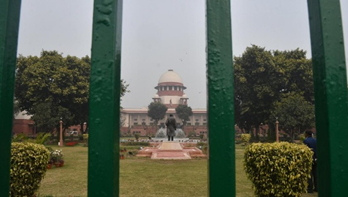
- The Supreme Court of India has recently delivered its opinion on the 16th Presidential Reference made by President Droupadi Murmu.
- A five-judge Constitution Bench headed by Chief Justice B.R. Gavai (including CJI-designate Justice Surya Kant) has ruled that no fixed timeline can be imposed by the Court on Governors for deciding the fate of Bills, while simultaneously holding that evasive inaction or prolonged delay by Governors is constitutionally impermissible.
- Both the letter and the spirit of the Constitution have been upheld without one defeating the other.
Background and Context
- Republic of India has been served by 15 Presidents across 16 presidencies, with Dr. Rajendra Prasad recorded as inaugural President having served two terms.
- Since 1947, appointment of Governors has been so numerous that precise count was described as difficult.
- Office-holders of President and Governor have been observed to exercise influence that can range from great good to considerable harm, while many incumbents prefer conduct marked by self-effacing restraint.
- Visual culture and editorial commentary have long captured tensions associated with formal assent and refusal; for instance, Abu Abraham cartoon was cited for its depiction of 1975 emergency signature moment, symbolising ease with which formal instruments can be executed.
Presidential and Gubernatorial Constitutional Responsibilities
Dual Obligation: Assent and Discretion
- Signatures affixed in fear or refused from bias both constitute infractions of Constitutional responsibility.
- When signatures are declined not from genuine reservations but from bias, constitutional malaise becomes evident.
- Similarly, assents provided out of fear rather than genuine approval violate constitutional trust. Constitutional morality and fairness in exercising these powers represent non-negotiable requirements of high office.
Independence and Constitutional Self-Consciousness
- Presidents and Governors must be possessed of minds that are alert and alive to both letter of Constitution and its spirit in evolving nation context.
- They should ensure that recommendations made to them adhere to constitutional letter while remaining vigilant that letter is not used to subvert constitutional spirit—an irony that framers of Constitution could not have anticipated.
- Dr. B.R. Ambedkar, principal architect of Constitution, could not have envisioned that constitutional provisions meant for honest actuation could be deployed for purposes contrary to constitutional intention.
Historical Precedents of Constitutional Morality
President R. Venkataraman (1987-92):
- Confident Constitutional Engagement President R. Venkataraman wielded constitutional pen confidently during tenure coinciding with Prime Ministers Rajiv Gandhi, V.P. Singh, Chandra Shekhar, and P.V. Narasimha Rao.
- All these Prime Ministers were strong-willed individuals but were first-time incumbents in pivotal office while Venkataraman possessed infinitely greater experience of political and constitutional office.
Distinctive Features of Venkataraman’s Approach:
- No cabinet expressed disquiet regarding his constitutional decisions and recommendations.
- Constitutional authority exercised with constitutional morality and fairness as guiding principles.
- One-on-one confidential discussions with Prime Ministers enabled communication of presidential concerns without creating public friction.
- Fourth Prime Minister P.V. Narasimha Rao engaged Venkataraman as thought-partner more than his own cabinet colleagues.
- No files were retained beyond few days, demonstrating prompt and decisive constitutional functioning.
President K.R. Narayanan (1997-2002):
Independent Constitutional Judgment President K.R. Narayanan exercised constitutional powers independently throughout tenure, using constitutional authority not merely as resident of Rashtrapati Bhavan but as President of India answerable to constitutional values.
Significant Constitutional Interventions by KRN:
- In 1997, Union Cabinet under I.K. Gujral had recommended dismissal of BJP government in Uttar Pradesh led by Kalyan Singh, and recommendation was returned by President KRN for reconsideration; recommendation was not repeated.
- In 1998, newly appointed Governor of Bihar recommended dismissal of Rabri Devi government and invocation of Article 356; KRN demurred and recommendation was returned, following which cabinet under A.B. Vajpayee did not repeat recommendation.
- Such instances were presented as examples where presidential response was guided by constitutional fairness and constitutional morality rather than partisan inclination.
Characteristics of Narayanan’s Constitutional Approach:
- Frankness exercised with governments when constitutional propriety demanded it.
- No misunderstanding arose because government recognized that frankness originated from desire to caution and correct, not to criticize.
- Constitutional decisions grounded in fairness rather than political calculation.
- Demonstrated that President is constitutional functionary first, political actor never.
Supreme Court response in 16th Presidential Reference
Bench Composition and Posture
- Five-judge Bench was headed by Chief Justice B. R. Gavai and included CJI-designate Surya Kant among others, and posture of Bench was described as neither tutoring executive nor awarding victory to any side.
Verdict on 16th Presidential Reference
- No Fixed Deadlines: It was ruled by Bench that date-lines cannot be fixed by Supreme Court for Governors for study of Bills, as specific timeframes are not prescribed in letter of Constitution.
- Rejection of Evasive Inaction: While timelines were rejected, it was unambiguously stated that ‘evasive inaction’ is not permitted, signifying that spirit of Constitution must be respected.
- Judicial Approach: Role of tutor was declined by Bench, and schooling of either side (Legislature or Governor) was avoided; instead, balance was struck between power to do right and right way to do it.
Interpretation of Gubernatorial Inaction
- It was acknowledged by Court that action and inaction by Governors may sometimes be driven by political predisposition rather than studiousness.
- “Clock on the Desk”: Although calendar with deadlines was rejected, an “informal alarm” or mechanism was placed by ruling, ensuring that if study of Bill is prolonged beyond normal study hours, delay can be raised in court, making evasive inaction justiciable.
- Federal Polity: It is emphasised that working of Constitutional arrangement in Centre-State relations depends on mutual respect between Legislature and Governor/President, as just one entity is required to wreck federal polity while two are needed to work it.
Broader Constitutional and Political Import
- Federal Polity: It is emphasised that working of Constitutional arrangement in Centre-State relations depends on mutual respect between Legislature and Governor/President, as just one entity is required to wreck federal polity while two are needed to work it.
- Importance of incumbents rising above personal limitations was emphasised, and examples were cited where office made incumbents great or incumbents made office great, with caution that reverse can also hold true.
- Judicial restraint was flagged as necessary to preserve dignity of constitutional offices while ensuring accountability where constitutional values are threatened.
Role expectations from Presidents and Governors
- Holders of high constitutional office were described as expected to be alert and alive to both letter and spirit of Constitution, and to ensure that recommendations addressed to them conform to constitutional standards.
- It was emphasised that no file should be kept pending for prolonged period to permit deliberations that could mask partisan motives or permit undue exercise of pocket veto.
- Subversion of Spirit: It is warned that letter of Constitution can sometimes be used to subvert spirit, an irony likely unanticipated by framers like Babasaheb Ambedkar.
- Presidents and Governors were contrasted with inert office-holders or mere rubber stamps, and were encouraged to exercise judgement without transforming offices into platforms for political manoeuvre.
Way forward
- Institutional practice must be oriented towards ensuring that recommendations submitted to Presidents and Governors are scrutinised promptly and acted upon within reasonable time so that constitutional processes are not stalled.
- Appointment and functioning protocols for Governors should be reviewed in spirit of strengthening constitutional morality, so that exercise of discretion is guided by fairness rather than partisan predisposition.
- Mechanisms for enhancing transparency of decision-making by Governors and Presidents should be considered to reduce scope for covert delay and to preserve trust in constitutional machinery.
- Judicial responses should continue to preserve separation of powers while remaining prepared to intervene when sustained inaction is used as instrument to subvert constitutional purpose.
- Political actors must be encouraged to respect institutional domain of high office, and civil society discourse should promote culture in which constitutional duty is prioritised over partisan advantage.
Conclusion
- It was observed that letter of Constitution was upheld by Bench while spirit of Constitution was preserved in practical terms, signalling continuity of constitutional values.
- Historical examples of Presidents such as RV and KRN were cited as demonstrations of how constitutional duties can be discharged with moral courage and fairness, and such examples were recommended to be emulated.
- Judiciary was credited with striking measured balance by refusing to micromanage exercise of presidential or gubernatorial functions while making clear that evasive inaction would not be permitted to corrode constitutional order.
- Overall assessment presented was that while formal provisions have prevailed, living ethos of Constitution remains intact provided incumbents, political class, and judiciary act with mutual respect, vigilance, and commitment to constitutional morality.
Constitutional Morality and Political Neutrality of Governors
Constitutional morality, as first articulated by Dr. B.R. Ambedkar during the Constituent Assembly Debates on 4 November 1948, demands paramount allegiance not merely to the literal text of the Constitution but to its underlying spirit, values, and ethos – encompassing justice, liberty, equality, fraternity, secularism, rule of law, and democratic accountability – even when the letter of law might permit otherwise, as judicially reinforced in landmark cases like Kesavananda Bharati v. State of Kerala (1973) (basic structure doctrine), Naz Foundation v. Govt of NCT Delhi (2009) (LGBTQ+ rights), and Govt of NCT Delhi v. Union of India (2018) (federal comity).
Political neutrality of the Governor embodies the constitutional imperative that the Governor, despite being appointed by the President under Article 155 for a term of five years (Article 156), must function as an impartial constitutional sentinel and representative of the Centre, eschewing any role as an agent of the Union Executive or the ruling political party at the national level, thereby safeguarding the federal balance and democratic ethos.
Constitutional Framework and Original Intent
- Article 153 mandates that there shall be a Governor for each State, with the proviso allowing the same person to serve as Governor for two or more States, reflecting the framers’ vision of a unifying federal figure.
- Article 154 vests the executive power of the State in the Governor, to be exercised either directly or through subordinate officers in accordance with the Constitution, subject to limitations where State legislative powers intersect with concurrent or Union lists (as per the proviso).
- Article 155 provides for the appointment of the Governor by the President, while Article 156 stipulates a term of five years unless removed earlier at the President’s pleasure, with Article 157 outlining qualifications (citizen of India, at least 35 years old) and Article 158 detailing emoluments, allowances, and prohibitions (e.g., no membership of Parliament or State Legislature, no office of profit).
- Article 159 requires the Governor to take an oath or affirmation before the Chief Justice of the High Court (or senior-most Judge) to faithfully execute the office and preserve, protect, and defend the Constitution.
- Article 163 establishes that there shall be a Council of Ministers headed by the Chief Minister to aid and advise the Governor in the exercise of functions, except in those areas where the Governor is expressly required to act in discretion (as interpreted by courts; no exhaustive list provided in the Constitution itself).
- Article 200 empowers the Governor, upon presentation of a Bill passed by the State Legislature, to declare assent, withhold assent, or reserve the Bill for the President’s consideration; for non-Money Bills, the Governor may return it for reconsideration “as soon as possible,” and if repassed, it must be presented again.
- Article 201 governs reserved Bills: the President may assent, withhold assent, or direct return for reconsideration (for non-Money Bills), with a six-month window for the Legislature to act; if repassed, it returns to the President for final decision.
- Article 356 enables the President, on receipt of a Governor’s report or otherwise, to proclaim President’s Rule if satisfied that the State government cannot function in accordance with the Constitution, highlighting the Governor’s pivotal role in emergency provisions.
- The original intent, as debated in the Constituent Assembly, was to position the Governor as a nominal executive head promoting Centre-State harmony, not a tool for partisan interference, with discretionary powers limited to exceptional scenarios like hung assemblies or constitutional breakdowns.
Landmark Judicial Pronouncements
| Case | Key Judicial Dictum on Constitutional Morality & Neutrality |
| S.R. Bommai v. Union of India (1994) | Governor’s report under Article 356 must rest on objective material and relevant factors, not subjective political satisfaction; floor test declared as the gold standard for majority validation; arbitrary use of President’s Rule condemned as an assault on federalism and constitutional morality. |
| Rameshwar Prasad v. Union of India (2006) | Governor cannot invoke discretion under Article 164(1)(b) or Article 174 to dismiss a ministry prematurely or prevent a floor test; personal political predilections or partisan motives render actions ultra vires, violating democratic accountability. |
| Nabam Rebia v. Deputy Speaker (2016) | Discretionary powers under Article 163 and Article 174(2) (summoning/proroguing Assembly) must align with constitutional trust; cannot be wielded to engineer defections or destabilise elected governments, as this erodes political neutrality. |
| Govt of NCT Delhi v. Union of India (2018) | Reinforced constitutional trust, federal comity, and collaborative federalism as binding doctrines; Governor/LG bound by aid and advice except in narrow discretionary domains; overreach undermines the basic structure. |
| State of Tamil Nadu v. Governor (2023-2024) | Indefinite withholding of assent to 10+ Bills without communication or reasoned order violates Article 200‘s mandate of prompt action and constitutional trusteeship; such delays tantamount to pocket veto, breaching democratic accountability and constitutional morality. |
| 16th Presidential Reference (2025) | No judicially fixed timeline for Bill decisions under Article 200 (upholding literal discretion), but evasive inaction or unreasonable prolongation beyond normal deliberation impermissible; Governor must eschew political predisposition, ensuring actions reflect constitutional morality; judicial review available for manifest arbitrariness. |
Historical Phases of Erosion of Neutrality
- 1947-1967 (One-Party Dominance Era): Governors largely ceremonial and neutral, embodying the framers’ intent amid Congress’s pan-India sweep; rare interventions, focused on advisory roles.
- 1967-1994 (Regionalism and Misuse Peak): Post-1967 elections ushering non-Congress State governments led to Article 356 invocations over 90 times (e.g., 1977-1980 under Janata Party Centre); Governors transformed into destabilising agents, recommending dismissals on flimsy pretexts, eroding federal trust.
- 1994-2014 (Judicial Safeguards Era): S.R. Bommai curtailed Article 356 abuses, mandating floor tests and objective reporting; shift to subtler tactics like Bill reservations, but relative restraint prevailed.
- 2014-2025 (Contemporary Conflicts Era): Surge in delays – Tamil Nadu (10+ Bills pending 2020-2024), Kerala (8 Bills withheld 2023-2025), Punjab (farm laws-related), Telangana, and West Bengal – marking the rise of “Bill veto” as a proxy for soft President’s Rule, often perceived as partisan targeting of opposition-ruled States.
Root Causes / Structural Challenges
- Partisan Appointment Mechanism: Entirely under Article 155‘s Presidential discretion, devoid of State consultation or neutral body, leading to selections from ruling party ranks (e.g., RSS affiliates in recent years).
- Precarious Tenure under Article 156: Removable at “pleasure,” fostering sycophancy to the Centre; average tenure dipped to ~3 years post-1967.
- Post-Retirement Incentives: Allure of Rajya Sabha nominations, governorship extensions, or diplomatic postings creates a “reward chain” for compliant behaviour.
- Ambiguous Discretionary Domains: Article 163‘s proviso lacks codification, inviting subjective misuse in Bill assents (Article 200), ordinance promulgations (Article 213), or President’s Rule reports (Article 356).
- Article 201’s Loophole: Reservation for President enables indirect veto without accountability, as the President (bound by Union Cabinet advice) rarely returns Bills.
- Absence of Accountability Tools: No impeachment mechanism (unlike judges under Article 124(4)), limited judicial review for discretionary acts, and no mandatory speaking orders for delays.
Global Best Practices for Ensuring Neutrality
| Country | Mechanism | Relevance to India |
| Germany | Federal President elected by Bundesversammlung (Bundestag + equal State delegates), ensuring bipartisan federal input; strict non-partisan convention. | Model for collegium-like appointment to balance Centre-State voices. |
| Canada | Lieutenant Governors appointed by Governor General on Prime Minister’s advice but post Provincial Premier consultation; entrenched convention against interference in elected governments. | Informal State input could mitigate perceived partisanship. |
| Australia | State Governors appointed by British Monarch on State Premier’s recommendation, fully insulating from national politics; ceremonial role emphasised. | Direct State control over appointment to prevent Centre’s leverage. |
| Ireland | President directly elected by popular vote; no gubernatorial equivalent, with ceremonial duties only; lifetime bar on party affiliation post-election. | Popular election or fixed non-partisan criteria for Governors. |
| Switzerland | Rotating Federal Presidency among seven Councillors elected by Parliament; consensus-driven, no veto powers; strict neutrality oath. | Rotation/term limits to depoliticise high offices. |
Significance of Upholding Constitutional Morality by Governors
- Promotes legislative sovereignty of State Assemblies, preventing executive overreach and ensuring elected mandates are respected under federal principles (Article 246).
- Nurtures cooperative and competitive federalism, as envisioned in institutions like the GST Council and NITI Aayog, fostering Centre-State dialogue over confrontation.
- Averts democratic backsliding by curbing misuse of emergency powers (Article 356), maintaining public faith in constitutional institutions amid rising regional assertions.
- Reinforces separation of powers at the sub-national level, where Governors act as impartial umpires between executive, legislature, and judiciary.
- Enhances India’s global stature as a robust federal democracy, countering narratives of “majoritarian centralism” in international forums like the UN or G20.
Way Forward – Concrete Reform Roadmap
- Legislate Tenure Security: Amend Article 156(1) via constitutional amendment to mandate a non-extendable five-year term, removable only for proven misbehaviour or incapacity through a two-thirds majority in Parliament (mirroring Article 124(4) for judges).
- Neutralise Appointments: Establish a statutory collegium under a new law – comprising Prime Minister, Leader of Opposition, Chief Justice of India, and the concerned Chief Minister – for transparent, bipartisan selections, implementing Sarkaria Commission (1988) and Punchhi Commission (2010) recommendations.
- Time-Bound Discretionary Actions: Insert a proviso in Article 200 prescribing a maximum four-month deadline for Bill decisions, mandating speaking orders for withholdals or reservations, with automatic lapse and judicial review for violations.
- Curb Article 201 Abuses: Amend to impose a six-month cap on President’s consideration, with automatic assent thereafter for non-Money Bills, ensuring no indefinite pendency.
- Accountability Mechanisms: Enact a Governors (Removal) Act for impeachment-like proceedings by State Legislature (two-thirds vote) + parliamentary ratification; introduce a Code of Conduct enforceable via Article 142 (Supreme Court’s residuary powers).
- Institutional Reinforcement: Convene annual All-India Governors’ Conference under the Vice-President and CJI to disseminate conventions; mandate periodic performance audits by the Comptroller and Auditor General.
- Judicial Evolution: Courts to evolve a “proportionality test” for discretionary exercises, weighing federal necessity against State autonomy, building on 16th Presidential Reference’s “unreasonable delay” threshold.
Conclusion
- The office of Governor remains the Achilles’ heel of Indian federalism because constitutional morality continues to be enforced through personal integrity rather than institutional insulation.
- From S.R. Bommai (1994) to the 16th Presidential Reference (2025), the Supreme Court has progressively moved from judicial restraint to judicial signalling, repeatedly reminding that political neutrality is not ornamental but the very soul of the Governor’s office.
- Until radical structural reforms break the appointment-removal-post-retirement reward chain, the tension between constitutional morality and partisan expediency will persist, threatening the delicate equilibrium of India’s cooperative federal democracy.
- The time has come to transform the Governor from a potential disruptor into a genuine constitutional bridge between Centre and States.
UPSC MAINS PYQs
- “Constitutional morality is the fulcrum which acts as an essential check upon the high functionaries and citizens alike…” In view of the above observation of the Supreme Court, explain the concept of constitutional morality and its application to ensure balance between judicial independence and judicial accountability in India. (2025)
- Discuss the essential conditions for exercise of the legislative powers by the Governor. Discuss the legality of re-promulgation of ordinances by the Governor without placing them before the Legislature. (2022)
- What is meant by the term ‘constitutional morality’? How does one uphold constitutional morality? (2019)