
Why in the News?
On November 21, 2025, the Government of India notified the implementation of the four Labour Codes, marking the culmination of over five years of legislative and consultative efforts to modernize the country’s fragmented labour framework.
Background: Evolution of Labour Laws in India
- India’s labour laws, many rooted in the colonial era, comprised over 40 central acts and numerous state variations, leading to compliance complexities that hindered investment and formalization. The Second National Commission on Labour (2002) advocated consolidation, but substantive action followed under the NDA government from 2015 onward. Tripartite deliberations involving government, employers (e.g., FICCI, CII), and unions shaped the Codes, passed between 2019 and 2020.
- Delays stemmed from the COVID-19 disruptions, state-level rule notifications, and stakeholder concerns over perceived pro-employer biases. The November 2025 rollout introduces a Single Registration, Single License, and Single Return system, supported by digital tools like e-shram for unorganized workers, positioning the Codes as a cornerstone of Aatmanirbhar Bharat.
Overview of the Four Labour Codes and Subsumed Laws
| Labour Code | Year Notified | Laws Subsumed (Key Examples) | Core Objectives |
| Code on Wages, 2019 | August 8, 2019 | Payment of Wages Act, 1936; Minimum Wages Act, 1948; Payment of Bonus Act, 1965; Equal Remuneration Act, 1976 | Universal minimum wages; timely payments; gender equity in remuneration. |
| Industrial Relations Code, 2020 | September 29, 2020 | Trade Unions Act, 1926; Industrial Employment (Standing Orders) Act, 1946; Industrial Disputes Act, 1947 | Streamlined dispute resolution; fixed-term employment; enhanced collective bargaining. |
| Code on Social Security, 2020 | September 29, 2020 | Employees’ State Insurance Act, 1948; Employees’ Provident Funds Act, 1952; Maternity Benefit Act, 1961; Payment of Gratuity Act, 1972; Unorganised Workers’ Social Security Act, 2008 | Extended coverage to gig/platform workers; gratuity portability; digital grievance redressal. |
| Occupational Safety, Health and Working Conditions (OSH) Code, 2020 | September 29, 2020 | Factories Act, 1948; Contract Labour Act, 1970; Inter-State Migrant Workmen Act, 1979; Building and Other Construction Workers Act, 1996 | Standardized safety norms; migrant worker protections; welfare facilities across sectors. |
In-Depth Analysis of the Four Labour Codes
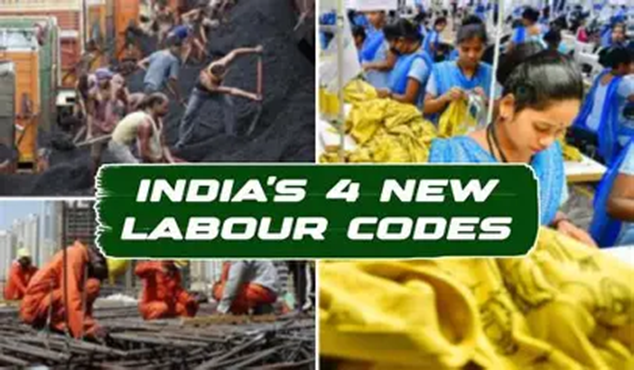
The Codes represent a functional regrouping of labour laws, emphasizing simplification (e.g., reducing 2,000+ compliance clauses to ~1,000) while introducing pro-worker elements like decriminalization of minor offences and Inspector-cum-Facilitator roles for advisory support.
Code on Wages, 2019: Ensuring Fair and Timely Remuneration
This Code establishes a foundational right to wages, extending protections beyond organized sectors to all workers, including those in agriculture and domestic work. It addresses historical disparities in wage fixation and payments, promoting uniformity amid India’s diverse regional economies.
- Floor and Minimum Wages: The central government sets a national floor wage based on living standards, with states able to fix higher minimums but not lower ones. Fixation criteria include skill levels (unskilled to highly skilled), geography, and hazardous conditions (e.g., high humidity or temperature). This aims to cover ~50 crore workers, preventing exploitation in low-wage sectors like textiles.
- Timely Payment and Deductions: Wages must be paid within 7-10 days of the wage period’s end (earlier for contract workers). Unauthorized deductions are capped at 50% of wages, with employer liability extending to firms or associations. Overtime is compensated at twice the ordinary rate, applicable universally without wage ceilings.
- Gender Equity and Bonus: Prohibits discrimination in recruitment, pay, or conditions based on gender (including transgender identity). Statutory bonus (8.33%-20% of wages) applies to employees earning up to ₹21,000/month, broadening eligibility.
- Enforcement Mechanisms: Replaces inspectors with facilitators for guidance; first-time offences compoundable via penalties (up to 50% of maximum fine). Digital wage records and self-certification reduce litigation.
Analysis: While empowering workers against arbitrary deductions, the Code’s success hinges on enforcement in unorganized sectors (78% of employment). It could boost female labour participation (currently ~25%) by mandating equal pay, but regional variations risk inconsistencies without robust monitoring.
Industrial Relations Code, 2020: Balancing Flexibility and Harmony
Focusing on trade unions, disputes, and employment conditions, this Code promotes collective bargaining while granting employers operational leeway, addressing the rigidity that deterred manufacturing investments.
- Fixed-Term Employment (FTE): Introduces time-bound contracts with pro-rata benefits (e.g., gratuity after one year), reducing perpetual casualization. This formalizes gig-like roles without diluting permanency perks.
- Trade Unions and Bargaining: Registers unions with 7+ members; recognition for those with 51% support or via councils (20% threshold). Expands “worker” definition to include supervisors earning ≤₹18,000/month and journalists.
- Dispute Resolution and Layoffs: Raises thresholds for government approval on layoffs/retrenchment/closures from 100 to 300 workers (state-extendable). Introduces re-skilling funds (15 days’ wages per retrenched worker). Two-member tribunals handle appeals post-conciliation; strikes require 14-day notice, including “tools down” actions.
- Grievance and Standing Orders: Mandatory women’s representation in committees; work-from-home by consent in services. Standing orders apply from 300 workers, certified digitally.
Analysis: The higher thresholds ease business scalability, potentially attracting FDI in labour-intensive industries, but unions criticize it as enabling “hire-and-fire” cultures. Re-skilling provisions align with AI disruptions, yet without funding adequacy, they may falter, exacerbating youth unemployment (~23%).
Code on Social Security, 2020: Universal Coverage in a Fragmented Workforce
This expansive Code subsumes nine laws, pioneering inclusion for ~40 crore unorganized/gig workers via a dedicated fund, addressing vulnerabilities in India’s 90% informal economy.
- Gig and Platform Workers: Defines “gig worker” (non-traditional tasks) and “platform worker” (online-mediated services); aggregators contribute 1-2% of turnover (capped at 5% of payments) to a Social Security Fund for life/disability insurance, health, and old-age benefits.
- Gratuity and Maternity: FTEs eligible after one year (down from five); expands dependents to include maternal grandparents and parents-in-law for women. Maternity benefits extend to adoptees and commissioning mothers.
- EPF and ESIC Reforms: Time-bound inquiries (five-year limit, two-year resolution); appeal deposits reduced to 25%. ESIC coverage voluntary for <10-employee firms; includes commuting accidents.
- Enforcement and Digitization: Randomized web-based inspections; 30-day compliance notices; compounding for first offences (50-75% fine). Uniform “wages” definition (basic + DA + 50% of other allowances) for calculations.
Analysis: By integrating e-shram (300+ million registrations), it enhances portability, vital for migrants (4 crore annually). However, the 1-2% aggregator levy may raise platform costs, potentially curbing gig growth (projected to 50 million jobs by 2030). Broader coverage could reduce poverty but requires state-level cess collections for sustainability.
Occupational Safety, Health and Working Conditions (OSH) Code, 2020: Safeguarding Dignity at Work
Regulating 13 laws, the OSH Code standardizes conditions across 30+ sectors, emphasizing prevention over cure amid rising occupational hazards (e.g., 50,000 annual deaths).
- Registration and Licensing: Unified threshold of 10 workers; one-time registration for hazardous work. Inter-state migrants (direct/contract/self) get travel allowances, portable rations, and a helpline.
- Health and Welfare: Annual free check-ups; appointment letters mandatory with job/wage details. Women can work night shifts (with consent/safety); overtime capped at 50 hours/quarter, paid double.
- Contract Labour and Safety: Threshold raised to 50 workers; five-year all-India licenses. Safety committees for 500+ workers; victim compensation from 50% of fines. National board for advisory.
- Working Hours and Inspections: 8-hour days/48-hour weeks; creche facilities for 50+ women. Risk-based digital inspections; decriminalization with penalties.
Analysis: Enhances migrant protections post-COVID exposures, but implementation gaps in construction/mines persist. Higher thresholds benefit MSMEs, yet without capacity-building, safety lapses could rise with informalization.
Comparative Impacts – Pre- vs. Post-Implementation Framework
| Aspect | Pre-Codes (Fragmented Regime) | Post-Codes (Unified Structure) | Key Implications |
| Compliance Burden | Multiple registrations/licenses; sector-specific rules | Single return/portal; digital self-certification | Reduces costs by 40%; eases MSME entry but demands tech adoption. |
| Worker Coverage | Limited to organized (~10%); exclusions for gig/migrants | Universal (organized + unorganized/gig); 50 crore+ beneficiaries | Boosts formalization; risks overburdening under-resourced schemes. |
| Dispute/Grievance Handling | Backlogged courts; union fragmentation | Tribunals + facilitators; 90-day conciliation | Faster resolutions; potential for bias without independent oversight. |
| Flexibility for Employers | Rigid layoffs; pre-approvals | FTE + higher thresholds; compounding offences | Attracts investment; criticized for eroding job security. |
Implications for Employment and Economic Growth
With 12 million annual workforce entrants and a peaking demographic dividend (15-64 age group ~65%), the Codes target non-farm formalization amid AI/climate disruptions. They project 8-10 million new jobs via eased hiring, but equitable skilling is crucial to avert “jobless growth.” Sectors like manufacturing (14% GDP) and services (gig economy) stand to gain, aligning with Viksit Bharat@2047.
Emerging Challenges: Gig Economy and Climate Vulnerabilities
- Gig/Platform Integration: ~15 million workers now eligible for benefits, but algorithmic biases and levy pass-throughs pose risks.
- Climate and Trade Shocks: Safety norms address heat stress, yet enforcement lags; US-China shifts demand agile dispute mechanisms.
Government’s Reform Agenda: Towards Sustainable Implementation
The Modi administration’s 44-month gestation emphasized “wisdom over haste,” integrating employer inputs for buy-in. Milestones include e-shram and digital inspections, with future focus on national databases and impact audits. This positions labour as a growth driver, not a constraint.
Conclusion: Honouring Labour in Amrit Kaal
The 2025 implementation of the Labour Codes heralds a transformative shift, blending worker dignity with economic vitality. By extending protections to the informal majority and streamlining regulations, it unlocks India’s human capital potential. Yet, success demands vigilant tripartite oversight, digital infrastructure, and adaptive policies to navigate criticisms. As states align rules, this framework could redefine “Shramev Jayate,” ensuring labour reforms deliver inclusive prosperity for generations.
Source: Labour and honour: On the four Labour Codes, the path ahead – The Hindu
UPSC CSE PYQ
| Year | Question |
| 2014 | While we flaunt India’s demographic dividend, we ignore the dropping rates of employability. What are we missing while doing so? Where will the jobs that India desperately needs come from? Explain. |
| 2015 | Success of ‘Make in India’ programme depends on the success of ‘Skill India’ programme and radical labour reforms.” Discuss with logical arguments. |
| 2024 | Discuss the merits and demerits of the four ‘Labour Codes’ in the context of labour market reforms in India. What has been the progress so far in this regard? |