
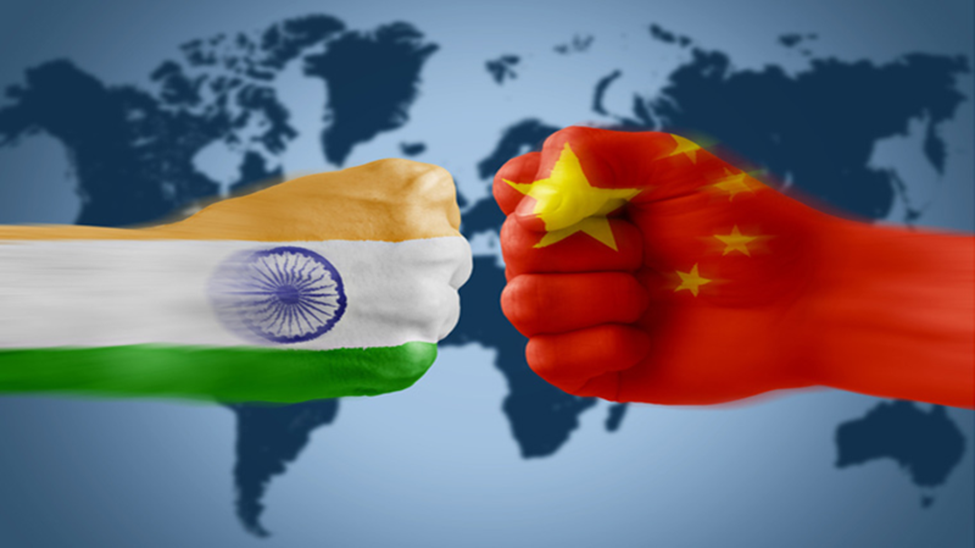
Context : India delivered a “strong demarche” to China (in Beijing and New Delhi) after a woman from Arunachal Pradesh was detained and mocked by Chinese immigration officials at Shanghai Airport on 21 November.
The Geographical and Dispute Landscape:
- Extent: The border spans 3,488 km, divided into Western (Ladakh), Middle (Himachal Pradesh, Uttarakhand), and Eastern (Arunachal Pradesh, Sikkim) sectors.
I. Core Disputes:
- Western Sector: Contestation over Aksai Chin, administered by China (Xinjiang) but claimed by India (Ladakh). It is critical for the China-Pakistan Economic Corridor (CPEC).
- Eastern Sector: China claims Arunachal Pradesh as “South Tibet,” while India administers it as an integral state.
- Ambiguity: The absence of a mutually agreed Line of Actual Control (LAC) leads to frequent friction.
II. Chronology of Conflict
- Historical Precedent: The 1962 Sino-Indian War remains the defining conflict.
- Recent Escalations: Increased frequency of confrontations since 2013.
- Doklam (2017): Standoff at the tri-junction.
- Galwan Valley (2020): Violent clash marking a significant deterioration in ties.
- Tawang (2022): Face-off in the Eastern sector.
India’s Multi-Pronged Response
Geopolitical Alliances:
- QUAD & I2U2: Engagement with the US, Japan, Australia, Israel, and UAE to ensure maritime security and counter Chinese hegemony.
- Economic Corridors: Promotion of IMEC (India-Middle East-Europe) and INSTC (International North-South Transport Corridor) to rival China’s Belt and Road Initiative (BRI).
- Maritime Strategy: Implementation of the “Necklace of Diamonds” strategy to encircle China via naval expansion and regional diplomacy, countering China’s “String of Pearls.”
- Border Infrastructure: The Border Roads Organisation (BRO) has accelerated 90 projects (worth ₹2,941 crore) across Ladakh, Arunachal Pradesh, and J&K to enhance troop mobility.
- Neighborhood Diplomacy: Strengthening ties with Bhutan (Gelephu mindfulness city) and Nepal (power export agreements) to mitigate Chinese regional influence.
Diplomatic Framework and Agreements
- Shimla Agreement (1914): Established the McMahon Line; recognized by India but rejected by China.
- Panchsheel (1954): Based on mutual respect for sovereignty; undermined by the 1962 war.
- 1993 & 1996 Agreements: Focused on maintaining peace, recognizing the LAC, and Confidence Building Measures (CBMs) regarding troop movements.
- Border Defence Cooperation Agreement (2013): Aims to prevent flare-ups and enhance communication, though effectiveness remains limited.
Strategic Imperatives (Way Forward)
- Infrastructure Modernization: Continued upgrade of airstrips, roads, and surveillance tech for rapid military response.
- Alliance Fortification: Deepening intelligence sharing and joint exercises with like-minded nations.
- Economic Decoupling: Diversifying trade partners to reduce economic dependence on Chinese markets.