
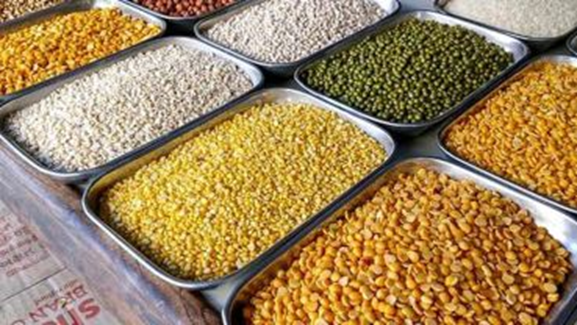
Context: Recent inspections by State food safety departments have flagged the persistent use of Auramine O, a banned industrial dye, in food items (sweets, street food) to mimic the color of saffron or turmeric.
1. What is Auramine O?
- Chemical Nature: It is a synthetic yellow dye derived from compounds like dimethylaniline and formaldehyde.
- Physical Properties: It appears as yellow flakes or powder and is highly soluble in water and solvents.
- Primary Application: It is strictly an industrial dye used in:
- Textile and leather processing.
- Manufacturing of printing inks and paper.
- Microbiological staining procedures.
2. The Health Verdict: Why is it Dangerous?
- Toxicity: Long-term ingestion can lead to Liver and Kidney damage and enlargement of the spleen.
- Genetic Impact: It has mutagenic effects, meaning it can alter genetic material (DNA).
- Cancer Risk: The International Agency for Research on Cancer (IARC) classifies Auramine O as “possibly carcinogenic to humans” (Group 2B).
3. Regulatory & Legal Status
- In India: It is prohibited/banned for use as a food additive/colorant under the Food Safety and Standards Act, 2006.
- Global Stand: It is banned in the European Union (EU) and the United States (USA) for use in consumables.
- Reason for Illegal Use: Despite the ban, it is used by small-scale vendors due to its low cost, easy availability, and ability to provide a bright yellow color indistinguishable from natural agents like turmeric.
4. Institutional Mechanism
- Nodal Agency: Food Safety and Standards Authority of India (FSSAI) is responsible for surveillance, sampling, and enforcement.
- Current Challenges: Lack of rapid testing kits at the point of sale and uneven laboratory infrastructure across states.