
Why in the News
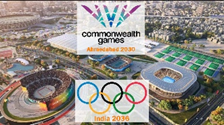
Recently, decision to host Commonwealth Games (CWG) 2030 in Ahmedabad has been announced and Letter of Intent has been submitted by India for hosting Olympic Games 2036 with Ahmedabad positioned as front-runner, and this development has been presented as strategic move to showcase sports infrastructure and strengthen soft-power standing.
Background and Context
- The Commonwealth Games had once symbolised imperial unity of the British empire, but the event has been facing a crisis of relevance in the post-colonial world, with multiple prospective hosts withdrawing on grounds of escalating costs.
- Recent pattern of withdrawals has been evident: Durban replaced earlier by Birmingham for 2022, Glasgow stepping in for 2026 after withdrawal by the Australian State of Victoria, and Ahmedabad taking over from the Canadian province of Alberta for 2030 hosting.
- India’s own relationship with the CWG has been ambivalent, since Delhi 2010 CWG had been marred by allegations of large-scale corruption and incompetence, and then IOA president Narinder Batra had, in 2019, informally described the CWG as “sub-standard” and had advocated withdrawal by India from participation.
Strategic Choice of Ahmedabad
- Ahmedabad has been selected as the host city for 2030 CWG, and this choice has been described as strategic, since the Letter of Intent for the 2036 Olympics has already been submitted by India, with Ahmedabad emerging as a front-runner city in that Olympic bid.
- Upgradation of sports infrastructure in Ahmedabad has been pursued vigorously, enabling the city to serve as a showcase venue to demonstrate that India possesses the capability, scale and readiness for mega multi-sport events, beyond the earlier Delhi experience.
Rationale behind India’s Renewed Interest
Soft Power and International Positioning
- Hosting of the CWG centenary edition has been seen as an important soft-power medium, enabling the projection of India’s image as an ambitious, modern, sporting nation, willing to host large global events.
- Through such events, India’s diplomatic profile and visibility within the Commonwealth and wider international community can be strengthened, supporting broader national interests in global governance and international relations.
Domestic Sporting Aspirations and Diversification
- Sporting aspirations within India have expanded significantly, with the desire that the sports ecosystem undergo diversification beyond cricket, and that on-field excellence be broadened across multiple disciplines.
- The presence of world-class sporting icons such as double-Olympic medallist javelin thrower Neeraj Chopra has been cited as evidence that India possesses role-model athletes, whose visibility during home-hosted mega events can inspire a younger generation toward greater sports participation and professional pathways.
Infrastructure Creation and Wider Public Benefits
- Hosting of the CWG has been expected to trigger significant infrastructural uplift, including stadia, training facilities, transport links and urban amenities, which would benefit athletes and also the wider public through improved public infrastructure and enhanced urban services.
Challenges and Concerns
Diminished Sporting Value of Commonwealth Games
- Commonwealth Games have been described as a sporting property in decline, with relevance reduced compared to global multi-sport events, because major sporting powers such as the United States and China remain outside the Commonwealth framework.
- Glasgow 2026 CWG is set to feature only 10 disciplines, with the exclusion of badminton, hockey, shooting and cricket, many of which have been strong performance areas for India, thereby further lowering the competitive and prestige value of the CWG platform for Indian sportspersons.
Disparity between CWG Medals and Olympic Performance
- India’s medal tallies in the last four CWG editions have stood at 61, 66, 64 and 101 medals, but subsequent Olympics following each of those editions have yielded only 6, 7, 2 and 6 medals respectively, revealing a sharp gap between regional/mid-level success and Olympic-level conversion.
- This mismatch has raised the question whether CWG success has been masking structural weaknesses in high-performance systems, training standards, sports science support and depth of competition that are required for Olympic podium finishes.
Doping Concerns
- India has been facing an escalating problem of doping, which can seriously damage reputation, especially when global attention is focussed during mega events such as the CWG centenary edition and a potential Olympic bid.
- Failure to control doping can lead to sanctions, suspensions, stripped medals and credibility loss, undermining soft-power gains sought through hosting and weakening public trust in sports governance institutions.
Financial Burden and Cost Escalation
- The financial outlay for CWG hosting has been warned to be potentially prohibitive, reflecting the experience of other host cities that had withdrawn due to rising costs and budgetary pressures.
- For India, the need has been emphasised that costs associated with Ahmedabad 2030 be carefully monitored, so that public funds are utilised efficiently, and legacy infrastructure does not become an under-used or debt-generating burden.
Way Forward
- Ahmedabad 2030 CWG has been required to be leveraged as an opportunity to showcase the strong present of Indian sport and to shape a future trajectory that aims at sustained Olympic success, rather than being treated merely as a stand-alone event.
- A comprehensive approach has been needed, in which infrastructure creation is aligned with long-term utilisation plans, doping controls are strengthened through robust testing and awareness, financial prudence is maintained, and performance pathways are redesigned so that CWG medals feed into improved Olympic outcomes, thereby justifying the ambition for 2036 Olympics centred on Ahmedabad.
Conclusion
- Ahmedabad 2030 Commonwealth Games has emerged as a symbolic and practical stepping stone toward India’s aspiration for hosting 2036 Olympics, combining soft-power goals, sporting diversification, and urban infrastructural transformation.
- However, the diminished stature of the CWG, cost concerns, legacy of Delhi 2010 controversies, doping challenges and the gap between CWG and Olympic performance have indicated that the success of this project will depend on honest introspection, institutional reforms and careful execution, so that the opportunity and hope associated with Ahmedabad 2030 can genuinely contribute to a strong present and glorious sporting future for India.
Sports Governance in India
Sports governance refers to the framework of rules, regulations, institutional mechanisms, and administrative processes through which sports activities are organized, administered, regulated and promoted within a country, ensuring transparency, accountability, athlete welfare and fair competition.
In India, sports governance has emerged as a critical policy area, given the nation’s ambitions to become a global sporting powerhouse and host major international events such as the 2036 Olympics.
Constitutional and Legal Framework
Constitutional Provisions
- Seventh Schedule – Entry 33 of State List
- Sports has been placed under Entry 33 of the State List (List II) of the Seventh Schedule of the Constitution of India, which covers “theatres and dramatic performances; cinemas; sports, entertainments and amusements.”
- This means that State Legislatures have the exclusive power to legislate on matters related to sports within their respective jurisdictions.
- However, the Central Government has been able to legislate on sports matters through Article 253 (legislation for implementing international agreements) and by invoking its role in international and inter-state sporting activities.
Fundamental Rights and Sports
- Article 19(1)(c) – Freedom to form associations and unions has been held applicable to sports bodies, though reasonable restrictions can be imposed in the interest of public order, morality, and sovereignty.
- Article 19(1)(g) – Freedom of profession has been invoked by athletes, though regulatory bodies like BCCI have been criticized for imposing stringent eligibility criteria that restrict this right.
- Article 21 – Right to Life and Personal Liberty extends to athletes’ right to a safe sporting environment, protection from harassment, and access to medical and welfare support.
Key Institutions in Sports Governance in India
| Category | Institution | Key Functions |
| Central Government Bodies | Ministry of Youth Affairs and Sports (MYAS) | – Functions as the nodal ministry for sports policy formulation, funding allocation, and coordination with National Sports Federations (NSFs) and State Governments. – Provides financial and infrastructural support to NSFs and implements flagship schemes like Khelo India and Target Olympic Podium Scheme (TOPS). |
| Sports Authority of India (SAI) | – Established in 1984, SAI serves as the apex body for promoting sports excellence through training, coaching, and infrastructure development. – Implements TOPS National Centres of Excellence (TOPS NCOEs) in 14 priority disciplines to prepare athletes for Paris 2024, Los Angeles 2028 and beyond. | |
| Autonomous Bodies | Indian Olympic Association (IOA) | – Functions as the National Olympic Committee (NOC) of India, recognized by the International Olympic Committee (IOC). – Responsible for selection of athletes for Olympic Games, coordination with international bodies, and representing India in the Olympic Movement. |
| National Sports Federations (NSFs) | – Each recognized sport has its own NSF that acts as the national governing body for that discipline. – NSFs are affiliated with respective International Sports Federations (IFs) and must comply with international statutes as well as the National Sports Development Code, 2011. |
Major Policy Frameworks
National Sports Policy 2001 (Superseded)
- Formulated with objectives of broad-basing sports and achieving excellence at national and international level.
- Lacked statutory backing and was not successfully implemented due to weak enforcement mechanisms.
| Framework | Pillar and Features | Key Focus | |
| National Sports Policy (NSP) 2025 (Approved July 2025) | Vision/Goal | Supersedes 2001 Policy; aims to establish India as a global sporting powerhouse and a top-10 Olympic nation by 2036. | |
| Pillar 1: Excellence on Global Stage | Enhanced infrastructure, talent identification, sports science and technology integration. | ||
| Pillar 2: Sports for Economic Development | Boosting tourism, manufacturing, sports goods industry and employment generation. | ||
| Pillar 3: Sports for Social Development | Promoting indigenous games, inclusivity, health and education through sports. | ||
| Pillar 4: Sports – A People’s Movement | Community engagement, establishing National Fitness Ranking and Indexing System, revamping Physical Education Framework. | ||
| Pillar 5: Harmonization with NEP 2020 | Integrating sports with education for holistic development. | ||
| Key Feature: Regulatory Board | Proposes establishment of Sports Regulatory Board with powers to grant, renew and suspend affiliation of NSFs. | ||
| Key Feature: Monitoring | Creates National Monitoring Framework with well-defined benchmarks, KPIs and time-bound targets. | ||
| National Sports Governance Act (NSGA) 2025 (Enacted August 2025) | Status | India’s first statutory framework for sports governance; replaces the non-binding Sports Code of 2011. | |
| National Sports Board (NSB) | Apex regulatory authority to grant, renew or revoke recognition of sports organizations (Chairperson/Members appointed by Central Government). | ||
| National Sports Tribunal (NST) | Dedicated body for speedy resolution of sports-related disputes; civil courts have no jurisdiction. | ||
| National Sports Election Panel (NSEP) | Oversight of elections in national sports bodies to ensure democratic and fair electoral processes. | ||
| Code of Ethics | NSB must formulate a comprehensive code of ethics consistent with international best practices. | ||
| Safe Sports Policy | Protection of athletes, particularly women and minors, from harassment, bullying and retaliation. | ||
| Inclusive Representation | Executive bodies must include minimum 4 women and 2 elite athletes. | ||
| Age and Tenure Reforms | Officials under 70 years can complete term; 3 consecutive terms of 4 years allowed with 1-term cooling-off. | ||
| Primacy of International Charters | In case of conflict, Olympic Charter and international statutes will primarily govern sports bodies. |
Key Government Schemes
| Scheme | Launch Year / Ministry | Objectives |
| Target Olympic Podium Scheme (TOPS) | September 2014 / MYAS | To provide comprehensive support to elite athletes with medal potential at Olympics and Paralympics. |
| Khelo India Programme | 2016-17 | To revive sports culture at grassroots level and establish India as a great sporting nation. |
Challenges in Sports Governance in India
Political Capture and Patronage
- Many NSFs have been transformed into fiefdoms of powerful individuals or families, with age/tenure caps flouted and clique control becoming common.
- Democratic deficit persists, with athlete representation remaining tokenistic, women under-represented, and major selections remaining opaque.
Lack of Autonomy and Professional Management
- Blurring of roles between management and governance creates a lack of checks and balances, allowing operations without oversight or accountability.
- Ineffective implementation of National Sports Policy (1984, revised 2001) due to absence of statutory support and enforcement mechanisms.
Athlete-Centric Issues
- Selection and trials often conducted with last-minute notices, ad hoc criteria and limited right to appeal.
- Safeguarding mechanisms remain patchy for sexual harassment, bullying and retaliation, with lack of independent “safe sport” units.
- Uneven access to sports science, physiotherapy, nutrition and psychology support; disability sport still struggles for parity.
Inadequate Funding and Utilization
- Less than 40% of the allocated budget for 2022-2023 was utilized for athlete development.
- Financial opacity prevails, with grants, sponsor money, ticketing and rights income not disclosed transparently.
Litigation Spiral
- Over 350 cases pending against various federations in different courts, with prolonged litigation stalling decision-making and hurting athletes’ careers.
Doping Crisis
- India has been facing an escalating problem of doping with a high percentage of positive cases.
- In 2022, India topped the world in percentage of doping positives (3.2%) against samples tested among countries testing more than 2000 samples.
- During April 2023 – January 2024, 186 Adverse Analytical Findings (AAFs) were recorded from 4891 samples (3.80% positive rate).
- Athletics (43), Weightlifting (33), Powerlifting (27), Wrestling (10) and Boxing (9) are major sports with doping violations.
Global Best Practices in Sports Governance
| Model | Governing Body | Key Principles | Enforcement Mechanism |
| United Kingdom (UK) Model | UK Code for Sports Governance (2016, revised 2021) | Five Principles: Clear split between Board (governance) and executive (management); Diversity, transparency, accountability, risk management. | Conditional Funding Model: Funding from UK Sport and Sport England is conditional on compliance with governance standards. |
| Australian Model | Australian Sports Commission (ASC) / Mandatory Sports Governance Principles | Single national entity; Rolling three-year strategic plans; Mandatory financial and performance reporting; Mandatory integrity measures (anti-doping, match-fixing). | Public Funding Condition: Compliance with Mandatory Principles is a condition for public funding. |
| International Olympic Committee (IOC) Framework | Olympic Charter (Article 27) | Requires NOCs to preserve their autonomy and resist all pressures; ensures elections free from outside influence and adherence to good governance principles. | Suspension/Recognition: IOC can suspend/withdraw recognition if autonomy is violated. |
| FIFA Statutes | FIFA Statutes (Article 19) | Member associations must manage affairs independently and without undue influence from third parties; bodies must be elected through democratic procedure. | Suspension: Violations result in suspension of the member association (e.g., AIFF in 2022). |
Lodha Committee Recommendations (2016)
The Justice R.M. Lodha Committee was appointed by the Supreme Court in January 2015 to recommend reforms for the BCCI following the 2013 IPL betting scandal.
| Area | Major Recommendation |
| Membership & Voting | Implemented “One State – One Member – One Vote” policy; only a single association designated as a Full Member with voting rights. |
| Age and Tenure Limits | Retirement age fixed at 70 years; tenure of office bearers limited to two consecutive terms. |
| BCCI President Term | Term of the President restricted to not more than two years. |
| Disqualification Grounds | Removal of administrators with criminal charges, unsound mind, insolvency, or holding a position in another athletic association. |
| Governance Structure | Apex Council (5 elected office-bearers + 4 Councillors) to replace the 14-member Working Committee; creation of a separate IPL Governing Council. |
| Player Representation | Inclusion of one male and one female representative of the players’ association on the Apex Council. |
| Transparency and Oversight | BCCI to be brought under the RTI Act; fixed norms for engagement of professionals and contractors. |
| Asset Disclosure | BCCI officials required to disclose assets to the governing board to ensure they are not involved in betting. |
| Professional Management | Implementation of a corporate structure with management handled by professionals with established skill-sets. |
Significance of Sports Governance for India
| Aspect | Significance |
| Soft Power and International Positioning | Hosting mega sporting events like 2030 Commonwealth Games and 2036 Olympics bid enables projection of India’s image as an ambitious, modern sporting nation. Strong sports governance supports the diplomatic profile and visibility within the international community. |
| Economic Development | The sports sector can contribute to GDP growth through tourism, manufacturing, media rights and employment generation. NSP 2025 recognizes sports as a potential driver of economic development with focus on the sports goods industry and sports tourism. |
| Youth Development and Social Inclusion | India is one of the youngest nations, with one-fifth of the global youth population (age 15-29), possessing immense potential to leverage sports for national development. Sports promote health, fitness, discipline and national integration while addressing inclusivity across gender, disability and socio-economic divides. |
| Preparation for 2036 Olympics | The National Sports Governance Act 2025 supports India’s bid for the 2036 Olympics by ensuring compliance with the Olympic Charter and global best practices. Ahmedabad is positioned as the front-runner city, with infrastructure upgradation being pursued through the 2030 CWG as a stepping stone. |
Way Forward
Strengthening Institutional Framework
- The National Sports Board established under NSGA 2025 must function as a genuinely independent regulator with transparent appointment processes to avoid politicisation and maintain credibility with international bodies.
- Rules and regulations under NSGA 2025 must be framed in consultation with IOC and international federations to ensure compatibility with the Olympic Charter and prevent international sanctions.
Balancing Autonomy and Accountability
- India should consider adopting UK’s conditional funding model, where governance reforms are incentivized through funding conditions rather than direct government control, thereby respecting federation autonomy while ensuring accountability.
- Clear delineation between oversight functions (ensuring transparency, ethics, athlete welfare) and operational matters (day-to-day administration, selections, competitions) must be maintained.
Professionalizing Sports Administration
- NSFs must be required to have professionally qualified CEOs and CFOs with corporate governance experience, separating governance (Board) from management (Executive).
- Term limits and age caps must be strictly enforced, with independent electoral oversight to prevent entrenchment of individuals or families.
Enhancing Athlete Centricity
- Athlete representation must move beyond tokenism to meaningful participation in decision-making at all levels, including selection committees, policy formulation and grievance redressal.
- Independent Safe Sport Units must be established within each NSF, with confidential reporting mechanisms and protection against retaliation for complainants.
Addressing Doping Menace
- National Anti-Doping Agency (NADA) must be strengthened with greater operational independence as per WADA requirements, and dope testing laboratories must obtain and maintain WADA accreditation.
- Education and awareness programmes must be intensified, particularly in sports with high violation rates like athletics, weightlifting, powerlifting and wrestling.
Improving Financial Governance
- Mandatory disclosure of all income sources (grants, sponsorships, ticketing, media rights) and utilization patterns through standardized reporting templates.
- Regular audits and performance reviews linked to funding allocations, similar to the Australian model.
Leveraging Technology and Data
- Implementation of National Fitness Ranking and Indexing System to track physical fitness levels across schools, colleges and workplaces.
- Use of sports science, medicine and technology to enhance athlete performance and reduce injury rates.
Conclusion
- Sports governance in India is at a critical juncture, marked by the landmark policy initiatives of the National Sports Governance Act, 2025 and the National Sports Policy 2025.
- These reforms are essential to overcome the persistent governance failures, doping crises, and international sanctions by ensuring transparency, accountability, and athlete centricity while respecting federation autonomy.
- Success in this endeavor is crucial for realizing India’s 2036 Olympic ambitions and harnessing the transformative potential of sports for nation building and achieving the vision of “Viksit Bharat”.