
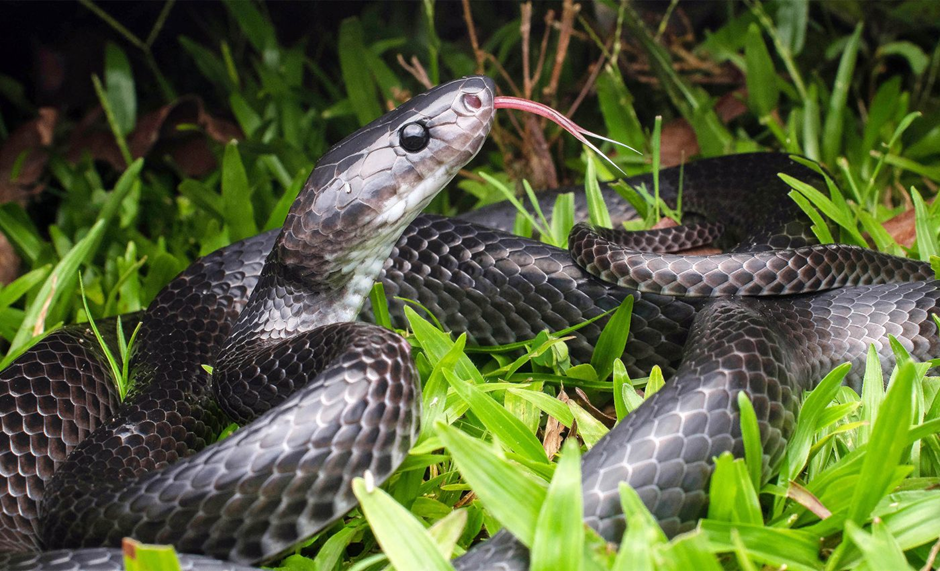
Two potentially new species—a wolf snake (Lycodon irwini) and a bird (Great Nicobar Crake)—have been documented on Great Nicobar Island. This discovery comes amidst the ongoing implementation of the massive Great Nicobar Mega Infrastructure Project, raising fresh debates on the island’s ecological sensitivity.
Species in News :
A. Lycodon irwini (Wolf Snake)
- Naming: Named after the late Australian conservationist Steve Irwin.
- Discovery: Described by researchers from Pondicherry University and Max Planck Institute.
- Status: Due to its rarity and restricted range, researchers have recommended it be classified as “Endangered” under the IUCN Red List.
- Habitat: Found on the east coast of Great Nicobar.
B. Great Nicobar Crake (Rallina sp)
- Type: A potentially new species of bird belonging to the genus Rallina.
- Observation: Photographed only thrice in a decade; details on its population and biology are “data deficient.”
- Significance: It shows distinct morphological features different from known crake species.
Biodiversity Profile of Great Nicobar
- Fauna: Home to over 1,800 species with 24% endemism (species found nowhere else).
- Recent Trends: Nearly 40 new species (frogs, crabs, geckos) described since 2021.
The Great Nicobar Project: Strategic Masterplan
A. Project Overview
- Nodal Agency: Andaman and Nicobar Islands Integrated Development Corporation (ANIIDCO).
- Conceived By: NITI Aayog (Approved in 2021).
- Four Key Components:
- International Transshipment Port: At Galathea Bay (Deep-sea port).
- Greenfield International Airport.
- Power Plant: 450 MW (Gas + Solar).
- Modern Township.
B. Why is it Strategically Vital?
- Location: The island lies at the mouth of the Malacca Strait, a global shipping choke-point.
- Maritime Hub: Aims to capture transshipment cargo currently handled by Colombo or Singapore.
- Defense: Enhances the Tri-Service Command’s reach in the Indo-Pacific.
What are the Critical Concerns?
A. Ecological Risks
- Galathea Bay: It is a prime nesting site for the Leatherback Sea Turtle (World’s largest sea turtle) and a biologically rich wetland.
- Coral Reefs: Dredging for the port poses a threat to surrounding coral colonies.
- Deforestation: Involves felling nearly 9.6 lakh trees, impacting carbon sequestration.
B. Tribal & Geological Risks
- Tribal Rights: The project overlaps with the habitat of the Shompens (a PVTG – Particularly Vulnerable Tribal Group) and the Nicobarese.
- Seismic Vulnerability: The island sits on the “Ring of Fire” (seismic zone) and is close to the epicenter of the 2004 Tsunami
KEY GEOGRAPHICAL LOCATION :
| Galathea Bay | Located on the Southern Coast of Great Nicobar; nesting site for Leatherback Turtles. |
| Shompen Tribe | PVTG indigenous to the interior forests of Great Nicobar; largely isolated. |
| Ten Degree Channel | Separates the Andaman Islands (North) from the Nicobar Islands (South). |
| Indira Point | Southernmost point of India’s territory, located on Great Nicobar Island. |