
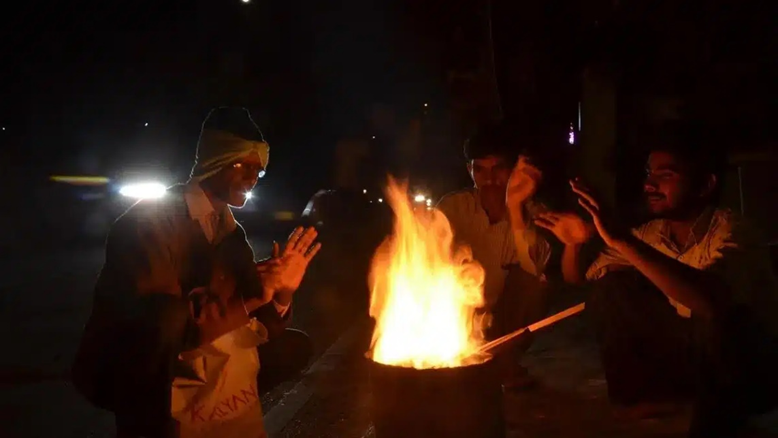
The India Meteorological Department (IMD) has predicted “more than usual” cold wave days for the winter season (December to February).
Affected Regions: The cold spell will primarily impact Northwest India (Delhi, Punjab, Haryana), Eastern UP, Northern MP, and parts of Maharashtra.
Why is North India Freezing? (The Causal Factors)
The India Meteorological Department (IMD) identifies specific meteorological conditions responsible for severe cold spells:
- The Fog Factor:
- Radiation Balance: Large-scale fog cover persists for extended durations, blocking sunlight during the day (preventing surface heating).
- Cooling Effect: While cloudy nights are typically warmer, persistent fog for 2–3 days leads to cumulative cooling even at night.
- Formation: Light winds combined with high moisture near the surface create a dense blanket of fog over the Indo-Gangetic plains.
- The Wind Pattern:
- Northwesterly Winds: In the absence of active Western Disturbances, cold winds from the northwest penetrate the plains.
- Wind Speed: Afternoon winds of 5–10 kmph exacerbate the chill.
- La Niña Influence:
- Pacific Connection: La Niña (abnormal cooling of the equatorial Pacific) historically favors intense cold waves in India.
- Impact: Increases the frequency and severity of cold spells across a larger geographical area.
- Subsidence: The downward movement of cold, dry air from the upper atmosphere closer to the surface traps the cold.
IMD Criteria for ‘Cold Wave’ :
A cold wave is defined as a rapid fall in temperature within 24 hours requiring protective measures.
- For Plains:
- Standard Criterion: When the Minimum Temperature is ≤ 10°C AND is 4.5°C to 6.4°C below normal for two consecutive days.
- Severe Cold Wave: When the Minimum Temperature is ≥ 6.5°C below normal.
- For Coastal Stations:
- The threshold of 10°C is rarely met.
- Wind Chill Factor: The “feels like” temperature is lower due to wind speed, causing discomfort despite higher ambient temperatures.
- Core Cold Wave Zone:
- Extends across Punjab, Himachal Pradesh, Uttarakhand, Delhi, Haryana, Rajasthan, UP, Gujarat, MP, Chhattisgarh, Bihar, Jharkhand, West Bengal, Odisha, and Telangana.
The Role of Western Disturbances (WD)
- Dual Impact:
- Warming Phase: Usually, approaching WDs bring cloud cover that traps heat (Greenhouse effect), keeping nights warmer.
- Cooling Phase: Once a WD passes, it leaves behind clear skies and cold northerly winds, often triggering a cold wave.
- Note: The absence of cloud cover allows infrared radiation to escape back into space, cooling the ground rapidly.
Institutional Framework: India Meteorological Department (IMD)
- Establishment: Founded in 1875.
- Parent Ministry: Ministry of Earth Sciences (Government of India).
- Mandate: The principal agency for meteorological observations, weather forecasting, and seismology.