
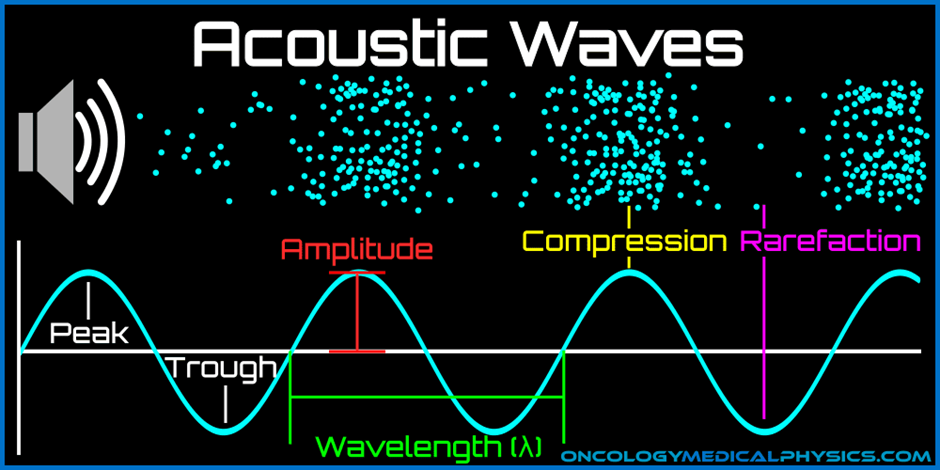
The diverse auditory environment of the Allen Forest Zoo (Kanpur) serves as a practical example to understand the fundamental concepts of acoustics (sound generation), frequency dynamics, and the application of electromagnetism in audio devices.
Mechanics of Sound Propagation
- Nature of Waves: Sound travels as longitudinal waves created by mechanical disturbances.
- Propagation Mechanism: It requires a material medium (solid, liquid, or gas). The source vibrates, causing periodic compression (high pressure) and rarefaction (low pressure) of air molecules to transmit energy.
- Human Auditory Spectrum: The human ear perceives frequencies between 20 Hz and 20,000 Hz (20 kHz).
- Infrasonic: Frequencies below 20 Hz (e.g., Elephant communication, earthquakes).
- Ultrasonic: Frequencies above 20 kHz (e.g., Bats, medical imaging).
Frequency Dynamics and Pitch
- Concept:Pitch is the perceptual characteristic of sound determined by its frequency (measured in Hertz).
- High Frequency = High Pitch (Sharp sound, e.g., a spoon dropping ~8 kHz).
- Low Frequency = Low Pitch (Deep sound, e.g., a hum ~200 Hz).
- Inverse Relationship Principle: In both string and wind instruments, the frequency is inversely proportional to the length of the vibrating element.
- String Instruments (Guitar): Shortening the vibrating string (by pressing a fret) increases the frequency (sharper note).
- Wind Instruments (Flute): Shortening the air column increases the frequency.
- Practical Example: As a water bottle fills, the air column shortens, causing the sound of the water to become progressively sharper (higher pitch).
Application of Electromagnetism: The Loudspeaker
- Transduction: Loudspeakers function as transducers, converting electrical energy into mechanical energy (sound).
- Core Components: A permanent magnet and a copper coil (electromagnet) attached to a diaphragm.
Operational Principle:
- Electromagnetism: When electric current flows through the copper coil, it generates a magnetic field.
- Alternating Current (AC): As the audio signal (AC) changes direction, the polarity of the electromagnet flips rapidly.
- Interaction: The varying magnetic field of the coil interacts with the static field of the permanent magnet (attraction and repulsion).
- Sound Generation: This rapid push-and-pull vibrates the diaphragm, creating sound waves in the air.