
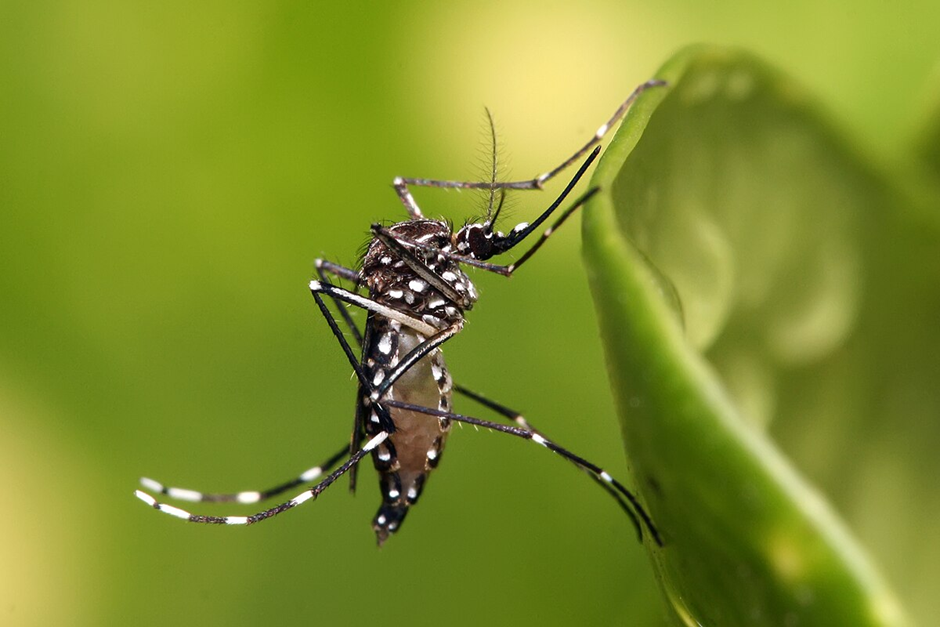
A recent study in PNAS (Proceedings of the National Academy of Sciences) challenges the traditional consensus on mosquito evolution.
- The Timeline Controversy:
- Traditional View (Triassic Origin): Suggests mosquitoes appeared ~220 million years ago. Supported by older molecular clock studies.
- Revised Hypothesis (Cretaceous Origin): The new study posits a younger origin ~106 million years ago.
- Scientific Basis for Revision:
- Branch Attraction Bias: A statistical error in previous studies where unrelated species appeared closely related due to high mutation rates.
- Genomic Shift: The genus Anopheles underwent a DNA composition shift (from G-C rich to A-T rich), which earlier studies misinterpreted as deep evolutionary divergence.
- The Co-Evolution Theory:
- Mosquitoes likely co-evolved with Plasmodium (Malaria parasite) ~43-46 million years ago.
- Culex Lineage: Historically associated with transmitting malaria to birds and reptiles.
- Anopheles Lineage: Evolved to transmit malaria to mammals.
Bio-Engineering the Vector:
With urbanization and climate change expanding vector territories, traditional controls (nets, insecticides) are failing. Genetic engineering offers precise, non-chemical solutions.
- Genomic Sequencing:
- Institutes in Bengaluru and the USA have sequenced the genome of Anopheles stephensi (a major urban malaria vector), enabling targeted gene editing.
- Gene Drive Technology:
- Concept: Proposed by Austin Burt (2003), it bypasses Mendelian laws of inheritance.
- Mechanism: Uses protein-based tools (like CRISPR) to force a specific trait (e.g., infertility) to be inherited by nearly 100% of offspring, rapidly spreading through wild populations.
- The OX5034 Mosquito (Self-Limiting):
- Developer: Oxitec (Released in Florida/Texas, 2020).
- Mechanism: Genetically Modified (GM) males carry a “self-limiting gene.”
- Outcome: When GM males mate with wild females, female offspring (the biters) die before adulthood; male offspring survive to continue the cycle.