
Why in the News?
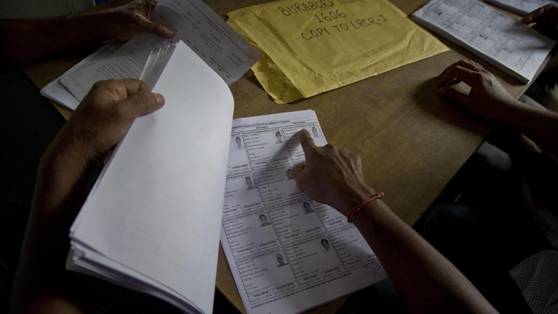
The issue of citizenship governance has recently resurfaced in the context of the Election Commission of India’s (ECI) countrywide Special Intensive Revision (SIR) of electoral rolls.
Background and Context: Conflict between Status and Evidence
A fundamental paradox of democracy is highlighted by the conflict where the state, created by the people, is tasked with determining who constitutes the people. This is seen in the present conundrum of citizenship verification.
Core Conflict
- Proof of Citizenship: Holding an Indian passport or having a name on the electoral rolls is no proof of citizenship, as these documents can be forged.
- Vexed Question: This situation presents a conflict between evidence of status and status of evidence, raising profound questions regarding the administration and determination of citizenship.
Legal and Constitutional Battle: SIR and ECI’s Mandate
The Special Intensive Revision (SIR) by the ECI is currently facing a legal challenge in the Supreme Court of India on several grounds, focusing on the jurisdiction and legality of the process.
Grounds for Legal Challenge Against SIR
- ECI’s Power: The Election Commission of India (ECI) is argued to have no power to determine citizenship, which is claimed to be solely within the purview of the Union Ministry of Home Affairs (MHA).
- Legality of SIR: Contention exists that no provision in the law allows for an en masse SIR, asserting that the revision can only be conducted selectively.
- Foreigner Determination: The determination of whether an individual is a foreigner can only be carried out by the MHA under the Citizenship Act and by quasi-judicial bodies such as Foreigners Tribunals constituted under the Foreigners Act, 1946.
ECI’s Counter-Argument
- Constitutional Mandate: The ECI’s constitutional mandate to determine eligibility for inclusion in the electoral rolls is argued to necessarily entail verifying citizenship status.
- Distinction in Process: The ECI’s central contention is that the process of assessing eligibility for enrolment cannot be equated with a formal determination of citizenship.
Fundamental Issue
- Presumption of Citizenship: The presumption that all residents are citizens unless proven otherwise is being questioned by the SIR process.
Burden of Proof and the Legal Regime
The existing legal framework for citizenship places the onus of proving citizenship on the individual, rather than on the state, particularly when challenged.
Absence of a Single Document
- No Single Evidence: No single piece of evidence countrywide conclusively proves Indian citizenship, lacking the status of being definitive evidence of citizenship status.
- Legal Regime Awaited: A legal regime for a countrywide adjudication of everyone’s citizenship, passed by Parliament, is awaiting rollout.
Centre’s Position on Proof
- Citizenship Act, 1955: The Citizenship Act, 1955, as amended in 2004, provides for the Central Government to compulsorily register every citizen and issue a National Identity Card (NIC).
- National Register of Citizens (NRC): The NICs are to be issued to citizens whose particulars are entered in the National Register of Citizens (NRC), which is a subset of the National Population Register (NPR).
- NPR and NRC Mandate: The NRC is mandated in the Act, while the NPR, which lists all residents, is authorised by rules framed under the Act. Only citizens who have proven their status are to be included in the NRC.
Evolution of Citizenship by Birth
Founders of the Republic favoured a territorial conception of citizenship (Jus Soli or ‘Right of the Soil’), but Jus Sanguinis (Right of Blood/lineage) gained more prominence through subsequent amendments.
- Pre-July 1, 1987: Persons born in India before this date are citizens regardless of who the parents are.
- July 1, 1987, to December 2, 2004: Persons born in India during this period are citizens only if either of the parents is a citizen of the country at the time of birth.
- On or after December 3, 2004: For eligibility, apart from at least one parent being a
‘Illegal Immigrant’ Determination
- 2003 Amendment: Legislation determined that a section of residents are ‘illegal immigrants’ who were to be identified and deported; they and their progeny would not be eligible for Indian citizenship by birth.
- Dual Proof Requirement: Eligibility now requires both parents to be determined as citizens, or one parent to be a citizen and the other not an illegal immigrant.
- CAA, 2019: A section of identified illegal immigrants qualify for Indian citizenship under the Citizenship (Amendment) Act, 2019, which became controversial due to the explicit religious test mandated.
Assam Exercise: A Case Study
The only State with a draft NRC, Assam, serves as a proof of the concept where the state determines who constitutes the people.
Section 6A and the Draft NRC
- Separate Regime: The Citizenship (Amendment) Act, 1985, inserted Section 6A into the Citizenship Act, 1955, creating a separate citizenship regime for Assam with varying cut-off dates.
- Draft NRC Outcome: A draft NRC, published in 2019, marked 19 lakh residents out of 3.29 crore as D, for Doubtful citizenship.
- Criteria for ‘D’: A person whose status as a citizen could not be “ascertained beyond reasonable doubt… to the satisfaction of the registering authority” ended up as a doubtful citizen.
Consequences and Reliance on Records
- Suspension of Rights: Once a person is marked ‘D’, their voting rights can be suspended, their citizenship can be determined by a foreigner’s tribunal, and they could be deported.
- Legacy Records: The process relied heavily on legacy records—documents regarding parentage and residency going back several decades—to prove the varying cut-off dates.
Paradox of Determination and State Apparatus
The administrative state is ultimately entrusted with the authority to determine who constitutes the people, a process that is often carried out at the lowest bureaucratic level.
Daily Determination
- Deciding Authority: Questions of citizenship, treason, and sedition are decided on a daily basis by the border agent, constable, village clerk, and voter enlisting officer.
- Proxy Exercise: The SIR by the ECI is viewed as a proxy of the NRC exercise. The same personnel (e.g., primary schoolteacher-BLO) involved in SIR under ECI oversight would likely make the same determination for NPR and NRC under MHA’s oversight.
Fundamental Contradiction
- The modern state apparatus, invested with the authority to determine who constitute the people, has a contradiction built in it since the state’s authority is created by the will of the people (sovereign).
- Regardless of which body oversees the exercise, the definition, design, and application of citizenship laws are structured such that the state decides who the people are.
Way Forward
- Clarify institutional mandates by statute or judicial interpretation so that competence for citizenship determination and competence for electoral eligibility verification are delineated, thereby reducing jurisdictional overlap and legal uncertainty.
- Place procedural safeguards in enrolment and verification processes, including independent oversight, standardised checklists for documentary scrutiny, opportunity for representation before decisions are finalised, and clear communication of recourse mechanisms, so that risk of disenfranchisement is minimised while integrity of rolls is preserved.
- Ensure administrative capacity building and training for field functionaries who will be engaged in verification tasks so that determinations are made consistently, lawfully and with sensitivity to human consequences, given that border agents, policemen and local registrars have been observed to make pivotal determinations.
- Adopt transparent evidence standards and secure legacy record access mechanisms so that reliance on decades-old documents is balanced by realistic recognition of constraints faced by many residents in producing such documents, thereby reducing arbitrary marking of persons as doubtful.
- Mandate independent review or quasi-judicial scrutiny prior to suspension of voting rights so that consequences such as disenfranchisement and initiation of deportation proceedings are not implemented without adequate legal process and avenues for redress.
- Coordinate inter-ministerial framework for NPR/NRC/MNIC implementation with parliamentary oversight so that promises of nationwide registration are translated into law and operationalised with due parliamentary debate and safeguards rather than ad hoc administrative exercises.
Conclusion
- The ongoing legal challenge against the ECI’s SIR brings into sharp focus the fundamental, political, and philosophical nature of citizenship governance in a democracy.
- It highlights the inherent paradox in the relationship between the people and the state, where the administrative state, a creation of the people, retains the ultimate power to define its citizenry, placing a significant burden of proof on the individual.
- The resolution of this vexed question necessitates a robust and clear legal framework that ensures both the integrity of electoral rolls and the protection of individual rights.
UPSC MAINS PYQs
- To enhance the quality of democracy in India the Election Commission of India has proposed electoral reforms in 2016. What are the suggested reforms and how far are they significant to make democracy successful? (2017)