
Why in the News?
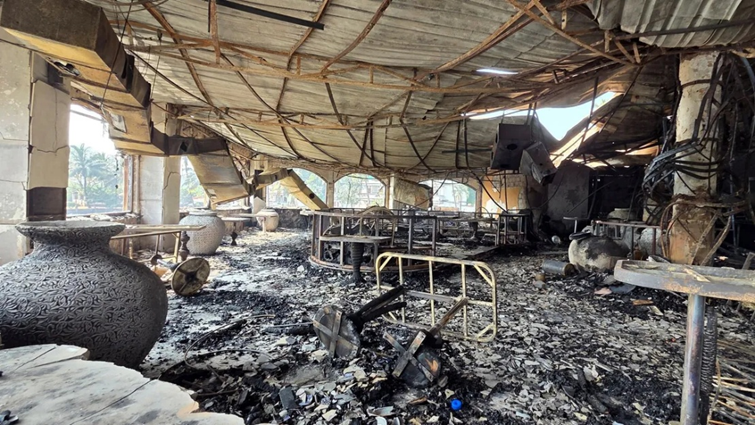
A technical report by the Directorate of Fire and Emergency Services, Goa revealed that the deadly nightclub fire in Arpora (Goa) that killed 25 people occurred due to major fire-safety lapses, regulatory failures and illegal operations.
Background: What Happened?
- The nightclub had been operating without a valid No-Objection Certificate (NOC) from the fire department.
- Local panchayat issued a demolition notice, but it was never enforced.
- The structure had:
- Wooden, highly flammable interiors
- Poorly ventilated basement
- Blocked exits
- Fire spread rapidly → victims died due to toxic smoke and oxygen deprivation.
This incident reflects a pattern seen across India in multiple industrial, commercial and residential fires.
Systemic Issues Highlighted
a) Regulatory failure
- Rules exist on paper but are ignored due to:
- Political patronage
- Bureaucratic inertia
- Corruption
- Weak enforcement capacity
- Illegal clubs in tourist hubs flourish under political protection.
b) Culture of non-compliance
- No fear of penalties or closure due to:
- Rare inspections
- Poor recording of violations
- Lack of continuous monitoring
- Establishments prioritise profits over safety.
c) Low priority for fire safety
- Fire departments often:
- Lack manpower
- Lack specialised equipment
- Face administrative delays
- Municipal bodies fail to enforce:
- Fire audits
- Structural safety norms
- Emergency exits and safety drills
The issue is not the absence of laws, but their non-implementation.
Broader Pattern Across India
Frequent tragedies have pointed to the same governance weaknesses:
- Firecracker units – Virudhunagar, Tamil Nadu
- Old buildings – Kolkata (frequent fires in commercial/residential structures)
- Industrial units – Kurnool (AP), Delhi, Pune
- Hospitals – ICU fires due to electrical short circuits
- Illegal nightclubs & bars across metros
Common thread: Weak state capacity, evasion of rules, and absence of accountability.
Key Governance Failures Identified
1. Poor enforcement of existing safety laws
- Licensing, audit norms, and building codes are not implemented.
2. Political interference
- Illegal establishments protected for revenue and vote-bank interests.
3. Bureaucratic inefficiency
- Paper-based approvals, delayed actions, lack of inspections.
4. Lack of deterrence
- Minimal penalties → repeated violations → recurring disasters.
5. Weak urban governance
- Urban Local Bodies (ULBs) lack:
- Technical expertise
- Fire-safety data systems
- Coordination with police and fire departments
What Needs to Change?
1. Mandatory periodic fire-safety audits
- Mandatory for commercial, industrial and hospitality establishments.
- Findings must be uploaded on public e-governance portals → transparency & accountability.
2. Empower Urban Local Bodies (ULBs)
- Strengthen municipalities with:
- Technical staff
- Licensing authority
- Powers to seal/demolish dangerous structures
- Local communities can be engaged for vigilance and reporting.
3. Strengthen institutional capacity
- Funding + training for fire departments.
- Quick-response infrastructure in high-density, tourist-heavy zones.
4. Penal consequences
- Heavy fines, license cancellation, and criminal liability for owners of non-compliant establishments.
5. Public awareness & risk communication
- Safety drills, fire-safety education, and citizen reporting networks.
6. Reduce political interference
- Independent regulatory oversight for commercial establishments.
Conclusion
The Goa nightclub fire is a symptom of deeper governance failures—regulatory apathy, corruption, and lack of deterrence. With India urbanising rapidly, such tragedies will recur unless fire-safety norms are enforced uniformly, transparently, and independently.
A culture of proactive compliance, empowered local governance, and continuous monitoring is essential to prevent the next disaster.
Source: Wanton negligence: On the Goa blaze – The Hindu
UPSC CSE PYQ
| Year | Question |
| 2024 | “Weak regulatory institutions are the biggest hurdle in ensuring public safety in India.” Discuss. |
| 2024 | Explain why fire-related incidents continue to rise in urban India despite existing laws and technical standards. |
| 2023 | Why do industrial and chemical accidents continue to occur frequently in India? Examine the gaps in India’s disaster management governance. |
| 2022 | “Administrative apathy and weak local governance are major causes of urban tragedies.” Comment. |
| 2022 | Discuss the challenges in ensuring safety in unregulated urban and peri-urban establishments. |
| 2021 | Why do fire accidents occur frequently in hospitals in India? Suggest measures to prevent them. |
| 2021 | Examine how political interference affects the functioning of regulatory agencies in India. |
| 2020 | Describe the role of NDMA and SDMAs in preventing man-made disasters. Are they effective? |
| 2019 | “India’s industrial safety architecture is outdated and poorly implemented.” Critically examine. |
| 2018 | “Implementation gaps, not policy gaps, are responsible for governance failures in India.” Comment. |