
By reading this article you can solve the below UPSC Model Question
Article 200 governs the Governor’s assent to Bills, ensuring constitutional dialogue, but can be misused to delay legislation and frustrate State assemblies.” Examine this in light of the recent Supreme Court advisory opinion and suggest measures to safeguard legislative supremacy.
                                                                                                                           (GS-2, Topic- Polity)
Why in the News?
- Recently, the Supreme Court of India delivered an advisory opinion in Special Reference No. 1 of 2025 regarding the scope of the Governor’s and the President’s discretionary powers concerning assent to Bills passed by State legislatures.
- This opinion has drawn scrutiny as it is perceived to potentially undermine the constitutional discipline and definitive limitations imposed on gubernatorial inaction by an earlier Supreme Court judgment.
Background and Context
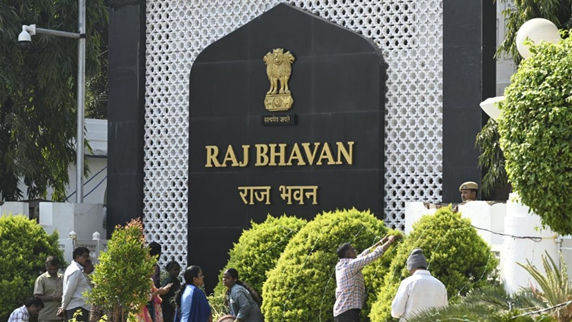
- A definitive ruling addressing the obstructionist tendencies of Raj Bhavan was previously pronounced by the Supreme Court in State of Tamil Nadu vs Governor of Tamil Nadu (April 2025).
- This judgment aimed to conclude the protracted practice of unelected Governors stymying Bills passed by elected legislatures through the indefinite delaying of assent.
- To ensure legislative supremacy, definitive timelines were imposed for Governors to act, and judicial intervention was permitted if these timelines were violated.
- The verdict offered the rare relief of allowing courts to deem the Governor’s unexplained inaction as assent, affirming democracy and addressing the resulting policy paralysis.
- However, before the full potential of this democracy-affirming verdict could be realised, the Court addressed a Presidential Reference (Special Reference No. 1 of 2025).
- This advisory opinion, delivered by a Constitution Bench led by the (now former) Chief Justice of India, Justice B.R. Gavai, has sought to dismantle the constitutional discipline imposed earlier, carrying great persuasive heft despite not formally overruling the previous judgment.
Court’s Interpretation and Observations
- Nature of Governor’s Role
- The Court described Article 200 as a repository of procedural mechanisms enabling a constitutional dialogue between Governor and State legislature.
- However, the dialogue was viewed as one-sided, because the Governor’s prolonged silence was not effectively addressed; timely response from both sides was necessary to uphold the integrity of the legislative process.
- Judicial Limitations
- The Court asserted that imposing judicial timelines lacked textual sanction, hence courts could not deem silence as assent.
- Violation of clarity established by the earlier verdict was noted, wherein the Court previously allowed judicial intervention when Governors delayed assent without explanation.
- In the new opinion, the only relief available for prolonged inaction is a direction to the Governor to decide, not an automatic construction of assent.
Issues and Concerns Arising
- Revival of Unfettered Discretion
- The constitutional discipline upheld in the State of Tamil Nadu verdict was weakened, reinstating broad discretionary authority for Governors.
- Unelected representatives may now delay or withhold assent without clear accountability mechanisms.
- Reversal of Limitations on Governor’s Powers
- Previously, Governors were required to act within reasonable time and assent to Bills returned after reconsideration.
- The new interpretation permits referral of Bills to the President even after reconsideration by the legislature, thus negating the binding nature of State legislatures’ re-enactment.
- Constitutional Safeguards Undermined
- Article 200 (dealing with the Governor’s power to give assent to a Bill) was presented as a repository of procedures that trigger a constitutional dialogue between constitutional functionaries.
- The first proviso of Article 200 clearly stated that once a Bill was reconsidered and returned, the Governor must assent.
- Allowing referral to the President at this stage creates a “constitutional black hole”, enabling Bills to die silently without resolution.
- The Court invoked Governor’s immunity under Article 361, barring deeper judicial scrutiny of inaction.
- Missed Opportunity for Reform
- The Reference had presented a rare chance for the judiciary to subject unilateral referral of Bills by Governors to judicial oversight.
- Instead, the opinion has conferred wider discretion, enabling Governors to send even reconsidered Bills to the President without clear limitations.
Constitutional Reasoning and Justification by the Court
- Invocation of ‘Checks and Balances’
- The Court justified its stance on the pretext of maintaining checks and balances among constitutional authorities.
- It argued that Assemblies might introduce amendments potentially conflicting with Central laws or the Constitution, warranting referral to the President.
- Problem of False Equivalence
- This reasoning created what commentators termed as false equivalence, as judicial review always remains available for testing validity of laws, whereas denial of assent leaves no redressal remedy.
- The power of assent was seen as procedural, not as a form of judicial review, hence elevating Governor’s assent power in such manner distorts the constitutional design.
Implications for Federalism and Governance
- The verdict represents a constitutional regression, diluting the balance between Union and State authorities.
- Legislative supremacy has been compromised, with Raj Bhavans resuming a dominant position in the law-making process.
- The principle of cooperative federalism stands threatened due to elastic discretionary powers conferred upon Governors.
- Policy paralysis in Opposition-ruled States may reappear, as governors could again employ delay tactics without facing effective legal consequences.
Way Forward: Restoring Constitutional Discipline
To address the constitutional retrogression and the resulting unwanted fillip to the Union’s domination over the States, the following steps are suggested to restore balance and accountability in the assent process:
- Upholding the Binding Nature of Reiteration: The explicit mandate under Article 200 must be strictly followed, requiring the Governor to assent to a Bill that has been re-enacted by the State Assembly. This closes the loophole that creates a constitutional black hole.
- Curtailing Unfettered Referral Power: The Governor’s discretion to refer reconsidered Bills to the President must be curtailed and subjected to transparent scrutiny, addressing long-standing concerns raised by bodies like the Sarkaria Commission.
- Maintain Assent as a Procedural Step: The Governor’s assent power must be confined to its role as a procedural aspect of law-making. It must not be elevated to the level of a preliminary judicial review conducted by Raj Bhavan, thereby preserving its nature as a ‘balance’ rather than a ‘check’.
- Strengthening Remedies Against Prolonged Inaction: The judicial remedy for prolonged inaction must be strengthened beyond a mere “direction to make a decision.” Such inaction must be treated as constitutionally impermissible conduct.
- Reaffirm Legislative Supremacy: The interpretation of Article 200 must unequivocally safeguard legislative supremacy, ensuring that the will of elected legislatures is not frustrated by the obstructionist tactics of unelected functionaries.
- Uphold the Rule Against Indirect Action: The principle that what cannot be done directly cannot be done indirectly must be rigorously applied. This prevents the Governor from using the expanded referral power to achieve the silent death of a Bill that could not be legally denied assent directly.
- Institutionalise Timely Constitutional Dialogue: New mechanisms must be introduced to ensure the process under Article 200 functions as an effective constitutional dialogue, mandating a proper and timely response from the Governor to prevent motivated silence.
Conclusion
Despite the challenges presented by the advisory opinion of the Supreme Court, the judicial discourse has clearly underscored the necessity of preserving legislative supremacy and the federal balance. The focus must now shift to advocating for robust constitutional practices that mandate timely gubernatorial action and firmly establish that the denial of assent cannot supersede the clear will of the elected State legislature.