
By reading this article you can solve the below UPSC Model Question
Oman has emerged as a key partner in India’s efforts to secure its extended neighbourhood.
Discuss how India–Oman relations contribute to India’s broader goals of regional stability, strategic autonomy, and global engagement.                                                    (GS-2, Topic- IR)
India and Oman share a deep-rooted, multi-dimensional relationship that spans history, culture, trade, maritime engagement, and strategic cooperation. What began as ancient maritime and commercial exchanges across the Arabian Sea has evolved into a robust strategic partnership encompassing defence, security, energy, trade, connectivity, technology, education, and digital finance.
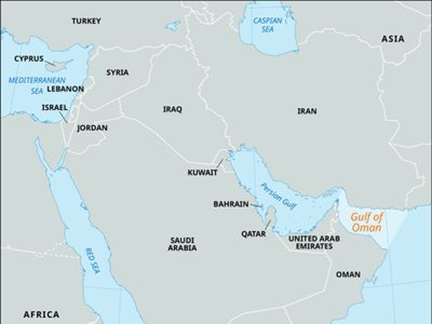
Oman occupies a unique and trusted position in India’s West Asia policy, owing to its strategic location at the mouth of the Gulf of Oman, its policy of moderation, mediation, and deliberate neutrality, and its consistent support for India during periods of regional uncertainty. In a region marked by conflicts and shifting alliances, Oman has remained an island of stability and mediation.
Concept and Historical Evolution of India–Oman Relations
India–Oman relations are best understood through the framework of strategic convergence combined with mutual trust.
Key conceptual pillars include:
- Strategic Autonomy: India’s engagement with Oman allows it to safeguard interests without entanglement in regional rivalries.
- Maritime Interdependence: Shared stakes in Indian Ocean security and freedom of navigation.
- Energy and Economic Complementarity: Oman as an energy partner; India as a market and investment destination.
- Soft Power and Diaspora Linkages: A strong Indian expatriate community reinforcing bilateral goodwill.
Historical Ties
- Centuries-old trade: India and Oman have traded across the Arabian Sea since ancient times, with Indian merchants using Omani ports as gateways to the Gulf.
- Cultural and social bonds: Shared maritime heritage, migration, and religious ties have strengthened people-to-people connections.
- Political alignment: During periods when the Gulf was ambivalent toward India and supportive of Pakistan, Oman maintained open and friendly relations, providing a reliable partner in West Asia.
Diplomatic Evolution
- 1955: Diplomatic relations formally established.
- 2005: MoU on military cooperation signed, paving the way for structured defence engagement.
- 2008: Strategic Partnership Agreement signed, reflecting the broadening of India-Oman cooperation beyond trade and culture.
- 2018 & 2025: Prime Minister Modi’s visits reaffirm strategic partnership; the 2025 visit coincides with 70 years of diplomatic relations.
- 2023: Sultan Haitham bin Tarik of Oman visited India, underscoring reciprocal diplomatic commitment.
Present Status of India-Oman Relations
The visit of Prime Minister Narendra Modi to Oman from December 15-18, 2025, as part of a three-nation tour to Jordan and Ethiopia, marks 70 years of diplomatic relations between the two countries. This visit in 2025 is described as “more than a routine diplomatic trip”; it is aimed at strengthening bilateral cooperation amid regional uncertainties.
Strategic and Defence Cooperation
- Defence and security cooperation form the bedrock of strategic partnership:
- Oman is the first Gulf country with joint exercises across all three Indian armed forces.
- Indian naval ships have been stationed in the Gulf of Oman since 2012-13 for anti-piracy operations.
- Oman provides overflight and transit facilities for Indian military aircraft.
- Duqm Port Agreement (2018):
- Provides basing facilities, operational turnaround, and logistics support for Indian Navy.
- Strategic location enables monitoring of Chinese PLA naval activity in the Indian Ocean.
- Defence procurement and collaboration:
- Oman purchased INSAS rifles (2010) from India.
- Potential deals for Tejas fighter aircraft, naval patrol ships, radar equipment, and Jaguar spares.
- Joint focus on counter-terrorism, anti-piracy operations, and maritime security.
- Significance: Ensures India maintains a strategic footprint in the Gulf, critical for regional stability and maritime security.
- Moreover, Oman is acknowledged as a trusted partner that enables India’s strategic presence in the Gulf and Indian Ocean, vital in the context of regional volatility post-Gaza ceasefire and other conflicts.
Economic and Commercial Cooperation
- Bilateral trade: $10.613 billion in FY 2024-25, showing steady growth.
- Foreign Direct Investment (FDI): Oman’s cumulative FDI in India from 2000-2025 stands at $605.57 million.
- Oman-India Joint Investment Fund (OIJIF):
- 50-50 JV between State Bank of India and Oman Investment Authority.
- Invested $600 million, with the third tranche of $300 million announced in 2023.
- Digital Economy Cooperation:
- MoU between Central Bank of Oman and NPCI in October 2022.
- Launch of Rupay debit cards in Oman, promoting Digital Public Infrastructure (DPI).
- Comprehensive Economic Partnership Agreement (CEPA):
- Likely to be signed during the 2025 visit.
- Oman to become second Gulf country after UAE to have CEPA with India.
- Helps diversify trade, mitigate US tariff impacts, and enhance economic cooperation.
Emerging Domains of Cooperation
- Energy Cooperation
- Focus on green hydrogen, renewable energy, critical minerals, and strategic petroleum reserves.
- Potential arrangement for Oman to store strategic petroleum reserves in India, similar to UAE.
- Connectivity
- Oman’s role in the India-Middle East-Europe Economic Corridor (IMEC) for trade and transport.
- Space and Technology
- Potential expansion of space cooperation agreements (existing MoU from 2018).
- Education and Health
- Offshore campuses of IITs and IIMs in Oman.
- Collaboration in healthcare innovation and telemedicine.
- Defence Industrial Collaboration
- Joint manufacturing and supply of critical weapon platforms.
Significance of India-Oman Relations
- Strategic Geopolitical Importance
- Oman’s location at the entrance of the Gulf of Oman and Arabian Sea provides India with a critical strategic foothold in West Asia and the Indian Ocean Region (IOR).
- Enables India to monitor regional developments, safeguard maritime trade routes, and enhance situational awareness in a conflict-prone region.
- Trusted Partner in Regional Stability
- Oman’s neutral and mediation-oriented foreign policy makes it a reliable partner for India in the Gulf, providing stability amid regional tensions.
- Acts as a balancing factor in India’s West Asia policy, especially during conflicts or geopolitical uncertainties.
- Maritime Security and Defence Cooperation
- Joint naval exercises and anti-piracy operations enhance Indian Ocean security and regional maritime stability.
- Duqm Port and overflight facilities provide India with strategic operational and logistics support, strengthening defence preparedness.
- Economic and Trade Significance
- Bilateral trade reached $10.613 billion (FY 2024-25), with potential for further growth under the Comprehensive Economic Partnership Agreement (CEPA).
- Investment and joint ventures, like the Oman-India Joint Investment Fund (OIJIF), promote mutual economic growth and industrial cooperation.
- Energy Security and Collaboration
- Oman is a reliable supplier of oil and gas, critical for India’s energy needs.
- Emerging cooperation in green energy, renewable resources, and strategic petroleum reserves strengthens India’s energy diversification and sustainability goals.
- Technological and Digital Cooperation
- Collaboration in space, ICT, AI, and fintech enhances India’s technological influence in West Asia.
- Initiatives like Rupay integration in Oman and NPCI partnerships showcase India’s Digital Public Infrastructure (DPI) expertise globally.
- Education, Health, and Human Capital Development
- Offshore campuses of IITs and IIMs, along with healthcare collaboration, promote knowledge transfer, skill development, and research cooperation.
- Strengthens people-to-people ties and soft power through engagement with the Indian diaspora in Oman (over 500,000 expatriates).
- Strategic Diplomacy and Multilateral Engagement
- Oman supports India in regional diplomacy, multilateral forums, and strategic initiatives, including G-20 engagements in 2023 (Oman invited as Guest Nation during India’s G-20 Presidency (2023)) and connectivity projects.
- Facilitates India’s balanced, forward-looking, and stable approach in West Asia while enhancing its global strategic presence.
Challenges in India–Oman Relations
- Underutilised Trade Potential: Despite strong political and strategic engagement, bilateral trade remains modest compared to geographical proximity and historical ties. Limited diversification beyond the energy sector and slow progress in trade facilitation mechanisms continue to constrain expansion.
- Delayed Economic Integration Frameworks: The absence of a finalised Comprehensive Economic Partnership Agreement (CEPA) restricts deeper market access, tariff rationalisation, and supply-chain integration. Regulatory complexity and procedural hurdles further affect ease of doing business.
- Regional Instability and Security Spillovers: Persistent geopolitical tensions in West Asia pose risks to trade routes, energy flows, and investment confidence. Maritime disruptions in the Gulf and adjoining sea lanes can directly impact bilateral cooperation and economic stability.
- Balancing Competing Gulf Partnerships: India must balance expanding relations with UAE, Saudi Arabia, Qatar, and Iran while preserving Oman’s role as a neutral and stabilising partner. Divergent regional alignments may occasionally limit the depth of security and diplomatic coordination.
- Energy Transition and Policy Alignment Challenges: While cooperation in renewables and green hydrogen is expanding, differences in transition timelines, financing structures, and access to clean technologies complicate collaboration. Managing the shift from hydrocarbons without undermining energy security remains a challenge.
- Competition from Extra-Regional Powers: The growing economic, infrastructural, and strategic presence of China and other major powers in the Gulf creates competitive pressures for India. External investments and naval activities can dilute India’s relative influence.
- Logistical and Connectivity Constraints: Limited direct shipping routes, air connectivity gaps, and underdeveloped port-to-port linkages reduce trade efficiency. Full operationalisation of strategic assets such as Duqm Port requires sustained institutional coordination.
Way Forward for India–Oman Relations
- Early Conclusion of CEPA
- Fast-track the India–Oman Comprehensive Economic Partnership Agreement (CEPA) to unlock trade potential through tariff reduction, services liberalisation, and investment protection.
- Promote sectoral diversification beyond hydrocarbons into manufacturing, logistics, pharmaceuticals, and agri-exports.
- Deepening Defence and Maritime Cooperation
- Expand joint military exercises, naval patrols, and intelligence sharing to address maritime security and non-traditional threats.
- Fully operationalise Duqm Port for logistics, maintenance, and sustained naval presence in the Indian Ocean Region.
- Strengthening Energy Transition Partnerships
- Institutionalise cooperation in green hydrogen, solar energy, critical minerals, and energy storage technologies.
- Encourage public-private partnerships and joint research to align energy transition goals with long-term energy security.
- Enhancing Connectivity and Logistics Integration
- Improve direct shipping, port-to-port linkages, and air connectivity to reduce trade costs and time.
- Integrate Oman more closely into regional and trans-continental connectivity corridors, strengthening supply chain resilience.
- Scaling Digital and Technology Cooperation
- Expand Digital Public Infrastructure (DPI) collaboration beyond payments to include digital identity, fintech regulation, and e-governance platforms.
- Promote joint innovation in AI, fintech, and cybersecurity.
- Boosting Investment and Financial Collaboration
- Expand the scope and size of the Oman–India Joint Investment Fund (OIJIF) into emerging sectors such as start-ups, renewables, and smart infrastructure.
- Facilitate smoother regulatory coordination to attract long-term institutional investors.
- People-Centric and Knowledge-Based Engagement
- Strengthen cooperation in education, healthcare, skill development, and labour mobility frameworks.
- Establish offshore campuses of Indian institutions and ensure diaspora welfare and skill upgradation aligned with Oman’s development goals.
Conclusion
India-Oman relations epitomize a multi-dimensional, strategic, and historically rooted partnership. From defence to trade, maritime security to digital finance, energy to education, the bilateral relationship is poised for a new phase of growth. The Prime Minister’s 2025 visit reinforces India’s commitment to a trusted, balanced, and strategic partnership, with Oman playing a pivotal role in India’s extended neighbourhood strategy and global outreach. This partnership is not just historical; it is future-ready, resilient, and mutually beneficial.