
After reading this article, you can solve the UPSC Mains practice question given below:
How has India’s transition from non-alignment to multi-alignment helped preserve strategic autonomy in a fragmented global order? Illustrate with recent examples. (GS-II, Subject – International Relations)
Why in the News?
- Recently, the “year of promise” for Indian diplomacy has faced a significant recalibration.
- While 2025 began with expectations of a reset in India-U.S. ties and normalization with China, it has concluded with mounting pressures in economic security, energy stability, and regional volatility.
- The emergence of reciprocal tariffs, shifting National Security Strategies (NSS), and fragile transitions in the neighborhood have compelled New Delhi to move beyond “performative diplomacy.”
Evolution of India’s Foreign Policy: From Non-Alignment to Multi-Alignment
Foreign policy is the mechanism through which governments guide their diplomatic relations and interactions with other countries. India’s foreign policy has evolved significantly over the decades, shaped by historical legacies, domestic priorities, and changing global dynamics.
1. Pre-Independence Era and Role of INC
- During British rule, India’s foreign policy was largely dictated by the colonial government, focusing on supporting British interests and limited international engagement.
- The Indian National Congress (INC) began advocating for India’s interests globally, mobilizing support for independence and raising awareness about colonial exploitation.
2. Nehruvian Era (1947–1964)
- India adopted a non-aligned and independent stance, emphasizing democracy and strategic autonomy.
- Panchsheel Principles guided foreign relations, promoting mutual respect, non-aggression, non-interference, equality, and peaceful coexistence.
- India became a founding member of the UN and actively engaged in decolonization and disarmament initiatives.
- Nehru was instrumental in establishing the Non-Aligned Movement (NAM).
- The Sino-Indian War (1962) highlighted the need for military modernization, while close ties with the Soviet Union secured political, economic, and defense support.
3. Shastri and Indira Gandhi Eras (1964–1984)
Shastri (1964–1966):
- Managed the Indo-Pakistan War of 1965 and signed the Tashkent Declaration.
- Strengthened ties with the Soviet Union and received PL 480 food aid from the US.
Indira Gandhi (1966–1977, 1980–1984):
- Oversaw the Indo-Pakistan War of 1971, resulting in Bangladesh’s creation and India’s emergence as a regional power.
- Signed the Indo-Soviet Treaty of Peace, Friendship, and Cooperation (1971).
- Conducted India’s first nuclear test (Smiling Buddha, 1974).
- Played a key role in founding SAARC (1985) for regional cooperation.
4. Rajiv Gandhi Era (1984–1989)
- Continued strong ties with the Soviet Union and engaged in the Sri Lankan Civil War, leading to the Indo-Sri Lanka Peace Accord (1989).
- Managed domestic security challenges such as the 1985 Air India bombing.
- Promoted economic liberalization to attract foreign investment.
5. 1990s: Liberalization, Global Engagement, and Nuclearization
- LPG reforms emphasized economic diplomacy and global integration.
- Gujral Doctrine guided neighborly relations, promoting non-reciprocity, sovereignty, non-interference, and peaceful dispute resolution.
- Look East Policy (1991) strengthened ties with Southeast Asia.
- 1998 nuclear tests established India as a nuclear power, leading to sanctions.
- India joined the WTO (1995), enhancing global trade.
6. NDA-I Era (1998–2004)
- Conducted Pokhran-II nuclear tests, asserting strategic capabilities.
- Managed the Kargil War (1999), demonstrating military deterrence.
- Improved India-US relations, highlighted by President Clinton’s 2000 visit.
7. UPA-I & II Era (2004–2014)
- Signed the Indo-US 123 Nuclear Agreement (2008), ending nuclear isolation.
- Developed a strategic partnership with China, including border defense agreements.
- Resolved land boundary disputes with Bangladesh (2014).
- Strengthened ties with Southeast Asia via the Look East Policy and India-ASEAN FTA (2010).
- Advocated for UN Security Council reforms for India’s permanent membership.
8. NDA-II Era (2014–Present)
- Adopted the Neighbourhood First Policy, prioritizing South Asia and Indian Ocean engagement.
- Expanded the Act East Policy for economic, cultural, and strategic ties in the Indo-Pacific.
- Joined the Shanghai Cooperation Organisation (SCO) for regional security collaboration.
- Strengthened the India-US Strategic Partnership across defense, trade, energy, and counterterrorism.
- Committed to global climate action through the Paris Agreement.
9. Recent Trends (2025)
- Expected bilateral trade agreements with the US and EU remained pending.
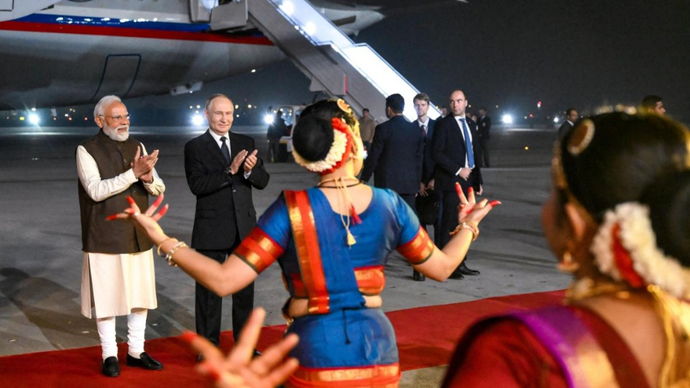
- Engagements with China and Russia were largely symbolic, with unresolved security and investment concerns.
- Regional diplomacy faced challenges due to terrorism, political instability in Bangladesh, Nepal, and Myanmar, and evolving alliances such as Saudi-Pakistan defense cooperation.
Significance of India’s Foreign Policy
India’s foreign policy has transitioned from “passive non-alignment” to “proactive multi-alignment,” serving as a primary tool to secure national interests in an increasingly fragmented global order. Its importance can be understood through the following dimensions:
1. Economic Security & Global Integration: Foreign policy acts as the “economic engine,” facilitating the capital and technology flows necessary for Viksit Bharat @ 2047.
- Strategic Role: Securing Free Trade Agreements (FTAs) to de-risk supply chains and integrate Indian MSMEs into global markets.
- 2025 Milestone: The finalization of the India-UK Comprehensive Economic Trade Agreement (CETA) and the launch of “Mission 500” with the U.S. to double trade to $500 billion by 2030.
- Fact: India’s exports reached a record high of $73.99 billion in late 2025, supported by the EFTA deal and the operationalization of the Oman CEPA.
2. Energy Security & Strategic Autonomy: Diplomacy ensures a “multi-vendor” energy basket, shielding the economy from price shocks and geopolitical bullying.
- Strategic Role: Balancing traditional fossil fuel imports with a leadership role in the global green transition.
- Recent Example: Despite Western tariffs, India maintained Russian Ural oil imports (covering ~35% of demand), asserting its right to prioritize domestic energy inflation over bloc politics.
- Green Leadership: Transitioning from oil-dependence to renewable leadership via the International Solar Alliance (ISA) and the Global Biofuels Alliance (GBA).
3. Regional Stability (Neighbourhood First & SAGAR): Ensuring a peaceful periphery is vital to preventing external hostile powers from “encircling” India.
- Strategic Role: Acting as the “First Responder” and “Net Security Provider” in the Indian Ocean Region (IOR).
- 2025 Context: Managing the “zigzag” relations with Nepal and fragile transitions in Bangladesh to maintain border sanctity.
- Operational Milestone: Launch of the MAHASAGAR doctrine (March 2025) in Mauritius, emphasizing “Mutual and Holistic Advancement for Security and Growth.”
4. Geopolitical Balancing (Multi-Alignment): India maintains Strategic Autonomy by engaging competing power centers without becoming a “junior partner” to any.
- Strategic Role: Positioning India as a “Non-West but not Anti-West” pole.
- Recent Example: Simultaneous participation in the Quad (maritime security with the US/Japan) and BRICS/SCO (continental stability with Russia/China).
- Defense Diversification: Launching the iCET with the U.S. while continuing the S-400 and BrahMos (Indo-Russian) partnerships.
5. Voice of the Global South (Vishwa-Bandhu): India bridges the gap between the developed “Global North” and the developing “Global South.”
- Strategic Role: Transforming India from a “Rule-Taker” to a “Rule-Shaper” in global governance.
- 2025 Achievement: Leading the charge for UNSC and Multilateral Development Bank (MDB) reforms, following the successful inclusion of the African Union in the G20.
- Digital Diplomacy: Exporting the “India Stack” (UPI, Aadhaar) to over 8 countries as a scalable model for financial inclusion.
6. National Security & Integrated Deterrence: Foreign policy enhances internal security through global intelligence networks and counter-terrorism cooperation.
- Strategic Role: Delegitimizing state-sponsored terrorism on the world stage while building indigenous defense capabilities.
- Recent Example: Operation Sindoor (2025)—a military response to cross-border strikes—was successfully supported by a diplomatic campaign that prevented international isolation.
- Maritime Domain Awareness: Expanding the Malabar Exercises and launching AIKEYME (Africa-India Maritime Engagement) to secure sea lanes.
7. Climate Justice & Sustainable Development: India uses diplomacy to advocate for Common But Differentiated Responsibilities (CBDR) and “Climate Finance.”
- Strategic Role: Leading global initiatives that balance environmental protection with the right to development.
- Commitment: The “Panchamrit” pledge (Net Zero by 2070) and Mission LiFE, which seeks to shift global consumer behavior towards sustainability.
- Disaster Resilience: The CDRI (Coalition for Disaster Resilient Infrastructure) helps vulnerable island nations prepare for climate-induced catastrophes.
8. Diaspora & Human-Centric Diplomacy: The 32 million-strong diaspora acts as India’s “Permanent Ambassadors,” contributing remittances (~$110bn+) and soft power.
- Strategic Role: Ensuring the safety and rights of Indians abroad while leveraging their influence in host-country politics.
- Recent Example: Operation Kaveri (Sudan) and the Migration and Mobility Partnership with the EU to facilitate legal talent flow.
- Visa Diplomacy: High-level negotiations in 2025 to secure H-1B visa interests and student safety in North America.
Challenges in the India’s Foreign policy
India’s foreign policy in 2025 confronted multiple interconnected challenges:
1. Economic Disruptions and Trade Protectionism: The global shift toward “economic nationalism” has created significant roadblocks for India’s export-oriented growth.
- The Tariff Challenge: The introduction of a 25% reciprocal tariff by major trading partners like the U.S. (under the 2025 administration) has hit labor-intensive sectors such as apparel, gems, and jewelry.
- Stalled Negotiations: Despite progress, “mega-deals” like the India-EU FTA remain stuck over issues of carbon taxes (CBAM) and labor standards, hindering India’s goal of becoming a global manufacturing hub.
2. Energy Security Amidst Sanctions Pressure: Navigating the global energy market while balancing ties with sanctioned nations poses a severe reputational and economic risk.
- The “Sanctions Maze”: India faces immense pressure to “zero out” imports from traditional partners. The recent 25% surcharge imposed by Western blocs on Russian Ural oil has increased the landed cost of energy, threatening domestic fiscal stability.
- Strategic Dilemma: Moving away from affordable Russian or Iranian energy could lead to a spike in domestic inflation, while staying the course risks secondary sanctions on Indian financial institutions.
3. Revisionist Power Dynamics and the Asian Balance: The evolving relationship between the U.S., China, and Russia has created a highly unpredictable security environment in Asia.
- The G-2 Threat: Any potential “Grand Bargain” or G-2 arrangement between the U.S. and China could marginalize India’s influence in the Indo-Pacific.
- Softening Western Stance: The 2025 U.S. National Security Strategy (NSS) reflects a more ambiguous tone toward Chinese aggression, leaving India to manage the Line of Actual Control (LAC) stand-off with less explicit Western diplomatic backing.
4. Neighborhood Volatility and the “Ring of Fire”: India’s immediate periphery is currently characterized by fragile transitions and the rise of anti-India sentiments.
- Regime Changes: The 2024–25 political upheavals in Bangladesh and Nepal have installed transitional governments that are less predictable than their predecessors.
- Deepening Hostility: The announcement of a Saudi-Pakistan mutual defense pact and the rise of ultra-hawkish military leadership in Islamabad (under Field Marshal Asim Munir) have revitalized the “two-front” security threat for New Delhi.
5. Erosion of the Rules-Based International Order: The failure of multilateral institutions like the UN Security Council to prevent or resolve conflicts has created a global power vacuum.
- Global Governance Crisis: China’s rollout of its own “Global Governance” framework seeks to replace the existing Western-led order with one that favors authoritarian stability over democratic norms.
- Weakened Norms: The global acceptance of peace proposals in Ukraine and Gaza that are seen as favoring the aggressors signals that “might is right” is returning to the forefront of international relations.
6. The “Vishwamitra” vs. “Vishwa-Victim” Narrative: India faces a persistent challenge in maintaining its image as a global leader while managing domestic and regional criticisms.
- The Credibility Gap: International observers often point toward double standards regarding India’s vocal concern for minorities abroad (e.g., in Bangladesh) versus its internal socio-political landscape.
- Narrative Control: There is a risk of slipping into a “Vishwa-victim” mindset, where diplomatic setbacks are blamed entirely on external machinations (Western sanctions or Chinese maneuvering) rather than a lack of pragmatic engagement.
7. Non-Traditional Security and Technological Warfare: The weaponization of supply chains and the rise of cyber-warfare have added new layers to the traditional security paradigm.
- Technological Chokepoints: Dependence on foreign technology for semiconductors and 5G infrastructure makes India’s digital economy vulnerable to “kill switches” controlled by external actors.
- Information Warfare: The use of deepfakes and state-sponsored disinformation campaigns in the neighborhood (especially from Turkey and Azerbaijan) seeks to damage India’s global reputation and incite internal discord.
Strategic Roadmap: Way Forward for India’s Foreign Policy (2026)
India’s foreign policy must adapt to a complex global order by balancing strategic autonomy, regional stability, and global influence. This requires the seamless integration of economic strength, military capability, and diplomatic outreach into a coherent framework of Integrated Deterrence to ensure credible influence and sustained strategic autonomy.
1. Diversifying Neighborhood Engagement (Track 1.5 & 2 Diplomacy): The political volatility in Bangladesh and Nepal proves that relying solely on “incumbent regimes” is risky.
- Broadening Outreach: India must engage beyond traditional allies to include opposition parties, civil society, and youth leaders in neighboring states to prevent “anti-establishment” sentiment from turning into “anti-India” sentiment.
- Strategic Outcome: Ensuring continuity of projects regardless of regime changes, effectively neutralizing the “China factor” in domestic neighborhood politics.
2. Countering “Trump 2.0” Transactionalism with Hard Leverage: With the U.S. utilizing tariffs as diplomatic leverage, India must move beyond shared values to shared strategic utility.
- Defense as a Bargaining Chip: Leverage massive defense procurements (e.g., GE F414 jet engines, MQ-9B drones) and the iCET framework to secure trade concessions or H-1B visa relaxations.
- Technology Co-development: Positioning India as the safest destination for “China Plus One” manufacturing, focusing on critical minerals and semiconductor supply chains.
3. Institutionalizing the “Vishwa-Bandhu” Role: India must move from being a “Voice” of the Global South to being its “Infrastructure Provider.”
- Digital Public Infrastructure (DPI) Export: Accelerate the rollout of the UPI and Aadhaar stacks to African and Southeast Asian nations to build long-term institutional dependence on Indian technology.
- Multilateral Reform: Use the 2026 BRICS Chairship to lead a constructive (not adversarial) reform of the WTO and IMF, ensuring India remains the bridge between the West and the Rest.
4. “Verify and De-escalate” Border Strategy: The 2025 thaw with China must be treated with strategic caution rather than optimism.
- Hard Power Readiness: Maintain high-altitude military preparedness while pursuing functional stabilization.
- Investment Screening: Continue the “Trusted Source” protocols for Chinese FDI in sensitive sectors (telecom, power) to prevent technological “kill switches” while allowing non-sensitive trade to balance the deficit.
5. Energy Sovereignty via the “Green-Grey” Balance: India must manage the transition from “Grey” (Russian oil) to “Green” (Solar/Hydrogen) without inviting sanctions.
- Alternative Sourcing: Proactively expand energy ties with Guyana, Brazil, and the UAE to reduce the “sanction risk” associated with the 25% surcharge on Russian Ural crude.
- International Solar Alliance (ISA): Use the ISA to secure global “Critical Mineral” supply chains, ensuring India isn’t just a consumer but a refiner of the green economy.
6. Consistent Narrative & Soft Power Realism: To avoid the “Vishwa-victim” trap, India must align its international rhetoric with domestic consistency.
- Internal-External Synergy: Ensuring that concerns about minority rights abroad (e.g., in Bangladesh) are backed by a robust, inclusive narrative at home to protect global credibility.
- Cultural Diplomacy: Leveraging the diaspora not just for remittances, but as a pressure group in host countries to safeguard India’s national interests during trade negotiations.
7. Maritime Domain Awareness (MDA) & “Act East” 2.0: As the land border remains tense, the Indian Ocean must become India’s “Power Theatre.”
- Tri-Service Integration: Strengthening the Andaman and Nicobar Command as a sentinel for the Malacca Strait.
- Coalition Building: Deepening maritime security pacts with France, Indonesia, and Vietnam to offer a credible security alternative to China’s “String of Pearls.”
Conclusion
In a world turning increasingly transactional, India’s foreign policy must balance strategic autonomy with the realities of global inter-dependence. The disappointments of 2025 serve as a reminder that symbolic gestures cannot replace tangible strategic gains. By aligning national interests with consistent global principles, India can navigate the “polycrisis” and solidify its position as a stabilizing force in a multipolar world.