
Why in the News
- The Supreme Court of India recently stayed the Delhi High Court’s order that had suspended the prison sentence and granted bail to former MLA Kuldeep Singh Sengar, convicted for the kidnap and rape of a minor in Unnao in 2017.
- The controversy centers on whether an MLA qualifies as a ‘public servant’ under Section 5(c) of the POCSO Act, which considers rape by a public servant as aggravated sexual assault, carrying a minimum 20-year sentence to life imprisonment.
- The Central Bureau of Investigation (CBI) argued that persons in positions of dominance, such as MLAs or MPs, should be included under the aggravated provision to prevent abuse of power over children.
About the POCSO Act
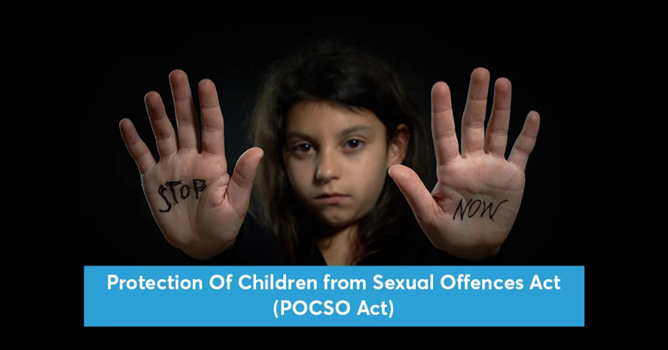
The POCSO Act was enacted to provide a specialized, child-friendly legal system for the protection of minors from sexual abuse.
- Enactment: The Protection of Children from Sexual Offences (POCSO) Act was enacted on 14th November 2012 to address sexual abuse, sexual harassment, and exploitation of children in India. It is administered by the Ministry of Women and Child Development.
- International Compliance: The Act was introduced in line with India’s obligations under the UN Convention on the Rights of the Child (1992), emphasizing protection from all forms of sexual exploitation.
- Definition of Child: A child is defined as any person below 18 years of age.
- Special Legal Framework: Provides a child-friendly system for reporting, investigation, and trial of sexual offences against children.
- Objectives:
- Prevent and deter sexual offences against children.
- Ensure speedy and effective justice through special courts.
- Maintain child-sensitive procedures during investigation and trial.
- Amendments: In 2019, penalties were strengthened, including the introduction of death penalty for certain aggravated offences against children under 16 years.
Procedural Safeguards and POCSO Rules, 2020
The POCSO Rules, 2020 were introduced to streamline the implementation of the Act and prioritize the victim’s rehabilitation.
- Mandatory Reporting: Any person (except a child) with knowledge of an offense must report it. Failure to report is punishable with imprisonment.
- Child-Friendly Testimony: Recording of the child’s statement must be done at their residence or a place of their choice, usually by a woman police officer not in uniform.
- Support Person (Rule 4): The Child Welfare Committee (CWC) assigns a support person to assist the child through the entire legal process, ensuring their mental and emotional well-being.
- Interim Compensation (Rule 9): Special Courts can grant immediate financial relief to the child for urgent needs (medical, educational, or rehabilitative) even before the trial concludes.
Key Provisions of the POCSO Act
- Gender-neutral legislation: The Act protects all children, defining a child as any person below 18 years, and applies equally to boys and girls.
- Mandatory reporting: Any individual or person in charge of an institution who becomes aware of a sexual offence against a child is legally obligated to report it; failure to do so is punishable under the law.
- No time limit for reporting: Victims are allowed to report sexual offences at any point in time, even years after the incident.
- Confidentiality of the victim: The Act strictly prohibits disclosure of the child’s identity in any form of media unless authorised by the special court.
- Child protection during legal process: The Act provides child-friendly procedures for investigation, recording of evidence, and trial, ensuring the safety and well-being of the victim.
- Special courts: Establishes Fast Track Special Courts (FTSCs), including exclusive POCSO courts, to ensure speedy trial of cases.
- Support mechanisms: Child victims may be assisted by support persons who help them navigate the investigation and trial, and provide emotional, educational, and legal guidance.
Key Offenses and Penalties under POCSO Act
The Act differentiates between offenses based on their gravity and the status of the perpetrator.
- Penetrative Sexual Assault (Section 3): Punishment involves imprisonment for a term between 10 years and life, along with a fine.
- Aggravated Penetrative Sexual Assault (Section 5): This involves offenses committed by people in positions of trust or authority (e.g., police, armed forces, public servants, or medical staff).
- Note: The 2019 Amendment increased the minimum punishment for this category from 10 years to 20 years, extending to life imprisonment or the death penalty.
- Sexual Harassment & Pornography: The Act explicitly defines non-penetrative sexual assault and makes the storage of child pornography a criminal offense.
Issues with the POCSO Act
- Criminalisation of Adolescent Consensual Sex: The Act does not differentiate between consensual sexual activity among adolescents (16–18 years) and sexual abuse, leading to the potential criminalisation of teenagers in consensual relationships.
- Studies indicate that a significant number of POCSO cases involve “romantic relationships”, especially in states like West Bengal, Assam, and Maharashtra.
- Age of Consent Conflicts:
- The age of consent under POCSO is 18 years, which aligns with the legal age of majority and minimum age of marriage.
- There is a conflict with personal laws, such as Muslim personal law, which allows marriage at puberty (~15 years), creating legal and social inconsistencies.
- The Union Cabinet’s proposal to raise the legal age of marriage for women to 21 years also interacts with POCSO provisions, complicating implementation.
- Lowering the age of consent under POCSO could impact efforts to prevent child marriage and undermine broader child protection measures.
- Awareness Gaps: Many children, parents, and institutions are not adequately aware of the law, reporting mechanisms, or protective measures, leading to underreporting of offences.
- Rise in Cyber Crimes and Abuse: Cases of online sexual exploitation and child pornography have increased, especially after the COVID-19 pandemic, exposing limitations in law enforcement capacity and digital monitoring.
- Legal Interpretation Issues: Certain provisions, like Section 5(c) on aggravated sexual assault by a public servant, have led to ambiguities in interpretation, as seen in cases like the Unnao rape case, where questions arose about whether elected representatives (MLAs/MPs) fall under the definition of “public servant.”
- Trial and Enforcement Challenges: Despite the establishment of Fast Track Special Courts (FTSCs), many cases experience delays in investigation and trial, which can compromise justice for child victims.
Recommendations by the 22nd Law Commission of India
- The 22nd Law Commission of India, constituted for a three-year term from 21st February 2020 and chaired by Justice Rituraj Awasthi (Retd.) from 9th November 2022, has reviewed issues related to the POCSO Act.
- The Commission recommended against lowering the age of consent, stating that doing so could be detrimental to girls’ protection and may weaken existing safeguards.
- It emphasized the importance of awareness programs on adolescent health, including mandatory sex education in schools and teaching the fundamentals of consent under the POCSO Act to ensure informed and safe behaviour among minors.
Judicial and Administrative Initiatives
To curb child abuse and improve conviction rates, the Government has initiated several infrastructure and awareness projects:
- Fast Track Special Courts (FTSCs): Following the Criminal Law (Amendment) Act, 2018, the Department of Justice initiated a Centrally Sponsored Scheme in October 2019 to establish 1,023 Fast Track Special Courts (FTSCs), including 389 exclusive POCSO Courts, across India.
- POCSO e-Box: An online portal launched by the National Commission for Protection of Child Rights (NCPCR) to allow children to report abuse directly and anonymously.
- Beti Bachao Beti Padhao: A flagship initiative that integrates child safety and survival into the broader framework of women’s empowerment.
- Juvenile Justice (Care and Protection) Act, 2015: Works in tandem with POCSO to provide a comprehensive safety net for children in need of care and protection.
- Child Marriage Prohibition Act, 2006: Prevents child marriage.
- Child Labour (Prohibition and Regulation) Act, 2016: Protects children from exploitative labor.
- Child Abuse Prevention and Investigation Units: Specialized police units to handle child abuse cases.
Q. with respect to the institutional framework of the Unique Identification Authority of India (UIDAI), consider the following statements:
1.	It is a constitutional body established under Article 21 of the Constitution.
2.	The Authority functions under the administrative jurisdiction of the Ministry of Home Affairs.
3.	It is mandated to issue a 12-digit unique identification number to residents of India.

Which of the statements given above is/are correct?
(a) 1 and 2 only
(b) 3 only
(c) 2 and 3 only
(d) 1, 2 and 3

Answer: b

Explanation:

Statement 1 is incorrect: UIDAI is a statutory authority established under the Aadhaar Act, 2016, not a constitutional body.
Statement 2 is incorrect: It operates under the Ministry of Electronics & Information Technology (MeitY).
Statement 3 is correct: Its core mandate is issuing the 12-digit Aadhaar number to residents.