
Why in the News?
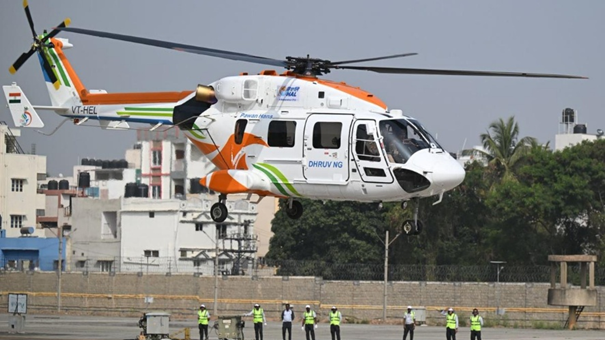
- Recently, Hindustan Aeronautics Limited (HAL) conducted the maiden flight of the Dhruv NG (Next Generation) multi-role helicopter at its helicopter division in Bengaluru, marking a major step in India’s indigenous civil helicopter development.
- The event highlighted India’s progress in self-reliant aerospace manufacturing, as the Dhruv NG is a fully indigenously designed and manufactured platform.
- On the same occasion, the Directorate General of Civil Aviation (DGCA) also granted certification for indigenous manufacturing of the Shakti civil engine, making it the first aero engine in India to receive DGCA certification for indigenous production.
About ALH Dhruv (Advanced Light Helicopter)
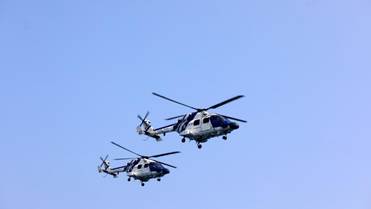
- Indigenous Platform: The Advanced Light Helicopter (ALH) Dhruv is a twin-engine utility helicopter designed and manufactured by Hindustan Aeronautics Limited (HAL).
- Operational Role: It is a multi-role, multi-mission rotary-wing platform suitable for a wide range of military and civil operations.
- Programme Initiation: The ALH Dhruv programme was launched in 1984 to achieve self-reliance in helicopter design and manufacturing.
- Design Assistance: The initial design phase received technical support from Germany’s Messerschmitt-Bölkow-Blohm (MBB).
- Induction Timeline: The helicopter first flew in 1992 and was inducted into service in 2002 after completing airworthiness certification.
Certification Status of ALH DRUV
- Military Certification: The helicopter is type-certified by the Centre for Military Airworthiness Certification (CEMILAC).
- Civil Certification: Certification for civil operations is granted by the Directorate General of Civil Aviation (DGCA).
- Operational Significance: Dual certification enables deployment in both defence and civilian roles.
Variants of ALH Dhruv
- Variant Structure: The ALH Dhruv family comprises four principal variants, which cater to the operational requirements of the Indian Army, Indian Navy, Indian Air Force, and Indian Coast Guard.
- Variant Names: The four variants are Dhruv Mk-I, Dhruv Mk-II, Dhruv Mk-III, and Dhruv Mk-IV.
Induction and Export Profile of ALH Dhruv
- Domestic Orders: In 2017, HAL received orders for 73 ALH helicopters for the Indian Army, Navy, and Coast Guard, mainly for Mk-III and Mk-IV variants.
- Export Destinations: The helicopter has been exported to the Nepal Army, Mauritius Police, and Maldives.
Key Features of ALH Dhruv
- Engine Configuration: Twin-engine layout ensures operational redundancy and enhanced safety.
- Cockpit Design: A glass cockpit integrated with advanced avionics improves pilot situational awareness.
- Structural Safety: A crashworthy airframe and landing gear enhance survivability.
- Rotor System: Composite, interchangeable main rotor blades improve durability and performance.
- Defensive Aids: Chaff and flare dispensers provide protection against missile threats.
- Pilot Interface: A Helmet-Mounted Sighting/Pointing System improves targeting capability.
- Protection Systems: An integrated self-protection suite enhances combat survivability.
- Fire Safety: An on-board inert gas generation system reduces fire hazards.
- Terrain Capability: The helicopter can operate in diverse terrains, including high-altitude and extreme climatic conditions.
About Dhruv-NG (Next Generation) Civil Variant
- Platform Type: Dhruv-NG is a light, twin-engine, multi-role and multi-mission helicopter, developed primarily for civil aviation requirements, with flexibility across diverse operational profiles.
- Design Lineage: It is the civil derivative of the ALH Dhruv Mk-III, a proven platform.
- Developer and Manufacturer: The helicopter is designed, developed, and manufactured by Hindustan Aeronautics Limited (HAL).
- Weight Class: It belongs to the 5.5-tonne maximum take-off weight category, positioning it in the medium civil helicopter segment.
Key Performance Parameters of Dhruv-NG Helicopter
- Maximum Take-off Weight: 5,500 kg
- Maximum Speed: Approximately 285 km/h
- Operational Range: Approximately 630 km with reserve fuel
- Endurance: Around 3 hours 40 minutes
- Service Ceiling: Approximately 6,000 metres, enabling high-altitude operations
- Internal Payload Capacity: Approximately 1,000 kg
Technical and Operational Features of Dhruv-NG Helicopter
- Engine Configuration: Powered by two indigenous Shakti engines with Category ‘A’ performance, ensuring safe continued flight after engine failure and high operational redundancy.
- Avionics Suite: Equipped with a civil-certified glass cockpit and AS4 (Applicability Statement-4) compliant avionics, providing enhanced situational awareness and regulatory compliance.
- Safety Enhancements: Incorporates crashworthy crew and passenger seats, self-sealing fuel tanks, and a proven twin-engine architecture.
- Operational Capability: Designed for day and night operations and capable of functioning in diverse Indian terrains, including high-altitude, offshore, and adverse climatic conditions.
Certification Status of Dhruv-NG Helicopter
- DGCA Certification: Dhruv-NG is undergoing full civil type certification by the Directorate General of Civil Aviation (DGCA), supported by an extensive flight-test programme.
- EASA Recognition: The helicopter has received a restricted type certificate from the European Union Aviation Safety Agency (EASA), enhancing its international acceptability and export potential.
Civil and Commercial Applications of Dhruv-NG Helicopter
- Passenger and Utility Operations: Suitable for VIP transport, executive travel, and general passenger utility missions.
- Medical and Emergency Services: Capable of deployment for Helicopter Emergency Medical Services (HEMS), air ambulance, and Search and Rescue (SAR) operations.
- Internal Security and Disaster Response: Designed for law enforcement, disaster relief, and humanitarian assistance missions.
Offshore and Energy Sector Operations
- ONGC Operations: Dhruv-NG will be deployed for offshore aviation operations, including transport of personnel to and from oil and gas rigs, marking a first-time deployment of this platform in offshore energy operations.
- Role of Pawan Hans: Pawan Hans Limited, India’s leading helicopter service provider, will induct Dhruv-NG helicopters for ONGC crew-change and logistics operations.
- Industry Significance: Pawan Hans has historically supported offshore operations for ONGC, British Gas, HOECL, and Petro Gas, making Dhruv-NG a strategically important and cost-efficient addition to its fleet.
Linkage with Government Schemes (UDAN & VGF)
- UDAN 5.1 Coverage: Under UDAN 5.1, Viability Gap Funding (VGF) has been extended to helicopter services, including regional and remote area connectivity.
- Affordability Impact: VGF support has significantly reduced helicopter travel costs, improving accessibility for civilians in remote and difficult terrains.
- Sectoral Expansion: This policy intervention is expected to accelerate growth of India’s civil helicopter market and strengthen regional air connectivity.
Significance for India
- Indigenous Aviation Capability: Dhruv-NG represents a major advancement in Atmanirbhar Bharat by strengthening indigenous civil helicopter design, manufacturing, and certification.
- Economic and Commercial Value: It offers a reliable, safe, and cost-effective solution for civil operators such as Pawan Hans Limited.
- Strategic Utility: The platform enhances India’s capabilities in civil aviation, offshore energy logistics, emergency services, and disaster management, while improving export credibility in the global helicopter market.
With reference to the twin-engine helicopter that was recently in the news, consider the following statements:
1. ALH Dhruv is an indigenously developed twin-engine helicopter designed for both military and civil roles.
2. Dhruv-NG is the civil derivative of the ALH Dhruv Mk-III platform.
3. Both ALH Dhruv and Dhruv-NG are certified for civil operations by the Centre for Military Airworthiness Certification (CEMILAC).

Which of the statements given above is/are correct?
(a) 1 and 2 only
(b) 1 and 3 only
(c) 2 and 3 only
(d) All of the above

Answer: (a) 1 and 2 only

Explanation:
Statement 1 is correct: ALH Dhruv is an indigenously developed twin-engine helicopter by Hindustan Aeronautics Limited (HAL), designed for both military and civil roles.
Statement 2 is correct: Dhruv-NG is the civil variant of ALH Dhruv Mk-III, designed primarily for civil and offshore operations while retaining the proven features of the military platform.
Statement 3 is incorrect: CEMILAC certifies helicopters for military operations only, whereas civil certification for both ALH Dhruv (civil variant) and Dhruv-NG is granted by DGCA, not CEMILAC.