
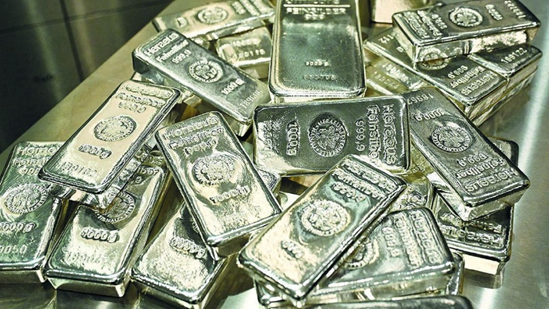
Why in the News?
- Recently, silver (white metal) prices surged by 6% in futures trading on the Multi Commodity Exchange (MCX), reaching a record high of ₹2,54,174 per kilogram for March delivery, driven by strong investor demand and bullish global trends.
- Internationally, silver futures crossed the $80 per ounce mark for the first time on the Comex, climbing 7.09% to $82.67 per ounce amid expectations of lower U.S. Federal Reserve interest rates and robust industrial demand from green energy sectors like solar photovoltaics and electric vehicles.
- Gold, another precious metal, also hovered near all-time highs in domestic markets, underlining the parallel trend in precious metal investment.
Overview of Silver
- Chemical Name: Argentinum (from Latin argentum, meaning silver;
- Chemical Symbol: Ag
- Atomic Number: 47
- Properties: Lustrous, highly conductive, malleable, ductile, resistant to corrosion
- Uses: Jewellery, silverware, electroplating, photography, electronics, chemical catalysts, and glass colouring
- Occurrence: Found mixed with lead, zinc, copper, and gold in polymetallic ores
- Mode of Production in India: Mostly produced as a by-product of other base metals such as lead, zinc, and copper, rather than from primary silver mines.
Extraction Process of Silver
Given its byproduct nature, silver extraction in India integrates with the refining of primary metals through efficient metallurgical techniques. The process typically involves:
- Smelting of lead ores: Silver, present as an impurity in galena, separates during high-temperature furnace operations, followed by cupellation to purify the metal.
- Electrolytic refining: Applied to isolates from zinc, copper, or gold ores, where electrolysis dissolves and deposits pure silver on cathodes.
- Chemical leaching: Utilizes cyanide or other solvents to extract silver from low-grade ores, with subsequent precipitation for recovery. These methods ensure high purity levels, with modern facilities emphasizing environmental controls to minimize emissions.
Major Silver Ore Minerals in India
Silver is mainly extracted from sulfide ores and as a by-product of base metal ores such as lead and zinc. The key silver-bearing minerals are:
- Argentite (Ag₂S): The primary silver ore, containing argentum (elemental silver); occurs in hydrothermal veins and is the most important source of silver worldwide.
- Stephanite (Ag₅SbS₄): A silver-antimony sulfide found in silver-rich hydrothermal veins; extracted for silver and antimony.
- Pyrargyrite (Ag₃SbS₃): Known as ruby silver due to its deep red color; contains silver, antimony, and sulfur and often occurs with argentite.
- Proustite (Ag₃AsS₃): Another form of ruby silver containing arsenic; found in high-silver hydrothermal deposits and historically used as a minor silver ore.
- Galena (PbS): Lead ore that frequently contains silver as an impurity; a major source of silver in India through lead smelting and refining.
- Sphalerite (ZnS): Zinc sulfide ore; silver is recovered as a by-product and commonly found in Rajasthan and other polymetallic mining areas.
- Chlorargyrite (AgCl): Also called Horn Silver due to its waxy, horn-like appearance; a halide mineral formed in the oxidation zones of silver ore deposits, especially in arid climates.
- Polybasite [(Ag,Cu)₁₆Sb₂S₁₁]: A complex silver-antimony-copper sulfide; occurs as dark metallic crystals in hydrothermal veins and often associated with other silver-bearing minerals.
- Tetrahedrite [(Cu,Fe,Zn,Ag)₁₂Sb₄S₁₃]: A complex copper-antimony sulfide where silver substitutes for copper in the crystal lattice; high-silver varieties are called Freibergite and are a common by-product in copper and zinc mining.
Key Note for India: India is rich in galena (PbS) and sphalerite (ZnS). Most of India’s silver is extracted as a by-product from these base metal ores during smelting and refining operations, rather than from primary silver mines.
Silver Production in India
India is a moderate producer of silver, with most production occurring as a by-product during the mining and refining of lead, zinc, copper, and occasionally gold. Silver is rarely mined as a primary metal in India, and production is concentrated in a few states rich in polymetallic deposits.
1. Rajasthan – Leading Silver Producer: Rajasthan accounts for over 60% of India’s total silver output due to its rich polymetallic deposits, primarily lead and zinc.
- Major Mines:
- Sindesar Khurd Mine (Rajsamand): Currently India’s largest and one of the world’s top five silver-producing mines. It is an underground, high-grade silver-lead-zinc mine.
- Rampura Agucha (Bhilwara): One of the world’s largest zinc mines, contributing a massive volume of silver during processing.
- Zawar Mines (Udaipur): Asia’s oldest mining complex (dating back to the 9th century) which continues to be a steady producer of silver.
- Rajpura Dariba: Another critical facility for lead-zinc-silver extraction.
2. Other Contributing Regions:
- Jharkhand: Silver is recovered at the Tundoo Lead Smelter near Dhanbad.
- Karnataka: The Hutti Gold Mines and Kolar Gold Fields (historically) recover silver during the final stages of gold refining.
- Andhra Pradesh: The Vizag Zinc Smelter processes lead concentrates to extract silver.
Industries in Silver Production in India
The majority of India’s silver production is dominated by Hindustan Zinc Limited (HZL), with a few other companies contributing smaller quantities. The leading producers are:
- Hindustan Zinc Limited (HZL): A subsidiary of the Vedanta Group, HZL is India’s largest silver producer, accounting for over 90% of the country’s total silver output. Its Rampura Agucha and Sindesar Khurd mines rank among the world’s richest zinc-lead-silver deposits.
- Hutti Gold Mines (Karnataka): Produces minor quantities of silver as a by-product during gold refining.
- National Mineral Development Corporation (NMDC): Involved indirectly in silver production through polymetallic mining operations, contributing to silver recovery from base metals.
Global Silver Production
- Leading Silver Producers: The world’s major silver-producing countries are Mexico, China, Peru, Russia, and Australia, which together account for a significant share of global mine output.
- India’s Position: India is not among the top 10 silver-producing countries, but it ranks among the top three global consumers of silver, reflecting strong industrial and investment demand.
- Global Output: As per the World Silver Survey 2024, global silver mine production in 2023 was about 26,000 tonnes.
- India’s Contribution: India produced only around 700 tonnes, indicating a small share in global production and a high dependence on silver imports to meet domestic requirements.
- Major Global Silver Producers (2023, approx.)
- Mexico: ~6,300 tonnes
- China: ~3,600 tonnes
- Peru: ~3,400 tonnes
- Russia: ~1,400 tonnes
- Australia: ~1,200 tonnes
- India: ~700 tonnes
Silver Production–Consumption Gap in India
- Low Domestic Production: India’s silver production is much lower than its consumption, as highlighted in the World Silver Survey 2024, with the gap widening due to rising demand from solar PV manufacturing, electronics, and jewellery.
- Rising Imports: During 2022–23, India experienced a sharp increase in silver imports to meet domestic demand.
- Import Value and Sources: According to the Ministry of Commerce and Industry (GoI), silver imports were valued at about ₹54,000 crore in FY23; in 2023, India imported over 7,000 tonnes of silver, mainly from Hong Kong, the United Kingdom, and Switzerland.
Applications and Importance of Silver in India
Silver has significant economic, industrial, and strategic importance in India due to its unique physical properties and expanding role in modern technologies:
- Jewellery and Silverware: Silver is extensively used in ornaments, utensils, and household items, particularly in rural and semi-urban India, where it acts as a traditional store of wealth and cultural asset.
- Coins and Investment Instruments: Silver coins, bars, and ETFs are popular investment options during festivals, weddings, and periods of inflation, reflecting silver’s role as a safe-haven asset.
- Electronics and Electrical Industry: Owing to its highest electrical conductivity among metals, silver is indispensable in printed circuit boards (PCBs), switches, connectors, mobile phones, batteries, and electrical contacts.
- Renewable Energy and Solar Sector: Silver paste is a key input in photovoltaic (PV) cells, making silver strategically important for India’s solar energy targets under the National Solar Mission.
- Medical and Healthcare Applications: Silver is used in antimicrobial coatings, wound dressings, catheters, surgical instruments, and medical textiles due to its bactericidal properties.
- Water Purification and Sanitation: Silver ions and nanoparticles are employed in water filters and purification systems to prevent microbial growth.
- Chemical and Industrial Catalysts: Silver functions as a catalyst in chemical reactions, including ethylene oxide production, which is vital for plastics and pharmaceuticals.
- Photography and Imaging: Although declining, silver salts still have applications in X-ray films, medical imaging, and specialised photography.
- Automotive and Emerging Technologies: Silver is increasingly used in electric vehicles (EVs), advanced sensors, and 5G technologies, enhancing its strategic relevance in India’s industrial growth.
Future Outlook of Silver Production in India
- India’s demand for silver is projected to rise in the coming years, driven by growth in sectors such as renewable energy, solar power, electronics, and investment assets.
- The International Energy Agency (IEA) highlights that the expansion of solar energy infrastructure will notably increase silver consumption in the country.
- To meet this growing demand and reduce reliance on imports, India can focus on exploring new silver deposits in states like Rajasthan, Jharkhand, and Chhattisgarh, as well as enhancing recycling and refining operations.
Government Initiatives to Boost Silver Production in India
To reduce import dependence, enhance domestic mineral security, and support strategic industries, the Government of India has introduced multiple policy and regulatory measures that indirectly and directly support silver production:
- National Mineral Policy, 2019: Encourages private sector participation, ease of doing business, and scientific exploration of mineral resources, including polymetallic deposits containing silver as a by-product.
- Atmanirbhar Bharat Mission: Emphasises self-reliance in critical and strategic minerals, aiming to lower India’s dependence on imported silver used in electronics, renewable energy, and defence-related applications.
- FDI Liberalisation in Mining: Permits 100% Foreign Direct Investment (FDI) under the automatic route for mineral exploration and mining, facilitating capital inflow, advanced technology, and global best practices in silver-bearing mineral extraction.
- National Solar Mission (MNRE): Rapid expansion of solar photovoltaic capacity increases demand for silver paste, indirectly incentivising domestic exploration and recovery of silver from base metal ores.
- Auction-Based Mineral Allocation: Introduction of transparent auction mechanisms for mineral blocks promotes efficient resource utilisation and encourages investment in polymetallic mines rich in lead, zinc, and silver.
- Strengthening Exploration by GSI and MECL: The Geological Survey of India (GSI) and Mineral Exploration Corporation Limited (MECL) are enhancing regional and detailed exploration of silver-bearing polymetallic zones.
- National Mineral Exploration Trust (NMET): Funds early-stage exploration to identify new silver-bearing mineral reserves, reducing geological risks for private players.
- Ease of Regulatory Clearances: Reforms in environmental approvals and mining leases aim to accelerate project timelines, indirectly supporting higher silver recovery.
- Make in India & Manufacturing Push: Growth in electronics, EVs, and renewable energy manufacturing creates sustained demand, strengthening the case for domestic silver supply chains.
- Recycling and Urban Mining Focus: Policy emphasis on metal recycling and recovery from electronic waste offers future potential for secondary silver production within India.
With reference to Silver in India, consider the following statements:
1.	Silver in India is predominantly produced as a by-product of lead and zinc mining.
2.	Most of India’s silver production comes from polymetallic deposits associated with galena and sphalerite ores.
3.	Rajasthan is the leading state in silver production in India.

Which of the statements given above is/are correct?
(a) 1, 2 and 3
(b) 1 and 3 only
(c) 2 and 3 only
(d) 1 only

Answer: (a) 1, 2 and 3

Explanation:
Statement 1 is correct: India produces silver mainly as a by-product during the extraction of lead and zinc, rather than from primary silver mines.
Statement 2 is correct: Indian silver production is closely linked to polymetallic ores, especially galena (PbS) and sphalerite (ZnS), which contain silver as an associated mineral.
Statement 3 is correct: Rajasthan leads India’s silver output due to extensive lead–zinc–silver deposits at Rampura Agucha, Sindesar Khurd, Zawar, and Rajpura Dariba.