
Why in the News?
- Recently, the Defence Research and Development Organisation (DRDO) has been tasked with a pivotal role in the Sudarshan Chakra initiative, an ambitious air defence program aimed at providing comprehensive aerial protection to India’s critical installations.
- The initiative will equip strategic locations across the country with advanced air defence systems over the next decade to counter evolving aerial threats, including aircraft, missiles, and drones.
- Defence experts have highlighted lessons from recent military operations like Operation Sindoor, emphasizing the need for robust and reliable air defence capabilities to ensure national security and operational readiness.
What are Air Defence Systems?
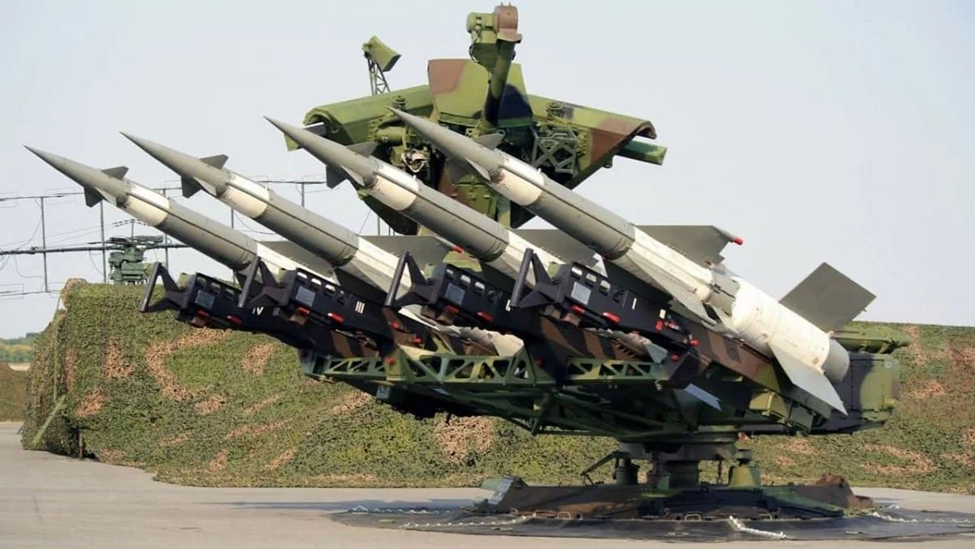
- Air defence systems are multi-layered military frameworks designed to detect, track, and neutralize aerial threats such as enemy aircraft, unmanned aerial vehicles (UAVs), ballistic missiles, and cruise missiles.
- Their primary objective is to deny adversaries access to national airspace while ensuring the safe operation of friendly forces.
- These systems integrate radars, command centres, interceptor aircraft, surface-to-air missiles (SAMs), anti-aircraft artillery (AAA), and electronic warfare (EW) systems using the C3 model:
- Command: Decision-making and threat assessment.
- Control: Operational management and resource allocation.
- Communication: Coordination between subsystems for rapid response.
Key Components of Air Defence Systems
1. Detection and Surveillance
- Radar Systems: High-frequency radars emit electromagnetic waves to detect and locate incoming aerial threats by reflecting signals off objects.
- Satellite and Infrared Sensors: Monitor stealth aircraft, hypersonic missiles, and other high-speed threats.
- Tracking Systems: Analyze the speed, altitude, trajectory, and type of threat to support accurate classification and response planning.
2. Engagement and Neutralization
- Surface-to-Air Missiles (SAMs): Intercept hostile aircraft or missiles before they reach their intended targets.
- Electronic Warfare (EW) Systems: Employ jamming, deception, and cyber tools to disrupt enemy radar, communications, and missile guidance.
- Anti-Aircraft Artillery (AAA): High-caliber guns provide short-range protection against low-altitude targets or serve as last-resort defence.
Operational Framework of Air Defence Systems
- Detection:
- Radars and satellite sensors identify aerial threats, including fighter jets, UAVs, and ballistic missiles.
- Example: India’s Rohini and Arudhra radar systems.
- Tracking:
- Monitors multiple threats in real time and differentiates between hostile, friendly, and civilian aircraft.
- Enables prioritization of targets and reduces risk of collateral damage in multi-threat scenarios.
- Interception:
- Neutralizes threats using fighter jets, SAMs, AAA, or EW systems.
- Engagement decisions depend on threat range, altitude, speed, and trajectory.
- Command, Control, and Communication (C3) integration ensures rapid coordination between sensors and shooters for an effective response.
India’s Multi-Layered Air Defence Structure
| Category | System/Weapon | Role / Key Feature |
| Interceptor Aircraft | Rafale, Su-30MKI, MiG-29, MiG-21 Bison, Tejas Mk-1 | Rapid-response jets for engaging high-speed aerial threats; equipped with air-to-air missiles and electronic warfare systems. |
| Surface-to-Air Missiles (SAMs) | Long-range: S-400 Triumf | Intercepts aircraft and missiles up to 400 km; protects strategic assets. |
| Medium-range: Akash, Barak-8 | Mobile systems for tactical and field unit protection. | |
| Short-range: MANPADS | Hand-held, for drones, helicopters, and low-altitude threats. | |
| Anti-Aircraft Artillery (AAA) | L-70, ZU-23-2 | Defends low-altitude targets; used as last-resort defense in close combat. |
| Electronic Warfare (EW) | Netra AEW&CS, Samyukta, Himshakti | Jam, deceive, and disrupt enemy radar, communications, and missile guidance. |
| Command & Control | Integrated Air Command and Control System (IACCS) | Fuses radar, sensors, and communication networks for coordinated decision-making. |
Major India’s Air Defence Systems
- Akash Missile System: An indigenously developed surface-to-air missile (SAM) system capable of engaging multiple airborne threats simultaneously. It employs command guidance and phased array radar to enhance targeting precision.
- S-400 Triumf Missile System: Procured from Russia, this long-range SAM system significantly strengthens India’s air defence capabilities. It can detect and intercept ballistic missiles, fighter jets, and drones at ranges of up to 400 km. The system is also operational in countries like China and Turkey for ballistic missile and aircraft defence.
- Integrated Counter-Unmanned Aerial System (UAS) Grid: Deployed along sensitive borders, this network combats hostile drones and unmanned aerial vehicles. It integrates radar detection, electronic jamming, and kinetic interception to prevent aerial intrusions effectively.
- Barak-8 Missile System: A joint Indo-Israeli medium-range SAM system designed for rapid interception of aerial threats. It enhances both naval and land-based air defence capabilities through high-speed response and precision targeting.
Notable Air Defence Systems Globally
- Patriot Missile System (United States): Widely used for intercepting aircraft and missiles, the Patriot system provides high-altitude defence and is deployed by the United States, Germany, Japan, and Saudi Arabia.
- Iron Dome (Israel): A short-range missile defence system primarily designed to intercept and destroy incoming rockets. It is extensively used to protect urban areas and strategic military installations in Israel.
- Terminal High Altitude Area Defense (THAAD – United States): A high-altitude missile defence system capable of intercepting ballistic missiles during their terminal phase. THAAD is deployed in countries including the United States, South Korea, and Japan to provide regional security against missile threats.
Strategic Importance of India’s Air Defence Systems
- Suppression of Enemy Air Defences (SEAD) & Air Superiority: Air defence systems enable India to neutralize adversary radars and SAM sites, ensuring control over contested airspace. Integration of electronic warfare (EW), precision-guided missiles, and drone operations allows reconnaissance and tactical missions with minimal risk.
- Preventing Enemy Air Dominance: India’s air defence acts as a protective shield, intercepting hostile aircraft and missiles to deny adversaries air superiority. This ensures the security of critical infrastructure and strengthens strategic stability during regional tensions.
- Surveillance, Deterrence, and Pre-Emptive Capability: Robust radar coverage and rapid-deployment systems allow continuous monitoring of airspace, preventing enemy reconnaissance, drone incursions, and missile attacks. Effective airspace control complicates adversary planning and enhances national readiness.
- Strategic Autonomy and Deterrence Posture: Air defence protects vital assets, including nuclear facilities, command centres, and metropolitan areas. Deployment of systems like S-400 Triumf raises the cost of enemy attacks, reinforces India’s second-strike capability, and supports its No First Use (NFU) nuclear doctrine.
- Preparedness for Two-Front Scenarios: Given threats from both China and Pakistan, India’s layered air defence—including IACCS, Akash, and QRSAM—ensures simultaneous protection across multiple theatres, supporting integrated joint-force operations.
- Civilian and Infrastructure Protection: Air defence safeguards urban centres and critical infrastructure during conflicts. Systems like Akash, MANPADS, and electronic warfare platforms protect population centres, ensuring survivability and continuity of critical operations under aerial attacks.
With reference to India’s Air Defence System, consider the following statements:
1. The S-400 Triumf is an indigenously developed long-range surface-to-air missile system.
2. The Akash missile system uses command guidance and phased array radar to engage multiple airborne threats.
3. Integrated Counter-UAS grids are deployed along sensitive borders to neutralize hostile drones and UAVs.

Which of the statements given above is/are correct?
(a) 1 and 3 only
(b) 2 and 3 only
(c) 1 and 2 only
(d) All of the above

Answer: (b) 2 and 3 only

Explanation:
Statement 1 is incorrect: The S-400 Triumf is procured from Russia, not indigenously developed. It is a long-range SAM capable of intercepting aircraft, drones, and ballistic missiles up to 400 km.
Statement 2 is correct: The Akash missile system is indigenously developed and employs command guidance and phased array radar, allowing it to engage multiple airborne threats simultaneously.
Statement 3 is correct: Integrated Counter-UAS grids are deployed along sensitive borders to detect, jam, and neutralize hostile UAVs and drones, enhancing India’s airspace security.