
Why in the News?
- Recently, violinist R.K. Shriramkumar was conferred the prestigious Sangita Kalanidhi Award by the Madras Music Academy during the annual Sadas.
- The award ceremony highlighted the continued emphasis on excellence and dedication in Carnatic music, with veteran Hindustani violinist N. Rajam encouraging students to pursue continuous practice and rigorous sadhana to achieve mastery.
- The event also recognized other eminent musicians with awards such as Sangita Kala Acharya, TTK Award, and musicologist honors, emphasizing the Academy’s role in promoting classical music.
About the Sangita Kalanidhi Award
- The Sangita Kalanidhi Award is regarded as the highest honour in Carnatic music.
- It is conferred annually by the Madras Music Academy, one of India’s premier institutions for the promotion and preservation of classical music.
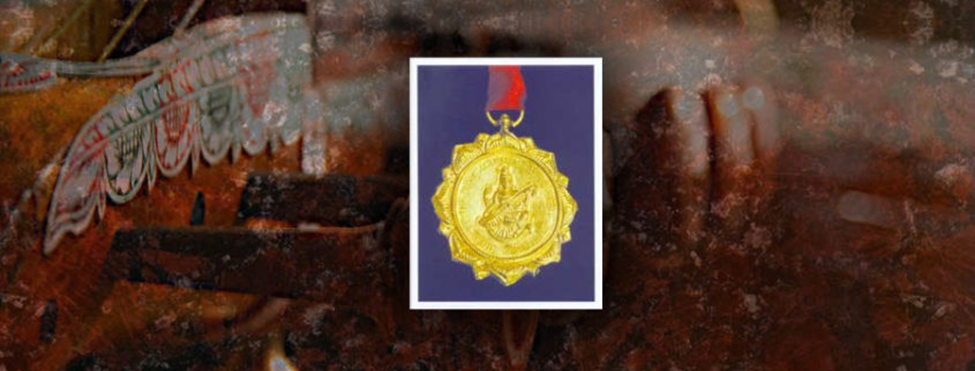
- The award includes a gold medal and a birudu patra (citation) recognizing outstanding contributions to Carnatic music.
- The Academy itself has a historical legacy, originating from the All India Congress Session held in Madras in 1927, and has since been a landmark institution in the fine arts.
Significance of the Sangita Kalanidhi Award
- Recognizes musicians who have made exceptional contributions to Carnatic music, both as performers and teachers.
- Encourages rigorous practice, mastery of technique, and innovation in the field of classical music.
- Strengthens the cultural and artistic heritage of southern India.
About Carnatic Music
- Carnatic music is the classical music tradition of southern India, primarily practiced in Tamil Nadu, Kerala, Karnataka, Andhra Pradesh, Telangana, and also in Sri Lanka.
- It is one of the two main streams of Indian classical music, the other being Hindustani music, which evolved in northern India under Persian and Islamic influences.
- Carnatic music emphasizes composition-based performance, intricate rhythmic patterns, and raga-based improvisation.
- Its repertoire includes keertanas, varnams, and kritis, with contributions from composers like Muthuswami Dikshitar, Tyagaraja, and Syama Sastri.
About Hindustani Music
- Hindustani music is the classical music tradition of northern India, prevalent in regions where Indo-Aryan languages are spoken.
- It evolved over centuries, influenced by Persian, Islamic, and Mughal cultural traditions.
- Hindustani music emphasizes improvisation, with performances organized around ragas and talas, and includes genres like khayal, dhrupad, thumri, and instrumental music.
Consider the following statements with reference to the Sangita Kalanidhi Award:
1.	The Sangita Kalanidhi Award is the highest honour in Carnatic music.
2.	It is conferred annually by the Madras Music Academy.
3.	The award is given for excellence in Hindustani music.
4.	The award includes a gold medal and a birudu patra (citation).

Which of the statements given above is/are correct?
(a) 1, 2, and 4 only
(b) 2 and 3 only
(c) 1 and 3 only
(d) All of the above

Answer: (a) 1, 2, and 4 only

Explanation:
Statement 1: Correct – The Sangita Kalanidhi Award is regarded as the highest honour in Carnatic music, the classical music tradition of southern India.
Statement 2: Correct – The award is conferred annually by the Madras Music Academy, one of India’s premier institutions promoting classical music.
Statement 3: Incorrect – The award is not for Hindustani music, which is the classical tradition of northern India.
Statement 4: Correct – Recipients of the award receive a gold medal and a birudu patra (citation) recognizing their contributions to Carnatic music.