
After Reading This Article You Can Solve This UPSC Mains Model Question:
“India’s aspiration of becoming a ‘Viksit Bharat’ by 2047 hinges significantly on the quality of its youth leadership.” Discuss the role of youth leadership in nation-building, governance, and economic transformation. Also examine the challenges in nurturing effective youth leadership in India and suggest measures to overcome them. (15 Marks | 250 Words) (GS- Social Justice)
Context:
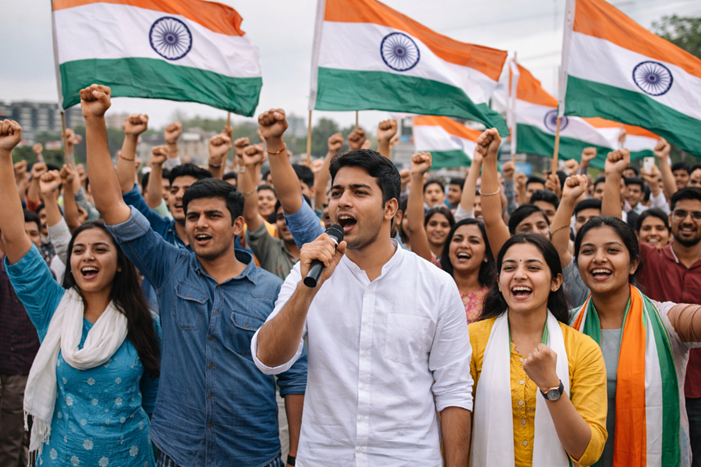
- VBYLD 2026: Reimagined from the National Youth Festival, it now focuses on the “Viksit Bharat Young Leaders Dialogue.” Over 50 lakh youth participated nationwide in 2025-26 through the My Bharat portal.
- National Dialogue (Jan 9-12, 2026): Selected youth leaders are engaging directly with policymakers and the Prime Minister to present actionable blueprints for a developed India.
- Amrit Peedhi: The government has officially designated the current generation as the “Amrit Peedhi”—the generation that will witness and drive the transition to 2047.
Why Youth Leadership is Key to Viksit Bharat:
A. The Demographic Pivot (The Window of Opportunity)
- Unparalleled Scale: With a median age of 28.4 years, India is one of the youngest nations in an aging world.As of 2026, roughly 67% of India’s population is in the working-age bracket (15-64 years).
- Workforce Dominance: It is projected that India will contribute 24.3% of the additional global workforce over the next decade. Youth leadership ensures this “human resource” is converted into “human capital.”
- Lowest Dependency Ratio: By 2030, India’s dependency ratio will be at its historic lowest (31.2%), meaning the “Amrit Peedhi” has the maximum capacity to save, invest, and lead economic growth.
B. Catalysts of Digital and Tech Innovation
- Digital Nativity: Today’s youth are the primary drivers of India’s Techade. Leadership in emerging sectors like AI, Semiconductor manufacturing, and Green Hydrogen is predominantly youth-led.
- Startup Leadership: India remains the 3rd largest startup ecosystem globally. Youth leadership is shifting the narrative from “frugal innovation” (Jugaad) to “scalable, tech-driven solutions” for global problems (e.g., the Smart Braille Watch developed by NIT Shillong students showcased in Jan 2026).
C. “Youth-Led Democracy” and Governance
- Decentralized Leadership: The Viksit Bharat Young Leaders Dialogue (VBYLD) is a 2026 milestone because it institutionalizes the Prime Minister’s call to bring 1 lakh youth from non-political backgrounds into public life.
- Problem-Solvers, not just Voters: The shift is from youth as a “vote bank” to youth as “policy co-designers.” Leadership at the Panchayat and Municipal levels by young professionals is bringing “fresh perspectives” to urban governance and rural development.
D. Social and Environmental Stewardship
- Net-Zero Champions: Leadership in Climate Action is largely driven by youth. From “Lifestyle for Environment” (LiFE) to circular economy startups, the youth are ensuring that Viksit Bharat is also a Harit Bharat (Green India).
- Social Inclusion: Youth leaders are increasingly at the forefront of breaking traditional barriers in gender, caste, and disability, using digital tools to ensure “Antyodaya” (serving the last person).
Challenges to Youth Leadership:
A. Structural Barriers in Governance
- The Gerontocracy Gap: Despite having the world’s largest youth population, the average age of India’s political leadership remains significantly higher (55+). The 1st Lok Sabha had 26% of MPs under age 30; today, that figure has dwindled to single digits.
- Dynastic Politics vs. Meritocracy: For youth from non-political backgrounds, the “entry cost” into leadership is prohibitive. High election expenses and the dominance of political dynasties often shut out grassroots innovators.
- Tokenism in Consultation: While platforms like VBYLD 2026 seek input, youth are often treated as “voters to be wooed” rather than “partners to be empowered” in core legislative decision-making.
B. The Economic and Skill Paradox
- The Employability Mismatch: As per the India Skills Report 2026, although employability has risen to 56.35%, a massive gap remains in “Industry 4.0” skills. Nearly 80% of engineering graduates still lack the specialized skills needed for AI, robotics, and advanced data analytics.
- Vulnerability of the Gig Economy: 16% of the youth workforce is now in gig or freelance roles. While this offers flexibility, the lack of social security nets (insurance, pensions) creates long-term financial instability, hindering their ability to take “leadership risks” like entrepreneurship.
- Digital Divide: Access to high-end AI tools and mentorship is concentrated in Tier-1 cities and elite institutions. Rural youth leaders face a “double burden” of erratic infrastructure and higher costs for hardware.
C. The “Crisis of the Mind”: Mental Health
- Suicidality and Stress: Suicidality remains the leading cause of death for Indians aged 15–29. High-stakes competitive exams and “status anxiety” in a digital world contribute to widespread burnout.
- Academic Anxiety: A large-scale survey released in late 2025 indicated that nearly 7.3% of adolescent experience diagnosable mental health disorders, driven largely by exam stress and the uncertainty of the job market.
- The Funding Gap: Despite the growing crisis, mental health receives less than 0.6% of the health budget, leaving the “Manodarpan” and “Tele-MANAS” systems overburdened and understaffed.
D. Social and Cultural Constraints
- The “Age-Hierarchy” Norm: Deep-seated cultural values that prioritize “elderly wisdom” often dismiss young voices as “inexperienced,” preventing them from taking lead roles in community and corporate boards.
- Gendered Barriers: Female youth leadership is often stifled by domestic expectations and “safety-driven” rules (like restrictive hostel curfews in universities) that limit their participation in evening political or networking forums.
Government Initiatives:
A. Flagship Platforms & Movements
- Mera Yuva Bharat (MY Bharat) Portal:
- The “Phygital” Bridge: Acting as an autonomous body, it serves as a one-stop digital platform for youth (15–29 years) to access experiential learning, volunteering, and mentorship.
- Status: The portal has crossed 2.5 crore registrations, integrating features like an AI-based Smart CV Builder, digital profiles, and location-based opportunity mapping (Geo-tagging).
- Viksit Bharat Young Leaders Dialogue (VBYLD) 2026:
- Direct Governance Access: Inspired by the PM’s call to bring 1 lakh youth from non-political backgrounds into public life.
- Selection Mechanics: A 4-stage nationwide grind (Quiz → Essay → State-level PPT → National Championship) culminating in selected youth presenting their vision directly to the Prime Minister at Bharat Mandapam (Jan 10–12, 2026).
B. Innovation & Technology Initiatives
- YUVAi: Global Youth Challenge:
- AI for Social Good: A joint initiative by NeGD, Intel, and MY Bharat for youth (ages 13–21) to develop AI solutions for sectors like Agriculture, Healthcare, and Smart Cities.
- Milestone: The AI Impact Summit (Feb 2026) will showcase the top 20 finalists, offering prize pools up to ₹15 lakh for top innovations.
- YUVAI – Emerging Tech Skills: Focuses on training the “Amrit Peedhi” in Python programming, AI modeling, and ethical AI use through virtual bootcamps.
C. Education & Skill Financing
- PM Vidyalaxmi Scheme:
- Affordable Quality Education: Provides collateral-free and guarantor-free loans up to ₹10 lakh for students in top-ranked (NIRF) institutions.
- Financial Inclusion: Offers a 3% interest subvention for families with income up to ₹8 lakh, targeting 1 lakh students annually.
- One Nation One Subscription (ONOS):
- Democratizing Research: Allocated ₹6,000 crore (2025–2027) to provide nationwide access to 13,000+ international research journals for all government higher education students, effectively removing the “paywall” for rural researchers.
- Model Skill Loan Scheme: Revised in late 2025 to offer loans up to ₹7.5 lakh with a 75% credit guarantee, specifically for advanced courses in AI, drone technology, and digital marketing.
D. Leadership & Civic Engagement
- National Youth Festival (NYF) 2026:
- Theme: “Youth as the Architects of Viksit Bharat.”
- Structure: Includes a “Science Mela” for innovation and a “Design for Bharat” track to encourage youth-led indigenous product design.
- Republic Day 2026 Contests: Integrated via the MY Bharat portal, involving youth in national competitions (Vande Mataram singing, Essay, and Painting) to deepen constitutional values and “Vikas Bhi Virasat Bhi.”
Way Forward: Harnessing the Potential:
A. Strategic “Decolonization” of the Mind
- Indigenous Innovation: The way forward lies in “Bharatiya-centric” solutions—leveraging traditional sustainable practices (like organic farming) and combining them with Deep Tech and Quantum Technologies.
- Vikas Bhi Virasat Bhi: Leadership must balance modern growth with cultural roots, ensuring that India’s 5,000-year-old civilizational wisdom informs modern governance.
B. Institutionalizing Non-Political Leadership
- The 1 Lakh Goal: A key 2026 objective is fulfilling the Prime Minister’s vision of integrating 1 lakh youth from non-political backgrounds into public life.
- Public Policy Internships: The way forward includes institutionalizing “VBYLD-alumni” networks into district-level planning committees and NITI Aayog’s aspirational block programs. This creates a legitimate, merit-based lateral entry into governance.
C. Strengthening “Phygital” Infrastructure
- MY Bharat Expansion: The portal must evolve from a “registration hub” to a “Digital Career Mentor.” By using AI-driven adaptive learning, it should provide rural youth with the same level of policy exposure and high-end skill training as those in Tier-1 cities.
- 5G-Enabled Skilling Hubs: Establishing village-level tech hubs for remote training in AI Ethics, Prompt Engineering, and Green Hydrogen to ensure the demographic dividend isn’t lost to a digital divide.
D. Focus on “Fit Bharat, Hit Bharat”
- Mental Resilience: Leadership is impossible without mental well-being. The way forward involves moving mental health support from clinical institutions to community spaces—making life-skills and stress management a mandatory part of the “Amrit Peedhi” curriculum.
- Athletic Leadership: Integrating sports as a tool for discipline and teamwork, ensuring that physical fitness is seen as a “national duty” for a productive workforce.
Conclusion:
Youth leadership is not just desirable but indispensable for translating the vision of a Viksit Bharat into reality. By harnessing the innovative zeal, diverse perspectives, and transformative potential of young Indians through structured engagement platforms and supportive policies, India can ensure sustainable, inclusive, and resilient development by 2047.