
Why in the News?
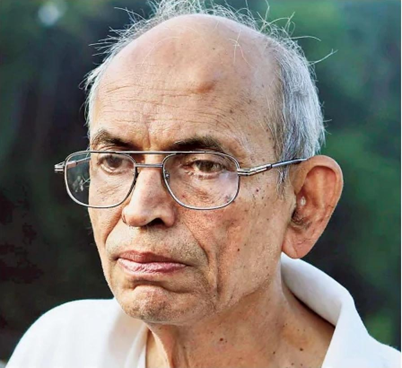
- Madhav Gadgil, the legendary ecologist, scholar, and author, passed away in Pune on January 7, 2026, at the age of 83.
- His ideas and the Western Ghats Ecology Expert Panel (WGEEP) Report, 2011 continue to resurface in public discourse, especially after recurring landslides, floods, and ecological disasters in the Western Ghats region.
Profile of Madhav Gadgil (1942–2026)
Madhav Gadgil was a pioneering scientist who bridged the gap between academic ecology and grassroots environmental activism.
- Academic Legacy: A Harvard-educated scholar, he founded the Centre for Ecological Sciences at the Indian Institute of Science (IISc), Bengaluru.
- Evolution of Thought: Initially a proponent of traditional “fortress conservation” (wildlife sanctuaries and national parks), he later metamorphosed into a critic of the Wildlife (Protection) Act of 1972, arguing it was often used to marginalize forest-dwelling communities.
- Major Publications: His autobiography, A Walk Up the Hill: Living with People and Nature (2023), and his co-authored works with Ramachandra Guha, such as This Fissured Land.
- Notable Contributions of Madhav Gadgil: He was a vocal supporter of the “Save Silent Valley” movement in Kerala and advocated for the rights of indigenous communities in the forests of Bastar.
Western Ghats: Ecological Significance
- Geographical Extent: The Western Ghats extend from Gujarat to Tamil Nadu and Kerala, covering about 1,600 km along India’s western coast.
- Hydrological Importance: They act as the water tower of peninsular India, giving rise to major rivers such as the Godavari, Krishna, Cauvery, Periyar, and Netravathi.
- Biodiversity Hotspot: The Western Ghats exhibit high endemism, with species such as the Nilgiri tahr, lion-tailed macaque, Nilgiri langur, Malabar civet, purple frog, and Malabar grey hornbill found nowhere else in the world.
Western Ghats Ecology Expert Panel (WGEEP), 2010
- Constitution of the Panel: The WGEEP was set up in March 2010 by the Ministry of Environment and Forests, with Madhav Gadgil as Chairman, in response to growing concerns over unregulated development and ecological degradation.
- Trigger for Formation: The panel was influenced by deliberations of the Save Western Ghats Movement held in the Nilgiris and attended by then Environment Minister Jairam Ramesh.
- Mandate of WGEEP:
- To assess the ecological status of the Western Ghats.
- To identify ecologically sensitive areas (ESAs).
- To recommend governance mechanisms for conservation and sustainable development.
Key Recommendations of the Gadgil Panel (WGEEP, 2011)
- Entire Western Ghats Declared Ecologically Sensitive: The panel chaired by Madhav Gadgil identified the entire Western Ghats region (1,29,037 sq km) as an Ecologically Sensitive Area (ESA), highlighting the inherent ecological fragility of the whole landscape rather than treating it in isolated pockets.
- Three-Tier Ecological Sensitivity Classification: The Western Ghats were categorised into ESZ-1, ESZ-2, and ESZ-3, based on the degree of ecological vulnerability, with more stringent regulatory measures prescribed for zones with higher sensitivity.
- Restrictions on Developmental Activities: The report recommended a ban on genetically modified crops, establishment of new Special Economic Zones (SEZs), and creation of new hill stations across ecologically sensitive zones to prevent environmental degradation.
- Mining and Quarrying Controls: It proposed no issuance of fresh mining licences, a phased closure of existing mines within five years in ESZ-1 and ESZ-2, and a total prohibition on new quarrying activities in ESZ-1.
- Limits on Infrastructure Expansion: The panel advised that new railway lines and major road projects should generally be avoided in ESZ-1 and ESZ-2, except in cases of unavoidable necessity, in order to minimise ecological disturbance.
- Establishment of a Statutory Regulatory Authority: The report called for the creation of a 24-member Western Ghats Ecology Authority (WGEA) under the Environment (Protection) Act, tasked with regulating, managing, and planning activities across all ecologically sensitive zones in the six Western Ghats States.
- Composition of the Proposed Authority: The suggested authority was to comprise domain and resource experts, along with representatives from key nodal ministries, to ensure coordinated, multi-state environmental governance across the Western Ghats.
Opposition to Gadgil Panel Recommendations
- Submission Timeline: The Gadgil Panel submitted its draft report in March 2011 and the final report in August 2011.
- Non-Disclosure: The report was not released publicly and was instead shared with State governments for comments.
- RTI Challenge: Environmental groups questioned the secrecy by filing RTI applications.
- Public Release: After intervention by the Chief Information Commissioner and court proceedings, the report was made public in May 2012.
- Gadgil’s Stand: Madhav Gadgil maintained that the report promoted inclusive development and advocated placing recommendations before Gram Sabhas to counter exclusionary conservation and growth models.
- Resistance by State Governments: The report encountered strong opposition from Kerala and Maharashtra, with Maharashtra opposing the proposed Western Ghats Ecology Authority (WGEA), describing it as a parallel institutional mechanism.
- Livelihood and Social Concerns: Kerala contended that declaring extensive areas as ecologically sensitive would adversely affect agriculture and local livelihoods, especially in Idukki and Wayanad, while political leaders and the Catholic Church cautioned against economic disruption and potential displacement of communities.
Kasturirangan Committee
- In response to widespread opposition, the Ministry of Environment constituted a High-Level Working Group in 2012 under K. Kasturirangan to reassess the Gadgil panel’s recommendations.
- Major Outcomes of the 2013 Kasturirangan Report:
- The Kasturirangan Panel recommended declaring about 56,825 sq km of the Western Ghats as an Ecologically Sensitive Area (ESA).
- It endorsed restrictions on mining, polluting industries, thermal power plants, and large townships, but followed a more limited approach than the Gadgil report.
- Unlike the earlier panel, it identified specific villages as ecologically sensitive and issued state-wise lists, making the approach more targeted and administratively feasible.
Continuing Policy Stalemate
- Based on these recommendations, the Central Government has issued six draft ESA notifications, with the latest in August 2024.
- However, differences with States continue, and a committee chaired by former Director General of Forests Sanjay Kumar is still working to finalise ESA boundaries.
Q. Consider the following recommendations:
1.	Three-tier ecological sensitivity zoning (ESZ-1, ESZ-2, ESZ-3).
2.	Identification of ESA boundaries using satellite imagery and land-use data.
3.	Establishment of a statutory Western Ghats Ecology Authority (WGEA).
4.	State-wise village-level listing of ecologically sensitive areas.

Which of the above were recommended by the Gadgil Panel (WGEEP)?
(a) 1 and 3 only
(b) 1, 2, and 4 only
(c) 2 and 4 only
(d) 1, 3, and 4

Answer: (a) 1 and 3 only

Explanation
Statement 1 – Correct: The Gadgil Panel classified the Western Ghats into three Ecologically Sensitive Zones (ESZ-1, ESZ-2, ESZ-3) based on levels of ecological vulnerability.
Statement 2 – Incorrect: The use of satellite imagery and land-use data for demarcating ESA boundaries was a key feature of the Kasturirangan Panel, not the Gadgil Panel.
Statement 3 – Correct: The Gadgil Panel recommended the creation of a statutory Western Ghats Ecology Authority (WGEA) under the Environment (Protection) Act.
Statement 4 – Incorrect: Village-level, state-wise identification of ecologically sensitive areas was proposed by the Kasturirangan Panel, which adopted a more targeted and administratively feasible approach.