
After Reading This Article You Can Solve This UPSC Mains Model Question:
“Somaliland, despite lacking international recognition, has emerged as a strategically significant region in the Horn of Africa.” Discuss the geopolitical importance of Somaliland and examine the challenges associated with its quest for international recognition.15 Marks/200 word (GS-2 International Relations)
Context:
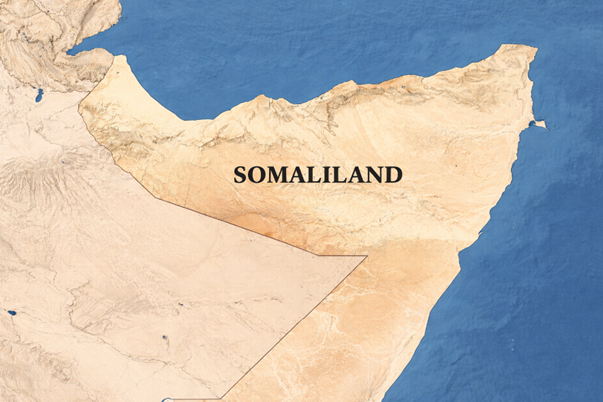
Somaliland, a self-declared sovereign state since 1991, has moved from the fringes of global diplomacy to the center of a geopolitical contest. This shift was catalyzed by Israel’s formal recognition of Somaliland making it the first UN member state to do so. This move has shattered the decades-long “diplomatic endnote” status of the region, signaling that strategic interests are now outweighing traditional norms of territorial integrity in the “rules-based international order.”
Critical Pillars:
1. The Transition from “Frozen Conflict” to “Active Contest”
- End of the “Endnote” Status: For 35 years, Somaliland was a diplomatic footnote. Israel’s recognition has permanently moved Hargeisa from the margins to the center of global power competition.
- The “Earned Sovereignty” Narrative: A major theme is the contrast between Somalia’s “fragile state” status and Somaliland’s “functional statehood.” Somaliland’s ability to maintain its own currency, security, and democratic elections for three decades has created “facts on the ground” that the international community can no longer ignore.
2. Maritime Security and the “Red Sea Gambit”
- Strategic Chokepoints: Somaliland’s 850km coastline along the Gulf of Aden. With the Bab-el-Mandeb Strait becoming a zone of high risk (due to Houthi activity), Somaliland is portrayed as a critical “stabilizing anchor.”
- The Berbera Port Factor: The UAE-managed Berbera Port is identified as the crown jewel of the region. Port offers an alternative to the Chinese-dominated Djibouti, making it a primary target for “Great Power” influence.
3. The “Abraham Accords” in Africa
- A New Diplomatic Model: Israel is using the “spirit of the Abraham Accords” to build unconventional alliances. By recognizing a “moderate, democratic Muslim nation” like Somaliland, Israel gains strategic depth and a potential forward base for counter-terrorism and maritime intelligence.
- Countering Rival Blocs: This move is framed as a challenge to the “Turkey-Qatar-Somalia” axis. The recognition intensifies the proxy competition between middle powers (Israel/UAE vs. Turkey/Egypt) for control over the Horn’s resources and ports.
4. The “African Union” Dilemma
- Sanctity of Borders: A recurring theme is the tension between “functional reality” and “legal precedent.” AU’s fear that recognizing Somaliland will open a “Pandora’s Box” of secessionist movements across the continent by violating the principle of colonial-era border integrity.
Why Somaliland is the “Queen” on this Board:
1. The “Pivot of Power”: Geography and Access
The Queen can move across the entire board; similarly, Somaliland’s location allows powers to project influence across multiple zones:
- The Chokepoint Gatekeeper: It sits directly adjacent to the Bab-el-Mandeb Strait, where 12% of global trade passes. By being in Somaliland, a power like Israel or India can monitor the “jugular vein” of world commerce.
- The 850km Coastline: This isn’t just a border; it’s a massive surveillance platform. It allows the UAE-Israel-India axis to counter the “encirclement” attempted by the Turkey-Somalia-Egypt axis.
2. The Berbera Port: A Multi-Functional Asset
If the port is the Queen’s “base,” it is one that offers both economic and military superiority:
- Deep-Water Capability: Unlike many regional ports, Berbera can host the largest container ships and heavy naval vessels.
- Strategic Backup: It serves as a crucial alternative to Djibouti. While Djibouti is “overcrowded” with Chinese, American, and French bases, Berbera offers a “clean slate” for powers like the UAE (via DP World) and potentially India to establish a sovereign footprint without Chinese interference.
3. Political “Agility”: The Stable Anomaly
Somaliland’s biggest strength is its internal stability. While Somalia and Yemen are often “trapped” in conflict (like Pawns or Knights with limited moves), Somaliland has:
- A “Laboratory of Stability”: 30 years of democratic elections, its own currency, and a functional military.
- Counter-Terrorism Shield: It has successfully kept Al-Shabaab at bay. For the U.S. and India, this makes it a reliable “security anchor” rather than a “security liability.”





The Global Impact:
1. Redefining Sovereignty
The primary global impact is the challenge to the “Sanctity of Borders” principle.
- The Precedent: By recognizing Somaliland, a UN member state (Israel) has bypassed the African Union’s long-standing rule that colonial borders are sacrosanct. This could trigger a “Pandora’s Box” of secessionist movements across Africa (e.g., Tigray in Ethiopia or Ambazonia in Cameroon).
- The “Rules-Based Order” vs. Realism: The world is seeing a shift where maritime security and port access are becoming more valuable than the legal definition of a state. Somaliland’s status as a “stable democracy” in a “fragile region” makes it a more attractive partner for the West than the official government in Mogadishu.
2. The Great Power “Chessboard”
The Horn of Africa is now a site of overlapping proxy conflicts involving global and regional powers:
| Player | Strategy & Impact |
| Israel & UAE | Seeking “Strategic Depth.” An alliance with Somaliland secures the Bab-el-Mandeb Strait and provides a counter-weight to Houthi influence in Yemen. It also builds a maritime wall against Iranian naval expansion. |
| Turkey & Egypt | Backing Somalia to maintain the status quo. Turkey has a massive military base in Mogadishu and seeks to control the “Somali Basin” energy reserves. Egypt supports Somalia primarily to pressure Ethiopia (its rival over the Nile dam). |
| China | Operates a massive base in Djibouti. China views the rise of Somaliland (which has ties with Taiwan) as a threat to its “Belt and Road” dominance in the region. |
| United States | Torn between supporting its ally (Israel) and maintaining the territorial integrity of Somalia. However, the U.S. is increasingly interested in Berbera Port as a backup to its base in Djibouti. |
India’s Impact and Perspective:
- Historical and Colonial Linkages: India and Somaliland share deep-rooted ties dating back to the British Raj, when British Somaliland was often administered as a functional extension of British India. This historical familiarity forms a “silent foundation” for modern relations.
- Strategic Balancing Act: While India has recently reaffirmed its support for Somalia’s “sovereignty and territorial integrity”. India views Somaliland as a “stable and democratic anomaly” in a volatile region.
- Countering China: India’s interest in Somaliland is increasingly driven by the need to counter Chinese influence in East Africa. With China established in Djibouti, India views the Berbera Port and Somaliland’s 850km coastline as a strategic “pivot” to maintain its own presence in the Western Indian Ocean.
- Caution vs. Ambition: India has officially debunked rumors of imminent recognition (calling them “misleading”), yet it continues to engage in capacity-building and humanitarian aid. The article notes that India is likely to pursue a “diplomatic balance”—protecting its strategic stakes in the Red Sea while avoiding a direct confrontation with the African Union’s norms.
Conclusion:
“The transformation of the Horn of Africa suggests that the future of global diplomacy will be written in port-cities and maritime corridors rather than just land borders. Somaliland’s strategic ‘earned sovereignty’ presents India with a unique opportunity to lead a Pax-Indica in the region. By integrating the Berbera Corridor into its Indo-Pacific strategy, India can foster a security architecture that is inclusive, stable, and resilient against great-power rivalries, ensuring that the Gulf of Aden remains a zone of shared prosperity rather than a theater of proxy conflict.”