
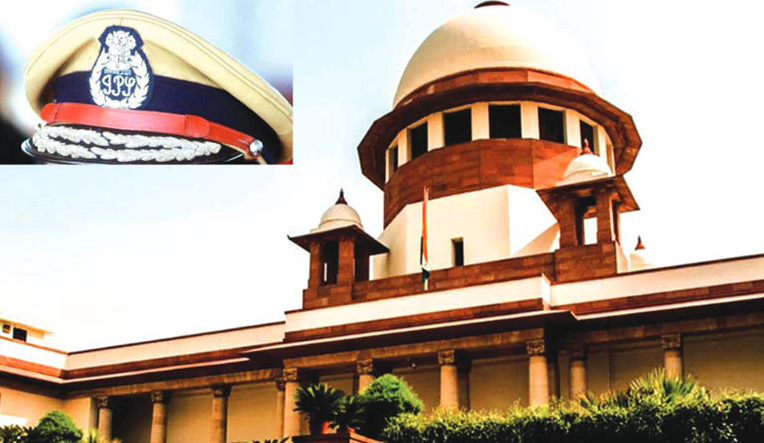
Context
Recently, the Supreme Court of India expressed strong disapproval of the growing trend among State Governments to appoint “Acting DGPs” instead of regular police chiefs. The Bench, led by Chief Justice Surya Kant, authorized the Union Public Service Commission (UPSC) to issue formal reminders to States for timely proposals and directed the Commission to initiate contempt proceedings in the Prakash Singh case if States continue to default on these constitutional and judicial mandates.
1. The Landmark Prakash Singh Case (2006)
The appointment process is governed by the directives issued by the Supreme Court in Prakash Singh vs. Union of India. The court aimed to insulate the police from political interference and ensure a merit-based selection.
- Empanelment: The State Government must select the DGP from a panel of the three senior-most officers of the department who have been empanelled for promotion by the UPSC.
- Tenure Security: Once selected, the DGP should have a minimum tenure of at least two years, irrespective of their date of superannuation (retirement).
- No “Acting” DGPs: The Supreme Court has repeatedly clarified that there is no concept of an “Acting DGP.” States must appoint a permanent DGP to ensure stability in the police hierarchy.
2. The Appointment Procedure
The process involves a collaboration between the State Government and the Union:
- Proposal Submission: The State Government must send a proposal containing a list of eligible IPS officers to the UPSC three months before the incumbent DGP is due to retire.
- Empanelment Committee: The UPSC convenes a committee to shortlist names. This committee typically includes:
- Chairman or Member of the UPSC (Chairperson).
- Union Home Secretary.
- State Chief Secretary.
- State DGP (Incumbent).
- A Chief of a Central Armed Police Force (CAPF) nominated by the Center.
- Shortlisting: The committee selects a panel of three officers based on seniority, service record, and range of experience.
- Final Selection: The State Government is then mandate to “immediately” appoint one of the three persons from the UPSC-recommended panel.
3. Eligibility Criteria (As per UPSC 2023 Guidelines)
The UPSC has refined the eligibility rules to ensure only the most experienced and capable officers reach the top:
- Length of Service: In 2023, the UPSC reduced the minimum service requirement from 30 years to 25 years to expand the pool of eligible candidates.
- Residual Tenure: To avoid “token” appointments, only officers who have at least six months of service remaining before retirement are considered for the panel.
- Experience: Preference is given to officers with at least 10 years of experience in critical areas such as Law and Order, Intelligence, or the Crime Branch.
- Willingness: An officer is not included in the panel unless they express their willingness to be considered for the post.
4. Key Constitutional and Statutory Points
- State Subject: “Police” and “Public Order” are subjects under the State List (List II) of the Seventh Schedule.
- All India Services: While the police force is a state subject, the DGP is an IPS officer, belonging to an All India Service, which is why the UPSC (a central body) plays a role in the selection.
- Single Window System: The Government of India has introduced a “Single Window System” for States to submit proposals to the UPSC to expedite the empanelment process and reduce delays.
Q. With reference to the appointment of the Director General of Police (DGP) in India, consider the following statements:
I. The DGP of a State is appointed by the Governor upon the sole recommendation of the State Cabinet.
II. According to Supreme Court guidelines, an officer must have at least six months of service remaining to be eligible for empanelment as DGP.
III. The Supreme Court has mandated a fixed minimum tenure of two years for the DGP, regardless of their date of retirement.

Which of the statements given above are correct?
A) I and II only
B) II and III only
C) I and III only
D) I, II and III

Correct Answer: B
Explanation

STATEMENT I INCORRECT: The DGP is appointed by the State Government, but they must choose from a panel of three names prepared by the UPSC, not based on the sole recommendation of the Cabinet.
STATEMENT II CORRECT: As per the UPSC's 2023 revised guidelines, only police officers with at least six months of service left before retirement are considered for empanelment.
STATEMENT III CORRECT: The Prakash Singh judgment (2006) mandates a minimum tenure of two years for the DGP to protect the office from political whim and frequent transfers.