
Context
- Recently, environmental scientists have sounded an alarm on a burgeoning ecological crisis: as the Arctic warms at nearly four times the global average—a phenomenon known as Arctic Amplification—it is becoming increasingly hospitable to invasive plant species.
Key Concepts
1. Arctic Amplification & The “Thermal Niche”
- Definition: The phenomenon where the Arctic warms at a significantly faster rate than the global average due to the Albedo-Feedback Loop (melting white ice exposes dark ocean/land, which absorbs more heat).
- Thermal Niche Expansion: Warmer temperatures allow temperate species (e.g., Cow Parsnip, Sticky Ragwort) to survive and reproduce in areas previously too hostile for their seeds to germinate.
2. Pathways of Invasion (The Human Vector)
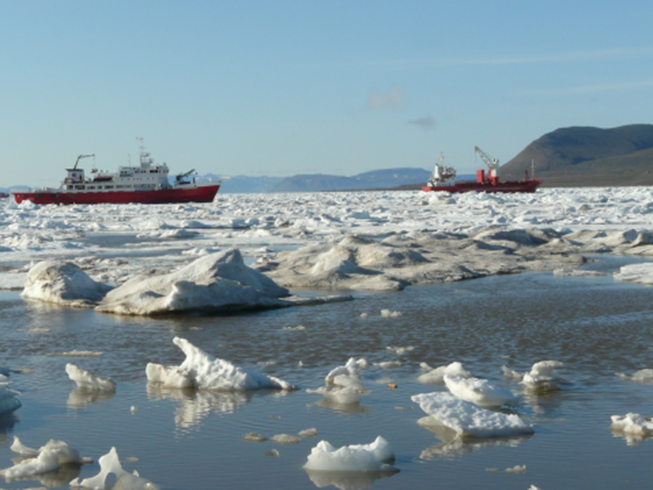
- Shipping: The melting of sea ice has opened the Northern Sea Route (NSR) and the Northwest Passage. Ballast water and hull fouling are primary vectors for marine and coastal invasive species.
- Tourism & Research: Seeds “hitchhike” on the clothing, hiking boots, and equipment of visitors to Arctic “hotspots” like Svalbard (Norway) and Western Alaska.
- Construction: Infrastructure development for oil and gas extraction often uses imported soil or equipment contaminated with non-native seeds.
3. “Sleeper Species” Phenomenon
- These are alien species that have been present in the Arctic for years in small, dormant populations.
- The Trigger: Once a specific temperature threshold is crossed, these species “wake up,” exhibiting rapid, aggressive growth that outcompetes native flora.
4. Ecological Feedbacks: The Invasive-Fire-Permafrost Link
- Altered Fire Regimes: Invasive grasses (e.g., Smooth Brome) create a more continuous and flammable fuel load than native tundra plants.
- Permafrost Impact: Frequent wildfires strip away the insulating organic layer of the soil. This exposes the permafrost, accelerating its thaw and releasing stored Methane and Carbon Dioxide.
International Governance & Frameworks
- ARIAS (Arctic Invasive Alien Species) Strategy: A specialized action plan by the Arctic Council (Working Groups: CAFF & PAME) to prevent, detect, and respond to biological invasions.
- Kunming-Montreal Global Biodiversity Framework (Target 6): Aims to reduce the rate of introduction and establishment of invasive alien species by at least 50% by 2030.
- India’s Role: As an Observer in the Arctic Council, India’s Arctic Policy (2022) emphasizes “Environmental Protection” and monitoring climate-induced biological changes that impact global weather (including the Indian Monsoon).
Q. With reference to the "Arctic Amplification" and its ecological impacts, consider the following statements:

1. Arctic Amplification is primarily driven by the reduction of the planetary albedo effect due to melting sea ice.

2. "Sleeper species" refer to native Arctic plants that undergo deep dormancy during extreme warming events to prevent moisture loss.

3. The presence of certain invasive grasses in the Arctic can accelerate the thawing of permafrost by increasing the frequency of tundra wildfires.

4. India is a permanent member of the Arctic Council and has a veto power on environmental policies in the region.

Which of the statements given above are correct?

A) 1 and 2 only
B) 2 and 4 only
C) 1 and 3 only
D) 1, 3 and 4 only

Answer: C

Solution:
•	STATEMENT 1 CORRECT: Arctic Amplification is a feedback process where the loss of reflective ice (high albedo) exposes dark water/land (low albedo), leading to increased heat absorption and faster warming.
•	STATEMENT 2 INCORRECT: "Sleeper species" are non-native/alien species that remain at low, non-invasive levels until triggered by environmental changes like warming. They are not native plants.
•	STATEMENT 3 CORRECT: Invasive plants can change the "fuel load" of the tundra. More flammable invasive grasses lead to fires that destroy the soil's insulation, causing the permafrost below to melt faster.
•	STATEMENT 4 INCORRECT: India is an Observer, not a member. Only the 8 countries with territory in the Arctic Circle are members. Observers do not have voting or veto rights.