
In the official UPSC Civil Services Examination notification, the Prelims syllabus simply mentions the term “General Science.”
However, these two words encompass a broad and dynamic domain, covering both:
- Basic Sciences (Physics, Chemistry, Biology)
- Science & Technology (Current Developments and Applications)
A minimal description in the notification does not indicate lesser importance. In fact, General Science consistently contributes a significant share of questions in Prelims.
🔹 Importance in UPSC Prelims
- On average, 10–15 questions every year are asked from General Science & Science & Technology (combined).
- Questions are increasingly:
- Conceptual
- Application-based
- Current-affairs linked
- Interdisciplinary
General Science plays a decisive role in improving overall Prelims score due to:
- Fewer ambiguities compared to Polity/History
- Strong elimination potential
- NCERT-based clarity
🔹 Broad Areas Covered Under “General Science”
1️. Physics
- Laws of motion, light, sound, electricity
- Nuclear physics basics
- Semiconductor & communication basics
- Everyday physics applications
2️.Chemistry
- Atomic structure
- Chemical bonding
- Acids, bases, salts
- Environmental chemistry
- Polymers, nanomaterials
3️.Biology
- Cell structure & function
- Human physiology
- Plant physiology
- Genetics & biotechnology
- Ecology basics
- Diseases & immunity
4️. Science & Technology (Dynamic Portion)
- Biotechnology
- Space technology
- Defence technology
- Nanotechnology
- Artificial Intelligence
- Robotics
- Quantum computing
- Health technologies (vaccines, mRNA, etc.)
- Government missions (ISRO, DRDO, CSIR initiatives)
Nature of Questions in Recent Years
- Less factual, more conceptual
- Strong linkage with:
- Environment
- Biotechnology
- Space missions
- Health & disease
- Direct questions from NCERT fundamentals
🔹 Key Insight for Aspirants
Do not judge the weightage of a subject by the number of words used in the syllabus.
In UPSC CSE, the importance of a subject depends on:
- Question trend
- Conceptual clarity required
- Interlinkages with current affairs
General Science remains a scoring and high-return area when prepared systematically.
Sources for Science & Technology:
The Science and Tech section has become more of an application area now.
Recommended Sources:
- NCERT Science (Class 6–10)
- The Hindu and The Indian Express Science & Technology (S&T) Section.
- RICE-IAS MONTHLY NEWS ANALYSIS MAGAZINE(MNA) Science and Technology Section.
To download RICE-IAS MNA click here – https://riceias.com/mna-magazine/
Follow RICE-IAS Website for Daily Current Affairs in English and Bengali
For new and recent details, don’t read advanced tech books. No requirements for you!
PSC CSE Prelims – General Science Questions (2015–2024)
| Year | No. of Questions |
| 2015 | 7 |
| 2016 | 10 |
| 2017 | 8 |
| 2018 | 13 |
| 2019 | 14 |
| 2020 | 13 |
| 2021 | 12 |
| 2022 | 14 |
| 2023 | 8 |
| 2024 | 7 |
| Total (2015–2024) | 106 |
Quick Trend Insight (For UPSC Strategy)
- Highest Questions: 2019 & 2022 (14 each)
- Lowest Questions: 2015 & 2024 (7 each)
- Peak Phase: 2018–2022 (Consistently 12–14 questions)
- Recent Dip: 2023–2024
PSC CSE Prelims – General Science Distribution (2015–2024)
| Category | Number of Questions | Percentage Share (%) |
| Basic Science | 27 | 25.47% |
| Science & Technology | 79 | 74.53% |
| Total | 106 | 100% |
Key Insight for UPSC Preparation
- Around 75% questions came from Science & Technology (current + application based).
- Only about 25% questions came from Basic Science (Physics, Chemistry, Biology fundamentals).
- Indicates strong emphasis on dynamic S&T topics in recent years.
UPSC CSE Prelims – Topic-wise Distribution (Basic Science Portion)
| Topic | Number of Questions |
| Human Body | 1 |
| Cell Biology | 1 |
| Microorganisms | 4 |
| Diseases | 4 |
| Immune System | 1 |
| Heredity and Evolution | 1 |
| Properties of Matter | 2 |
| Applications in Everyday Life | 5 |
| Space Science | 8 |
| Total (Basic Science) | 27 |
Quick Insight for UPSC Strategy
- Highest weightage: Space Science (8 questions)
- Followed by: Applications in Everyday Life (5 questions)
- Biology-linked topics (Microorganisms + Diseases + Immune System + Heredity + Human Body + Cell Biology) together form a significant share.
- Physics & Chemistry fundamentals appear mainly under: Properties of Matter, Applications in Everyday Life, Space Science
Topic-wise Distribution (Science & Technology Portion)
| Topic | Number of Questions |
| Biotechnology | 17 |
| Information Technology | 15 |
| Space Technology | 11 |
| Miscellaneous Technologies | 10 |
| Communication Technologies | 8 |
| Defence | 4 |
| Energy-related Technologies | 4 |
| Electronic Devices | 3 |
| Nanotechnology | 3 |
| Governance in S&T | 2 |
| Health-related Developments | 2 |
| Total (Science & Technology) | 79 |
Key UPSC Trend Insight
- Highest Weightage: Biotechnology (17 questions)
- Followed by: Information Technology (15 questions)
- Space Technology & Communication together form a strong recurring theme.
- Governance & Health developments appear as emerging applied areas.
Science & Technology in UPSC Prelims (Last 10 Years): Source Analysis
In the past decade, UPSC Prelims Science & Technology has consisted of two clear parts—Science (static) and Technology (dynamic).
The Science portion covers core concepts from Physics, Chemistry, and Biology. This area is largely static, making NCERTs (Class 6–12) the most important source for conceptual clarity. Topics like cell biology, human physiology, mechanics, gravitation, light, and chemical bonding form the foundation. While some overlap exists in areas like space science and modern physics, NCERTs are meant to build fundamentals—not to directly solve every Prelims question.
The Technology portion is dynamic and application-based. It focuses on the use of scientific principles in real-world contexts and is closely linked with current affairs, government initiatives, and emerging research. Frequently asked areas include biotechnology, artificial intelligence, nanotechnology, space missions, defence technology, renewable energy, and quantum technology.
For preparation, NCERT + Newspaper forms the core strategy. NCERT builds concepts, while regular newspaper reading connects those concepts to current developments. Aspirants may selectively refer to official sources like ISRO, DRDO, CSIR, and NASA for clarity, but these should not become primary study material.
UPSC often frames questions that are not traceable to a single source. Therefore, success depends on conceptual clarity, application-based understanding, and integration of static knowledge with current affairs rather than excessive material collection.
Difficulty Level Distribution (2015–2024)
| Year | Total Questions | Easy | Medium | Difficult |
| 2015 | 7 | 1 | 4 | 2 |
| 2016 | 10 | 3 | 4 | 3 |
| 2017 | 8 | 2 | 3 | 3 |
| 2018 | 13 | 4 | 6 | 3 |
| 2019 | 14 | 3 | 6 | 5 |
| 2020 | 13 | 1 | 5 | 7 |
| 2021 | 12 | 2 | 6 | 4 |
| 2022 | 14 | 5 | 6 | 3 |
| 2023 | 8 | 2 | 3 | 3 |
| 2024 | 7 | 1 | 4 | 2 |
| Total | 106 | 24 | 47 | 35 |
Overall Analysis: Science & Technology (UPSC Prelims, 2015–2024)
1️.Consistent Weightage
- 10–12 questions annually on average.
- Present every year → a core scoring area.
2️. Shift Toward Dynamic Component
- 70–75% questions from Technology/current developments.
- 25–30% from static basic science.
3️. High-Yield Themes
- Biotechnology (most consistent).
- Space missions (especially related to ISRO).
- AI, Cybersecurity, Quantum, Defence, Renewable Energy.
4️.Nature of Questions
- From factual → conceptual & application-based.
- Focus on “how it works” + real-world use.
- Elimination technique important.
5.Difficulty Level
- Mostly medium to difficult.
- Analytical depth increased in recent years.
6️.Interdisciplinary Linkage
- Connected with Environment, Polity (data governance), Economy (digital tech), and IR (space/defence cooperation).
- Overall preparation strategy Should remains clear: NCERTs for fundamentals, newspapers for dynamic updates, and conceptual clarity over excessive source collection.
Let’s Discuss some PYQs
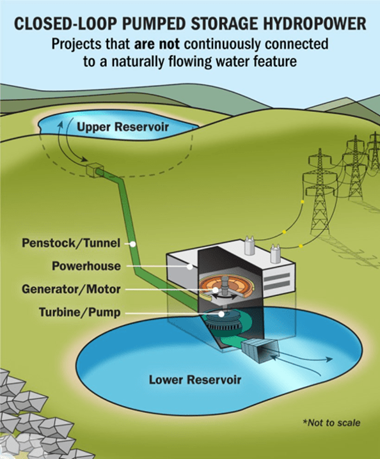
Q. Recently, the term “pumped-storage hydropower” is actually and appropriately discussed in the context of which one of the following?(2024)
[A] Irrigation of terraced crop fields
[B] Lift irrigation of cereal crops
[C] Long duration energy storage
[D] Rainwater harvesting system
Answer: C
Q. Consider the following:
1. Aerosols
2. Foam agents
3. Fire retardants
4. Lubricants
In the making of how many of the above are hydrofluorocarbons used? (2023)
(a) Only one
(b) Only two
(c) Only three
(d) All four Correct
answer: c
Q. ‘Wolbachia method’ is sometimes talked about with reference to which one of the following? (2023)
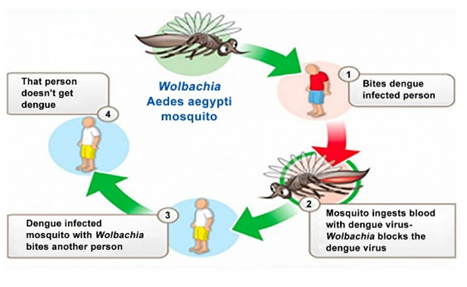
(a) Controlling the viral diseases spread by mosquitoes
(b) Converting crop residues into packing material
(c) Producing biodegradable plastics
(d) Producing biochar from thermo-chemical conversion of biomass
Q. Which one of the following is the context in which the term “”qubit“” is mentioned? (2022)
(a) Cloud Services
(b) Quantum Computing
(c) Visible Light Communication Technologies
(d) Wireless Communication Technologies Correct
answer: b
Q. Consider the following communication technologies (2022)
1. Closed-circuit Television
2. Radio Frequency Identification
3. Wireless Local Area Network
Which of the above are considered Short-Range devices/technologies?
(a) 1 and 2 only
(b) 2 and 3 only
(c) 1 and 3 only
(d) 1, 2 and 3 Correct
answer: d
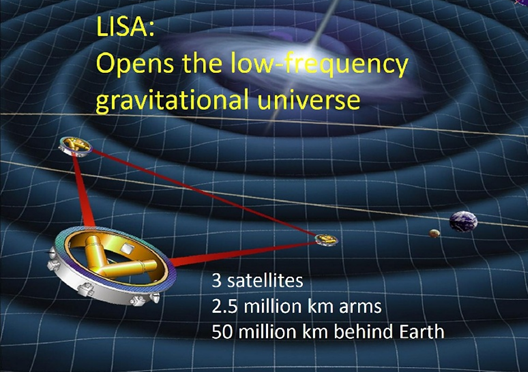
Q. The experiment will employ a trio of spacecraft flying in formation in the shape of an equilateral triangle that has sides one million kilometres long, with lasers shining between the craft.” The experiment in question refers to (2020)
(a) Voyager-2
(b) New horizons
(c) Lisa Pathfinder
(d) Evolved LISA
Correct answer: d
LISA (Laser Interferometer Space Antenna) is a planned ESA-led space-based observatory, with NASA collaboration, designed to detect gravitational waves from space. Scheduled for the mid-2030s, it will use three spacecraft in a 2.5 million km triangle formation to measure spacetime ripples, enabling study of black holes and the early universe
Q. What is Cas9 protein that is often mentioned in news?
(a) A molecular scissors used in targeted gene editing
b) A biosensor used in the accurate detection of pathogens in patients
(c) A gene that makes plants pest-resistant
(d) A herbicidal substance synthesized in genetically modified crops
Correct answer: a
(Cas9 protein, frequently in the news, is a bacterial enzyme acting as “molecular scissors” in targeted gene-editing technology. It is a key component of the CRISPR-Cas9 system, which allows scientists to precisely cut and alter DNA sequences to edit genes in organisms, including humans)
FAQs
1. How many questions are generally asked from Science & Technology in UPSC Prelims?
On average, 10–12 questions per year are asked. Over the last 10 years, around 100+ questions have appeared, making it a stable and important section.
2. Is Science & Technology more static or current affairs based?
Around 70–75% of questions are dynamic, linked to current developments (e.g., ISRO missions, AI, biotechnology). Only about 25–30% come from static basic science concepts.
3. Which topics have the highest weightage in the last 10 years?
High-yield areas include:
- Biotechnology
- Space Technology
- Information Technology (AI, Blockchain, Cybersecurity)
- Defence Technology
- Energy & Renewable Technology
Biotechnology has been the most consistently asked theme.
4. Are NCERT books sufficient for Science & Technology preparation?
NCERTs are essential for building conceptual clarity, especially in Physics, Chemistry, and Biology.However, they are not sufficient alone, because most questions are application and current-oriented.
5. How important is newspaper reading for Sci-Tech?
Very important. Questions frequently arise from:
- Scientific breakthroughs
- Government missions
- Emerging technologies
- Policy-related tech developments
Newspaper reading helps connect concept + application.
6. What is the difficulty level of Sci-Tech questions in Prelims?
In the last decade:
- ~45% Medium
- ~33% Difficult
- ~22% Easy
Most questions are conceptual and elimination-based, not direct fact recall.
7. Does UPSC ask very technical or engineering-level questions?
No. UPSC avoids deep technical formulas or engineering calculations.
Instead, it focuses on:
- Basic working principles
- Applications
- Policy relevance
- Societal impact
8. Is Science & Technology linked with other GS subjects?
Yes, strongly. Sci-Tech overlaps with:
- Environment (GM crops, climate tech)
- Economy (semiconductor mission, digital economy)
- Polity (data protection, AI governance)
- International Relations (space cooperation)
Integrated preparation gives better results.
9. How unpredictable is the Sci-Tech section?
Moderately unpredictable.UPSC may frame questions from themes not traceable to one single source. Hence, conceptual clarity is more important than memorizing isolated facts.