
After Reading This Article You Can Solve This UPSC Mains Model Questions:
India’s monsoon is increasingly influenced by complex ocean–atmosphere interactions rather than simple land–sea thermal contrast. Discuss and suggest a suitable way forward to enhance India’s resilience to monsoon variability. 15 Marks (GS-1, Geography)
Introduction
- India’s South-West Monsoon (June–September) is the lifeline of the nation’s agriculture, water security and rural economy, contributing nearly 70 per cent of the country’s annual rainfall and sustaining the livelihoods of over half a billion people directly dependent on rain-fed farming.
- Following two consecutive years of above-normal precipitation, the India Meteorological Department (IMD) has now forecast an 8 percent rainfall deficit with an uncertainty band of ±5%. for the 2026 monsoon season — a development that demands urgent policy attention, scientific understanding, and institutional preparedness.
Understanding Rainfall Classification
The India Meteorological Department (IMD) classifies seasonal rainfall relative to the Long Period Average (LPA), currently set at 87 cm for the June–September period based on the mean summer‑monsoon rainfall over India for the base period 1971–2020. The main categories are:
- Normal Rainfall: Rainfall between 96 per cent and 104 per cent of LPA. In such years, agricultural output is largely stable, reservoir storage is adequate and the macro-economy remains insulated from weather shocks.
- Above Normal / Excess Rainfall: Rainfall above 104 per cent of LPA. While beneficial for water storage and groundwater recharge, excess rainfall can trigger floods, waterlogging and crop damage in vulnerable districts.
- Below Normal Rainfall: Rainfall between 90 per cent and 96 per cent of LPA. This signals an emerging moisture deficit but may not trigger a formal drought declaration unless spatial distribution is severely skewed.
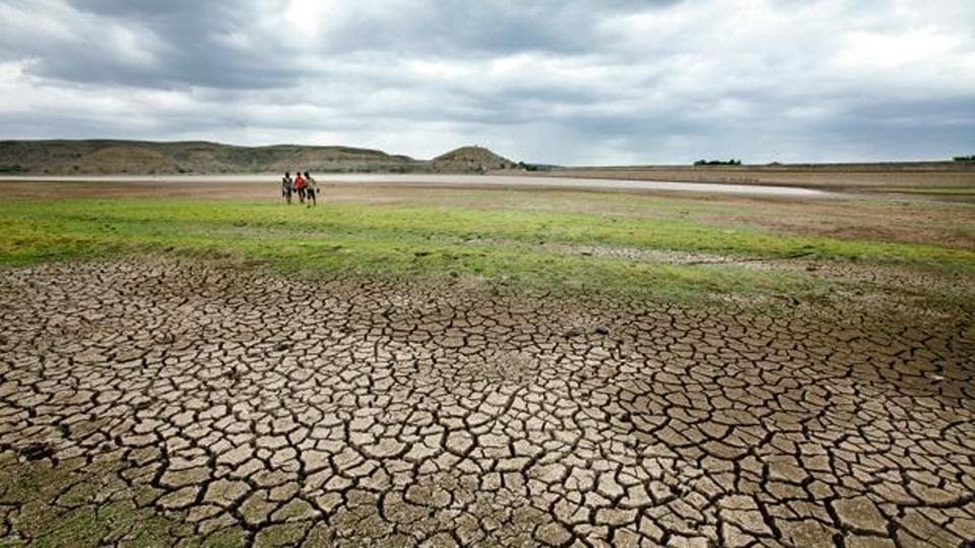
- Deficient Rainfall: Rainfall below 90 per cent of LPA at the national scale. Deficient rainfall over large spatial extents is typically associated with drought conditions, disrupted kharif sowing, and significant agricultural distress.
- Drought: The term drought refers to a prolonged and significant deficiency of precipitation over a region relative to its expected average, resulting in water scarcity that adversely affects agriculture, ecosystems, and human populations.
- Draught Classification: In the Indian context, droughts are formally classified into meteorological drought (rainfall deficiency), hydrological drought (depletion of surface and groundwater), agricultural drought (soil moisture deficit hampering crop growth), and socio-economic drought (when water scarcity disrupts livelihoods and food security).
- The National Disaster Management Authority (NDMA) guidelines provide the administrative framework for drought declaration, compensation, and relief.
- Current Context: In 2015, the IMD’s first‑stage forecast was 93% of LPA (below normal); the actual rainfall turned out to be 86% of LPA, which marked a deficient monsoon and is widely treated in public discourse as a drought year. This historical pattern underscores that even a “below‑normal” forecast can rapidly slide into deficit and drought conditions.
How the Monsoon Works: Role of Ocean–Atmosphere Linkages
The Indian summer monsoon is primarily driven by the differential heating of land and ocean. In summer, the Indian subcontinent heats up faster than the surrounding seas, creating a low‑pressure zone over the land.
Warm, moist air from the southern Indian Ocean is drawn inland, rises over mountain ranges such as the Western Ghats and the Himalayan foothills and condenses to produce widespread rainfall. However, this seemingly straightforward mechanism is heavily modulated by large‑scale ocean‑atmosphere interactions, especially El Niño, La Niña and the Indian Ocean Dipole (IOD).
A. El Niño: El Niño refers to the abnormal warming of sea surface temperatures (SSTs) in the central and eastern equatorial Pacific Ocean, typically occurring at intervals of two toseven years and often exceeding 1°C above normal.
- Origin: The name ‘El Niño’ (Spanish for ‘the Child’) was historically used by Peruvian fishermen who observed warm coastal waters around Christmas time. In meteorological terms, it is the warm phase of the El Niño–Southern Oscillation (ENSO) cycle — a coupled ocean–atmosphere system.
- Mechanism: During an El Niño event, the Walker Circulation — the large-scale east–west atmospheric circulation over the tropical Pacific — weakens. This suppresses convection (rising air and rainfall) over the Indo-Pacific region and enhances it over the central and eastern Pacific.
· Impact: The consequent anomalous subsidence of dry air over the Indian subcontinent weakens the monsoon trough, reduces moisture flux from the Arabian Sea and Bay of Bengal, and leads to below-normal or deficient rainfall over large parts of India. Since 1950, El Niño has coincided with a deficient monsoon in India in nine out of sixteen occurrences.
- Current Context: IMD’s 2026 forecast anticipates that El Niño conditions will intensify in the second half of the monsoon season — August and September, making the latter part of the season particularly vulnerable.
- Critically, the timing of El Niño determines its impact. When warming peaks outside the monsoon months, its influence is limited. The 2019 season illustrates this well: despite early El Niño-like conditions, rainfall turned out to be above normal because the warming was short-lived and did not sustain through the core monsoon months.
B. La Niña: La Niña is the opposite phase of ENSO, characterised by anomalous cooling of SSTs in the central and eastern equatorial Pacific. The name ‘La Niña’ (Spanish for ‘the Girl’) reflects its contrast with El Niño.
- Mechanism: During a La Niña phase, the Walker Circulation strengthens, enhancing convection over the Indo-Pacific region and increasing the supply of moisture to the Indian subcontinent.
- Impact: La Niña years are therefore generally associated with above-normal or excess rainfall over India, particularly over central and peninsular India, though regional variability persists. India’s recent years of surplus rainfall can be partly attributed to La Niña conditions, illustrating the cyclical nature of monsoon variability.
C. Indian Ocean Dipole (IOD)- Counter‑Mechanism: The Indian Ocean Dipole (IOD) sometimes called the “Indian Niño” is characterised by differences in SSTs between the western Indian Ocean (near the Arabian Sea and East Africa) and the eastern Indian Ocean (near Sumatra and Indonesia). Unlike ENSO, which operates in the Pacific, the IOD is an indigenous Indian Ocean phenomenon that exercises a more direct and proximate influence on the Indian monsoon.
- Positive IOD: A Positive IOD (pIOD) event occurs when the western Indian Ocean warms anomalously while the eastern Indian Ocean cools. This strengthens the moisture-laden westerly winds flowing towards India, enhances convection over the subcontinent, and is associated with above-normal rainfall over most of India. Crucially, a positive IOD can counteract or partially offset the negative effects of a concurrent El Niño
- Negative IOD: Conversely, a Negative IOD (nIOD), in which the eastern Indian Ocean is warmer than the western Indian Ocean, suppresses moisture flux towards India and can compound the deficit effects of El Niño, thereby amplifying the risk of drought.
D. Madden–Julian Oscillation (MJO)-The Intraseasonal Regulator: An eastward-moving system of enhanced and suppressed convection over the tropical Indian and Pacific Oceans, operating on 30–60 day timescales.
- Active Phase over Indian Ocean: Enhances moisture convergence and rainfall over India.
- Suppressed Phase over Indian Ocean: Leads to temporary weakening (break) in monsoon rainfall.
- Used by the IMD for extended-range forecasts (2–4 weeks) aiding agriculture and disaster preparedness.
E. Equatorial Indian Ocean Oscillation (EQUINOO): Variability in convection over the equatorial Indian Ocean, identified by Indian Institute of Tropical Meteorology; complements IOD in influencing monsoon rainfall.
- Eurasian Snow Cover: Affects land–sea thermal contrast, influencing monsoon onset and strength.
- Atlantic Meridional Overturning Circulation (AMOC): A large-scale Atlantic Ocean circulation system influencing global climate and monsoon via teleconnections.
- North Atlantic Sea Surface Temperatures (SSTs): Alter atmospheric circulation, impacting the Indian monsoon.
Why Forecasting the Monsoon is Challenging
- Monsoon prediction is inherently difficult due to the non-linear interaction of multiple climate drivers, including El Niño, La Niña and IOD.
- Key challenges include:
- Timing uncertainty, as the impact of El Niño depends on whether it peaks during or outside monsoon months
- Intensity variation, since weak El Niño conditions may not significantly disrupt rainfall
- Regional diversity, where different parts of India may experience contrasting rainfall patterns
- For example, in 2019, despite the presence of El Niño-like conditions, India recorded above-normal rainfall, highlighting the limitations of deterministic forecasting.
- These complexities underscore that forecasts are probabilistic rather than absolute, requiring cautious interpretation and flexible policy responses.
Emerging Challenges in a Deficit Monsoon Year
- Agricultural Stress: Kharif crops such as rice, pulses, oilseeds and sugarcane are directly sown during the monsoon season. A shortfall reduces sown area, lowers yields, and triggers farm distress, particularly for small and marginal farmers who lack irrigation access.
- Inflationary Pressures: Food inflation is a direct consequence of poor monsoons. Shortages in pulses and oilseeds can disrupt the Consumer Price Index (CPI), forcing the Reserve Bank of India to maintain high interest rates, thus slowing economic growth.
- Fertilizer and Input Uncertainty: Ongoing geopolitical tensions in West Asia, a region critical to India’s supply of natural gas used in urea production could compound agricultural challenges by disrupting fertilizer availability and inflating input costs at a time when farmers are already dealing with weak rains.
- Rural Demand Contraction: The rural economy is closely tied to agricultural income. A poor monsoon weakens rural purchasing power, contracts demand for manufactured goods, and can slow the broader economic recovery.
- Water–Energy Stress: A deficient monsoon reduces reservoir recharge, leading to critically low water storage that affects both irrigation and drinking supply during the rabi season, while also lowering hydropower generation, thereby increasing reliance on costlier thermal power and raising overall energy stress.
Government Initiatives and Institutional Frameworks
- National Disaster Management Authority (NDMA): Provides coordination and policy guidance for drought response, including early warning dissemination and inter-state coordination.
- Pradhan Mantri Fasal Bima Yojana (PMFBY): The flagship crop insurance scheme is designed to compensate farmers for yield losses due to natural calamities, including drought. However, enrolment gaps and delayed claim settlements remain persistent concerns.
- Pradhan Mantri Krishi Sinchayee Yojana (PMKSY): Focuses on “Har Khet Ko Pani” (Water for every farm) and “Per Drop More Crop” through micro-irrigation
- MNREGA Integration: The rural employment guarantee scheme acts as an automatic economic stabiliser in drought years, providing wage income to rural households when agricultural work declines.
- National Water Mission: Aims to promote water-use efficiency and conservation, with special emphasis on irrigation modernisation and groundwater regulation.
- IMD’s Agrometeorological Advisory Services: Provides district-level crop and weather advisories to farmers through SMS and Kisan Portals, enabling informed decisions on sowing time, crop choice, and input use.
- PM-KUSUM and Solar Irrigation: The Pradhan Mantri Kisan Urja Suraksha evam Utthan Mahabhiyan (PM-KUSUM) aims to reduce dependence on diesel-powered irrigation by promoting solar pumps, thereby reducing operational costs for farmers in deficit rainfall years and curtailing groundwater over-exploitation.
Way Forward: Policy and Institutional Measures
A. Immediate Preparedness Measures
- Strengthen Weather–Agriculture Advisory Systems:
- Better integrate IMD forecasts with extension services at the block and panchayat levels so that farmers receive tailored sowing, crop‑choice, and water‑management advisories.
- Promote short‑duration and drought‑resilient varieties (e.g., short‑duration paddy, millets, pulses) in regions where deficits are likely.
- Ensure Timely Availability of Inputs:
- Shore up fertilizer stocks and monitor distribution channels to prevent localised shortages.
- Ramp up domestic production of nitrogen‑based fertilizers and bio‑fertilizers to reduce dependence on imported gas‑linked inputs.
- Manage Water and Storage Prudently:
- Prioritise equitable water distribution from reservoirs, especially in inter‑state river basins.
- Enforce summer‑irrigation restrictions, promote micro‑irrigation, and encourage community‑level water‑saving practices.
B. Medium‑ and Long‑Term Structural Reforms
- Invest in Water‑Harvesting and Groundwater Recharge: Scale up watershed development, pond and tank restoration, and artificial‑recharge structures to capture monsoon runoff and reduce dependence on groundwater.
- Promote regulated well‑spacing, aquifer‑mapping, and community‑level groundwater management.
- Diversify Cropping Patterns: Gradually shift parts of paddy‑dominant landscapes towards millets, pulses, and oilseeds that are less water‑intensive and more climate‑resilient.
- Provide price‑support, market‑linkage, and procurement mechanisms for these crops so farmers are not discouraged by price risks.
- Enhance Climate‑resilient Infrastructure: Improve flood and drought‑resilient rural infrastructure (e.g., bunds, drainage channels, community‑level storage).
- Integrate climate‑risk assessments into urban planning, especially for water‑supply systems, stormwater drainage, and groundwater‑management.
- Strengthen Forecasting and Early‑Warning Systems: Invest in high‑resolution models, satellite data, and AI‑based tools to improve the spatial and temporal accuracy of monsoon forecasts.
- Expand real‑time monitoring of soil‑moisture, river‑flow, reservoir levels, and groundwater to support anticipatory decision‑making and early‑warning for droughts and floods.
Conclusion
India’s monsoon, shaped by complex interactions such as El Niño, La Niña and the Indian Ocean Dipole, poses significant risks when deficits arise, particularly for agriculture, water resources, and the broader economy. Addressing these challenges requires a shift toward anticipatory governance that integrates scientific forecasting, institutional readiness and community resilience to effectively manage growing climate uncertainty.