
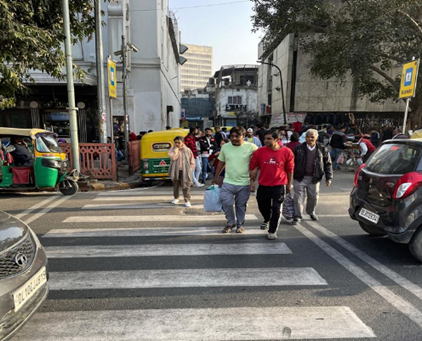
After Reading This Article You Can Solve This UPSC Mains Model Question:
The right to walk is an essential component of the Right to Life under Article 21. Discuss the challenges faced by pedestrians in Indian cities and suggest measures to create pedestrian-friendly urban spaces. 15 Marks (GS-2 Polity)
Why in News?
The Supreme Court, in a recent judgment, reaffirmed that the right to walk on safe and unobstructed footpaths is a Fundamental Right under Article 21 of the Constitution. The observation came while hearing a compensation case involving the death of a five-year-old child who was killed by a tanker lorry in Karnataka.
Introduction
As Indian cities become increasingly vehicle-centric, pedestrians often face unsafe and inaccessible streets. Recognising the right to walk as an extension of the Right to Life and Personal Liberty (Article 21), the Supreme Court has emphasized that urban development must prioritize pedestrian safety and accessibility alongside motorized transport.
Significance of Pedestrian Rights
1. Constitutional Significance
- The right to walk safely flows from Article 21, which guarantees the right to life with dignity.
- Accessible public spaces are essential for ensuring equal enjoyment of fundamental rights.
2. Social Significance
- Walking remains the primary mode of transport for a large section of the population, particularly the poor, elderly, children, and persons with disabilities.
- Safe footpaths promote inclusive urban mobility.
3. Economic Significance
- Walkable cities reduce dependence on private vehicles, lowering transportation costs.
- Improved pedestrian infrastructure enhances productivity and access to economic opportunities.
4. Environmental Significance
- Encourages non-motorized transport.
- Reduces traffic congestion, fuel consumption, and urban pollution.
5. Public Health Significance
- Promotes physical activity and healthier lifestyles.
- Helps reduce lifestyle diseases associated with sedentary living.
Key Observations of the Supreme Court
1. Walking Has Become Increasingly Difficult
- Rapid motorization has transformed streets into vehicle-dominated spaces.
- Pedestrians are often treated as obstacles rather than rightful users of public roads.
2. Footpaths Are Essential Public Infrastructure
- Pedestrians have a legitimate claim over pavements and walkways.
- Safe walking spaces are necessary for exercising the right to mobility.
3. State Responsibility
- Governments and local bodies have a duty to provide safe and accessible pedestrian infrastructure.
- Compensation alone cannot substitute preventive urban planning.
Major Challenges Faced by Pedestrians in India
1. Lack of Continuous Footpaths
- Many cities lack dedicated pedestrian pathways.
- Existing footpaths are often discontinuous and poorly designed.
2. Encroachment of Public Spaces
- Footpaths are frequently occupied by parked vehicles, utility structures, vendors, and construction materials.
- This forces pedestrians onto roads, increasing accident risks.
3. Vehicle-Centric Urban Planning
- Urban infrastructure prioritizes road widening and vehicular movement over pedestrian safety.
- Walking infrastructure receives limited funding and attention.
4. Fragmented Regulatory Framework
- India lacks a comprehensive national law protecting pedestrian rights.
- Responsibilities are scattered across municipal laws, planning regulations, and urban guidelines.
5. Weak Urban Governance
- Poor implementation of street-design norms and inadequate monitoring reduce effectiveness.
- Municipal bodies often lack technical and financial capacity.
6. Road Safety Concerns
- High incidence of pedestrian fatalities due to speeding, unsafe crossings, and inadequate traffic management.
- Vulnerable groups face disproportionate risks.
Challenges in Implementing the Right to Walk
1. Conflict with Informal Livelihoods
- Footpaths often support street vendors and informal economic activities.
- Strict enforcement may create tensions between pedestrian rights and livelihood rights under Article 19(1)(g).
2. Weak Enforcement Culture
- Existing urban regulations are often poorly implemented.
- Legal recognition alone may not ensure behavioral change.
3. Limited Financial Resources
- Urban local bodies frequently prioritize road expansion over pedestrian infrastructure.
- Dedicated funding for walkability remains inadequate.
4. Absence of Public Awareness
- Many citizens and motorists do not recognize pedestrian right-of-way norms.
- Lack of civic awareness contributes to unsafe road behavior.
Lessons from Other Policy Experiences
1. Street Vendors Act, 2014
- Strong legal protections alone have not ensured effective implementation.
- Delays in surveys, vending committees, and zoning continue to create conflicts.
2. COTPA, 2003 (Anti-Smoking Regulations)
- Behavioral change succeeded through sustained awareness campaigns and visible enforcement.
- Demonstrates the importance of combining legal measures with social messaging.
3. Swachh Bharat Mission
- Citizen responsibility alone cannot deliver outcomes without adequate public infrastructure.
- Similarly, pedestrian rights require government investment in footpaths and urban design.
Way Forward
1. Enact a Comprehensive Pedestrian Rights Framework
- Develop national standards recognizing pedestrians as primary road users.
2. Build Continuous and Accessible Footpaths
- Ensure universal accessibility, especially for persons with disabilities and senior citizens.
3. Adopt Complete Streets Approach
- Design roads for pedestrians, cyclists, public transport, and vehicles rather than only automobiles.
4. Increase Urban Infrastructure Funding
- Allocate dedicated resources for pedestrian infrastructure under urban development schemes.
5. Integrate Street Vendors Through Planning
- Implement the Street Vendors Act effectively by creating designated vending zones and shared-use spaces.
6. Strengthen Road Safety Measures
- Improve crossings, traffic calming measures, signage, and enforcement of pedestrian right-of-way rules.
7. Promote Behavioural Change
- Conduct public awareness campaigns to build a culture of respecting pedestrian rights.
Conclusion
Recognising the right to walk under Article 21 is a significant step towards inclusive and people-centric cities. However, real change will require better pedestrian infrastructure, stronger urban governance, and a shift towards prioritising people over vehicles in urban planning.