
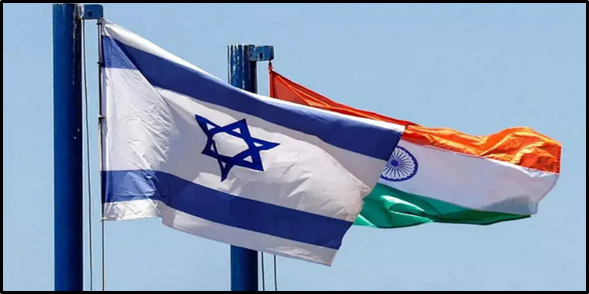
Important for GS Prelims- International Relations/Economy
About India-Israel FTA
- Proposed bilateral trade agreement between India and Israel, aimed at deepening economic ties beyond a transactional trade relationship into a strategic partnership.
- Negotiated under the Ministry of Commerce and Industry, India.
- Core mandate: tariff reduction, services liberalization, and alignment on emerging technology sectors.
Key Facts
| Particular | Details |
| Negotiations initially began | May 2010; stalled after 2013 |
| Framework revival | Terms of Reference (ToR) signed November 2025 |
| First Round | 23–26 February 2026, New Delhi |
| Second Round | 20–23 July 2026, Vanijya Bhawan, New Delhi |
| India’s Chief Negotiator | Ajay Bhadoo, Additional Secretary, Department of Commerce |
| Israel’s Chief Negotiator | Yifat Alon Perel, Senior Director, Trade Policy and Agreements |
| Bilateral trade (FY 2024–25) | USD 3.62 billion |
| Bilateral trade (FY 2025–26) | USD 3.93 billion |
Key Negotiation Chapters of the Trade Agreement
- Trade in Goods: Selective duty eliminations and phased tariff reductions on gems and jewelry, machinery, chemicals, textiles, fertilizers, electronics, and agricultural products.
- Trade in Services: Eases regulatory requirements and professional mobility, leveraging India’s IT and professional services strengths and Israel’s fintech and digital capabilities.
- Rules of Origin and Customs Procedures: Streamlines border clearances, lowers transaction costs for MSMEs.
- Sanitary and Phytosanitary (SPS) Measures and Technical Barriers to Trade (TBT) chapters included.
- Strategic focus areas: artificial intelligence (AI), semiconductors, cybersecurity, clean energy — aligning Israel’s “Silicon Wadi” innovation ecosystem with India’s manufacturing/digital value-chain goals.
- Key sensitivities: agriculture and agri-technology market access, intellectual property rights (IPR) harmonization (software, pharmaceuticals), government procurement, data governance, defense technology transfers.
Associated Frameworks
- India-Israel Bilateral Investment Agreement (BIA): Signed September 2025; entered into force 4 July 2026 — separate instrument from the FTA, focused on investment protection, not trade tariffs.
- I2U2 Grouping: Broader transcontinental cooperation framework (India, Israel, UAE, USA) linked to trade potential under the FTA.
- India-Middle East-Europe Economic Corridor (IMEC): Broader connectivity framework whose commercial potential is linked to successful conclusion of the India-Israel FTA.
India’s Role
- PM Narendra Modi addressed a Special Plenary of the Knesset, Jerusalem, on 25 February 2026, calling for early FTA finalization, during his State Visit to Israel.
- Union Minister of Commerce and Industry Piyush Goyal engaged with the Israeli delegation during the First Round (February 2026).
- India represented by Chief Negotiator Ajay Bhadoo, Additional Secretary, Department of Commerce.
Conclusion
The India-Israel FTA, under active negotiation since the November 2025 ToR, aims to establish a comprehensive trade pact covering goods, services, and emerging technology sectors, distinct from the parallel India-Israel BIA (in force July 2026).
| This concept has been elaborately discussed in the following article of DD News India, Israel Conclude Second Round of Free Trade Agreement Negotiations |