
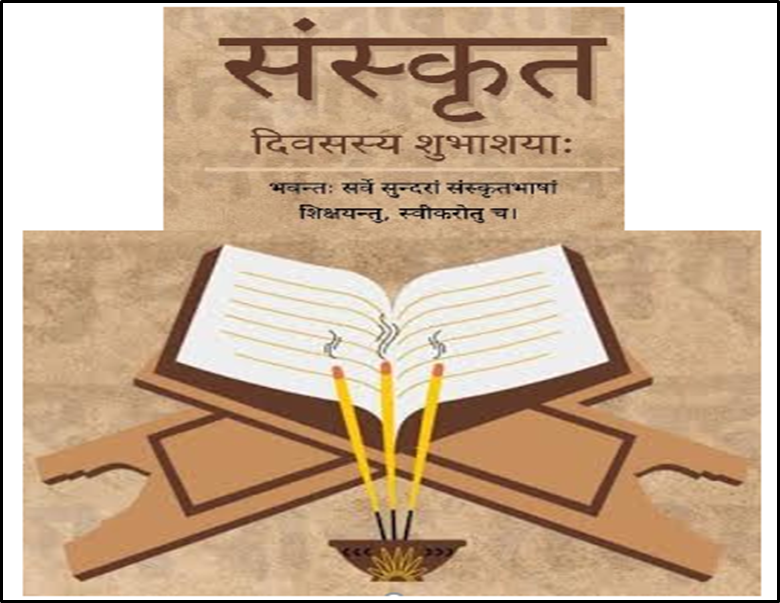
About World Sanskrit Day
World Sanskrit Day, also known as Sanskrit Diwas, is observed annually to promote and preserve the Sanskrit language and its rich contribution to Indian knowledge and culture.
It was formally established in 1969 by the Union Ministry of Education and is traditionally associated with the birth anniversary of Panini, the ancient grammarian of Sanskrit.
Shravana Purnima: Academic and Ritual Connection
- World Sanskrit Day is observed on Shravana Purnima, the full moon day of the Hindu month of Shravana, typically falling in August; in 2026, it fell on Friday, 28 August.
- Ancient academic calendar: In traditional Gurukulas, the academic year commenced on Shravana Purnima, when students formally resumed core Vedic recitation after a study pause running from the Paush full moon.
- Upakarma: Shravana Purnima marks Upakarma (also Avani Avittam, Janivarada Hunnime), a Vedic ritual of renewal in which men perform purification rites and change the sacred thread (yajnopavitam), its three strands symbolising debts to parents, society, and the Guru; the ritual concludes with recitation of the Gayatri Mantra.
Rishi Parv and Cultural Associations
- Rishi Parv: During Upakarma, offerings (tarpanam) are made to the Rishis credited with composing the Vedic hymns, making Shravana Purnima historically observed as the festival of the sages alongside World Sanskrit Day.
- Raksha Bandhan: Historically termed Shravani in Vedic literature, the same day marks Raksha Bandhan, when priests tie protective threads (raksha-sutras) and sisters tie rakhis to brothers.
Mythological Basis: Hayagriva and the Restoration of the Vedas
- Hindu mythology holds that on the full moon of Shravana, Lord Vishnu assumed his horse-headed avatar, Hayagriva, to defeat the demons Madhu and Kaitabha, who had stolen the Vedas from Brahma.
- By restoring the Vedas — composed in Vedic Sanskrit — to Brahma, Hayagriva’s legend anchors Shravana Purnima’s enduring association with the preservation of the Sanskrit language.
Conclusion
Thus, Shravana Purnima, linked with Panini and traditions like Upakarma, Rishi Parv and Raksha Bandhan, symbolises the renewal and preservation of Sanskritic and Vedic knowledge.
| This concept has been elaborately discussed in the following article – Prime Minister Extends Greetings On World Sanskrit Day 2026 |