
Introduction
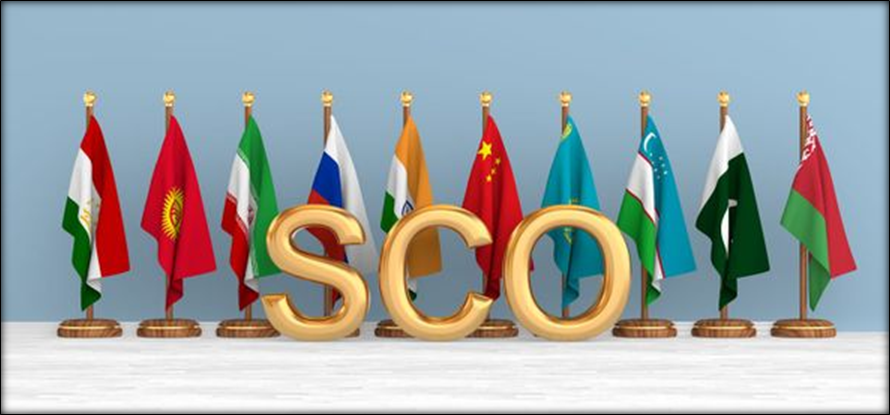
The SCO is a permanent intergovernmental organisation established in 2001 to promote regional security, mutual trust and cooperation among Eurasian countries. India became a full member in 2017.
Key Features and Objectives
- Origin and membership: The SCO was established on 15 June 2001 in Shanghai by China, Russia, Kazakhstan, Kyrgyzstan, Tajikistan and Uzbekistan; India and Pakistan joined as full members in 2017, followed by Iran in 2023 and Belarus in 2024.
- Regional security: Its core objective is to promote peace, security and stability and jointly address terrorism, separatism and extremism.
- Counter-terrorism: The Regional Anti-Terrorist Structure (RATS) at Tashkent provides an institutional mechanism for cooperation against terrorism and extremist threats.
- Economic cooperation: The SCO promotes cooperation in trade, investment, energy, transport, technology and infrastructure, thereby supporting greater Eurasian economic integration.
- Connectivity: It provides a platform for discussing transport and connectivity corridors, which is particularly important for India’s engagement with Central Asia.
- Afghanistan: The SCO is important for addressing the regional implications of Afghanistan, particularly terrorism, radicalisation, narcotics trafficking and political instability.
- India’s strategic interests: Membership enables India to simultaneously engage China, Russia, Central Asia, Iran and Pakistan, strengthening its policy of strategic autonomy and multi-alignment.
- Central Asian outreach: The SCO complements India’s bilateral engagement with Central Asian republics and provides a multilateral platform for advancing security, energy, connectivity and economic interests.
- Multilateral diplomacy: The organisation gives India an avenue to advocate a multipolar and rules-based international order while maintaining dialogue with competing major powers.
- Important limitation: The SCO is not a military or defence alliance; its emphasis is on consultation, cooperation and regional stability rather than collective defence.
Recent SCO Summits: Key Reforms and Institutional Developments
- Strengthening counter-terrorism architecture — Astana Summit 2024: The SCO adopted a Programme of Cooperation against Terrorism, Separatism and Extremism for 2025–2027, aimed at improving coordinated responses to these threats through the Regional Anti-Terrorist Structure (RATS).
- Creation of an SCO Anti-Drug Centre — Tianjin Summit 2025: Member states signed an agreement establishing an SCO Anti-Drug Centre to strengthen cooperation against narcotics trafficking and associated transnational criminal networks.
- Universal Centre for Countering Security Threats — Tianjin Summit 2025: The SCO agreed to establish a Universal Centre for Countering Challenges and Threats to the Security of SCO Member States, expanding institutional cooperation beyond conventional terrorism.
- Greater economic institutionalisation — Tianjin Summit 2025: The summit advanced proposals for an SCO Development Bank, reflecting an effort to deepen financial cooperation and reduce dependence on external financial institutions.
- Green and energy cooperation — Tianjin Summit 2025: China proposed an SCO platform for cooperation in green industries and energy, indicating a shift towards addressing energy transition and sustainable development alongside traditional security concerns.
- Expansion of digital and technological cooperation — Tianjin Summit 2025: The summit placed greater emphasis on science, technology and artificial intelligence, signalling the SCO’s gradual expansion from a security-centric grouping towards technology and development cooperation.
Conclusion
The SCO provides India with a valuable Eurasian diplomatic platform for advancing security, connectivity, economic interests and strategic autonomy. India should use it pragmatically while complementing SCO engagement with strong bilateral and regional partnerships.
| This concept Has Been Elaborately Discussed In This Article: India’s Central Asia Outreach: From Strategic Engagement to Geoeconomic Influence |