
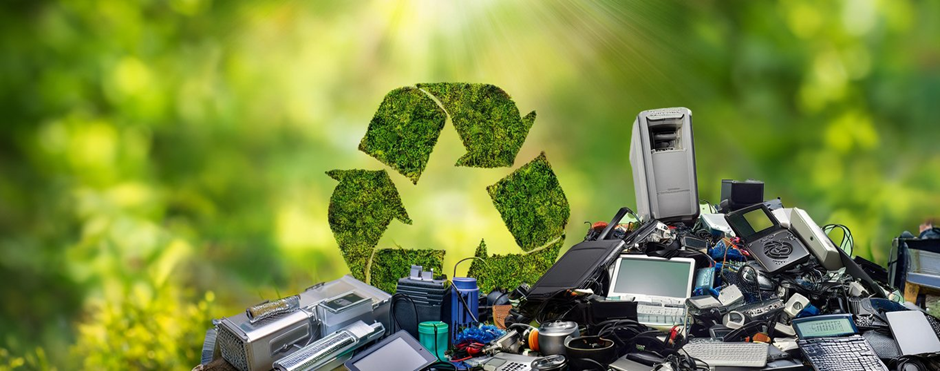
About E-Waste
- E-waste refers to discarded Electrical and Electronic Equipment (EEE) after the end of its useful life or due to technological obsolescence.
- It includes waste generated during manufacturing, repair, refurbishment and maintenance of electronic products.
- Examples: computers, mobile phones, TVs, refrigerators, washing machines, ACs, printers, etc.
- IContains valuable materials such as gold, silver, copper and aluminium, as well as hazardous substances such as lead, mercury and cadmium.
- Improper disposal causes air, water and soil pollution and poses health risks.
E-Waste Generation in India
- India is among the world’s largest e-waste generators.
- India’s e-waste generation increased from about 1.01 million tonnes (2019–20) to 1.75 million tonnes (2023–24).
- Major drivers: digitalisation, rising consumption, frequent replacement of devices and shorter product life cycles.
- Informal recycling remains a major challenge, often involving unsafe dismantling and burning.
Legal Framework Before E-Waste Management Rules, 2016
- Before dedicated rules, e-waste was regulated mainly through the Environment (Protection) Act, 1986 and broader hazardous-waste regulations.
- The E-Waste (Management and Handling) Rules, 2011 provided the first dedicated framework.
- Weak collection mechanisms, limited coverage and inadequate implementation necessitated a stronger framework.
Need for E-Waste Management Rules, 2016
- Rapid increase in e-waste generation.
- Weak implementation of the 2011 Rules.
- Inadequate producer responsibility and collection mechanisms.
- Continued dominance of the informal recycling sector.
- Growing environmental and health risks from hazardous substances.
- Need for a comprehensive EPR-based management system.
E-Waste Management Rules, 2016: Objectives
- Ensure scientific and environmentally sound management of e-waste.
- Promote reuse, recovery and recycling.
- Reduce health and environmental hazards.
- Make producers responsible for post-consumer e-waste.
- Promote formal recycling and reduce unsafe informal practices.
Scope and Applicability
- Applied to entities involved in manufacture, production, sale, purchase, collection, storage, transportation, refurbishment, dismantling and recycling of EEE.
- Major stakeholders: producers, manufacturers, importers, consumers, bulk consumers, dealers, e-retailers, refurbishers, dismantlers and recyclers.
- Covered a wide range of EEE, including IT/telecom equipment, consumer electronics and household appliances.
- CFLs and other mercury-containing lamps were specifically included.
- Certain wastes, such as radioactive waste and used lead-acid batteries, were regulated separately.
Collection Targets
- The 2016 Rules introduced phase-wise e-waste collection targets.
- Targets increased progressively from 30% to 70% over specified implementation periods.
- Aim → increase formal collection and ensure channelisation to authorised recyclers.
Key Stakeholders
- Producers: EPR, collection/channelisation, awareness and record-keeping.
- Manufacturers: Management of e-waste generated during manufacturing.
- Consumers/Bulk Consumers: Hand over e-waste to authorised entities; avoid mixing with general waste.
- Dealers/E-Retailers: Support take-back and collection mechanisms.
- Refurbishers: Reuse/refurbish equipment and manage generated waste.
- Dismantlers: Safe dismantling and segregation of components.
- Recyclers: Environmentally sound processing and material recovery.
- Urban Local Bodies: Collection and channelisation of orphaned e-waste.
Current Framework: E-Waste Management Rules, 2022
- E-Waste (Management) Rules, 2022 replaced the 2016 Rules and came into force on 1 April 2023.
- Strengthened the EPR framework through a centralised online system.
- Introduced mandatory registration of producers, manufacturers, refurbishers and recyclers.
- EPR compliance is linked to recycling targets and EPR certificates.
- The framework covers 106 categories of EEE.
- Provides for environmental compensation for non-compliance.
Conclusion
Effective e-waste management is essential for protecting human health, preventing environmental pollution and recovering valuable resources. Strengthening EPR, formal recycling infrastructure and consumer awareness is crucial for achieving a circular and sustainable electronics economy in India.
| This Concept has been Elaborately Discussed in the following Article: From Hazardous Scrap to Strategic Asset: Decoding India’s Urban Mining Potential |