
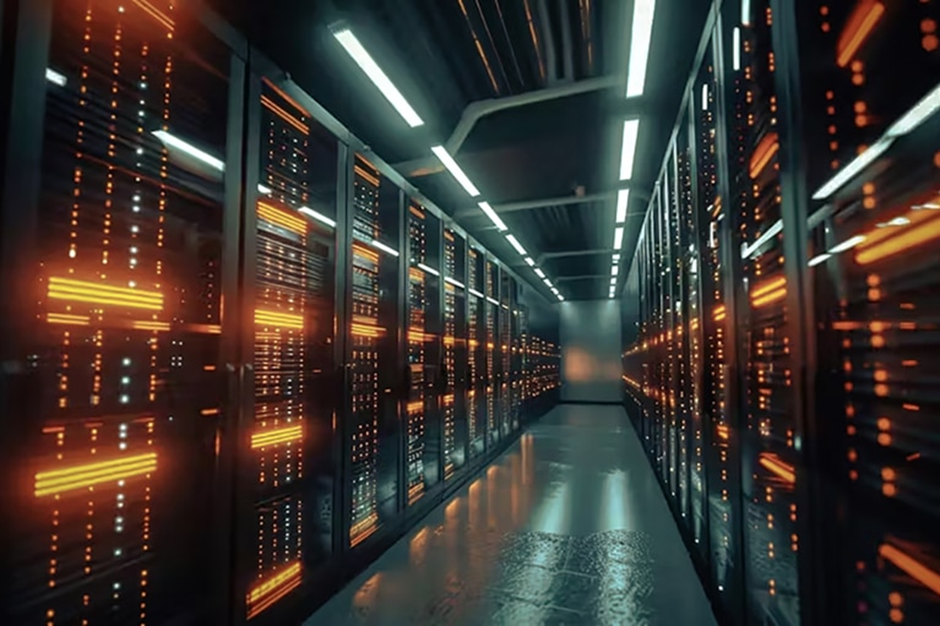
About Data Centres
- Definition: A Data Centre is a dedicated, secure space within a centralized location where computing and networking equipment is concentrated.
- Core Function: Designed for the purpose of collecting, storing, processing, and distributing massive amounts of data for digital economies.
Types of Data Centres
- Enterprise Data Centres: Built, owned, and operated directly by corporations for their internal, proprietary network needs.
- Colocation Data Centres: Facilities where businesses can rent space, equipment, and bandwidth from a third-party owner.
- Managed Services Data Centres: Operated by a third-party managed service provider on behalf of a company to handle IT operations.
- Hyperscale Data Centres: Massive, high-density facilities engineered by tech giants (like Google or Amazon) to quickly scale up immense cloud computing requirements.
- Edge Data Centres: Smaller, decentralized facilities located close to the end-users to deliver cached content and process data with minimal latency.
India’s Status
- Capacity Surge: Operational capacity has increased from about 375 MW in 2020 to ~1,500 MW in 2025, with projections to grow four to five times by 2030.
- Market Value: Expected to expand from US$ 4.5 billion (2023) to a projected US$ 11.6 billion by 2032.
- Investment Pipeline: Between 2019 and 2025, committed investments reached approximately US$ 95 billion from both global and domestic sources.
Factors Facilitating Growth of Data Centres in India
- Budget 2026–27 Incentives: Offers a tax holiday until 2047 for eligible foreign companies providing global cloud services, alongside a 15% safe harbour rate for related-entity centres.
- Infrastructure Status (2022): Facilities with an IT load above 5 MW receive easier access to institutional credit at lower interest rates.
- Electronics Manufacturing Boost: Backed by a ₹1,000 crore provision for the India Semiconductor Mission (ISM) 2.0 and ₹40,000 crore for the Electronics Components Manufacturing Scheme (ECMS).
- Data Sovereignty Laws: The Digital Personal Data Protection (DPDP) Act, 2023, and the RBI’s localization mandates compel domestic data retention.
Other Enabling Factors
- Foundational Digital Public Goods: Massive transaction volumes generated by Aadhaar, UPI, and ONDC require robust domestic servers.
- Global AI Data Boom: Exponential surge in computing demands driven by the integration of Artificial Intelligence (AI) into global economies.
- Start-up & Cloud Adoption: A rapidly expanding SaaS market (expected to hit $35 billion by 2025) and widespread enterprise cloud migration.
- Energy Security Grid: Reliable power access supported by massive renewable energy expansion and nuclear frameworks like the SHANTI Act.
Government Initiatives for Promotion
- IndiaAI Mission: Fosters AI-optimized server facilities and provides subsidized computing access to develop sovereign AI models.
- Draft Data Centre Policy (2020): Recommends establishing specialized Data Centre Economic Zones (DCEZs) and deploying a single-window clearance mechanism.
- GI Cloud (MeghRaj): Establishes a secure, scalable national cloud infrastructure for delivering robust e-Governance services.
Conclusion
India’s rapidly expanding data centre ecosystem is the backbone of its emergence as a global digital powerhouse. However, sustaining this trajectory requires transitioning toward green cooling technologies, streamlined regulations, and circular water management to position India as a resilient, resource-secure computational hub.
| This concept has been elaborately discussed in the following article – India’s Evolving Data Centre Ecosystem: Balancing Digital Growth and Water Security |